

Call Centers Under Investigation
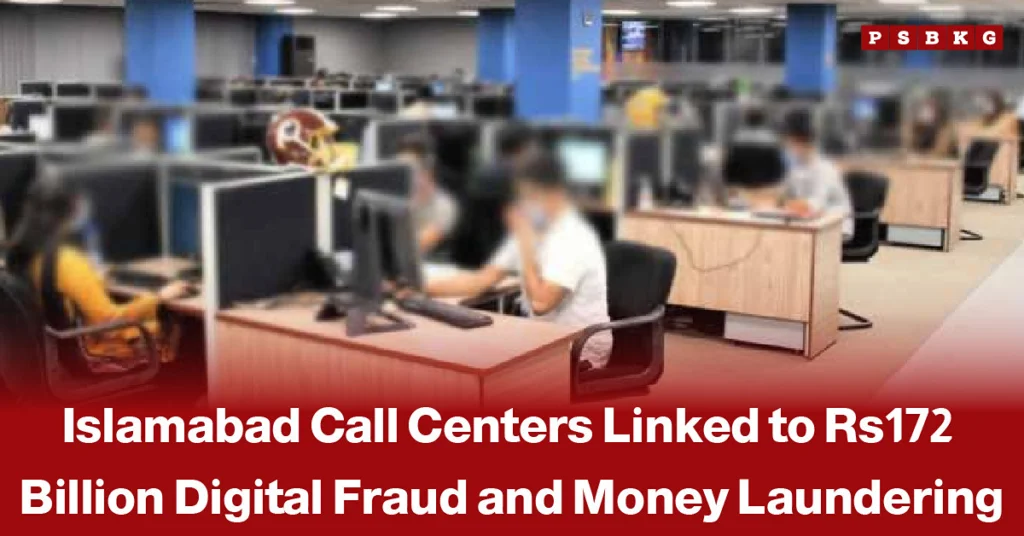
Several call centers in Islamabad have come under investigation over alleged involvement in digital fraud and money laundering. Authorities have been increasing their crackdown on illegal call centers as concerns grow over organized online scams, fraudulent calls, and misuse of financial accounts. The National Cyber Crime Investigation Agency (NCCIA) has carried out raids on suspected operations in different parts of the capital. In one recent case, staff reportedly escaped with computer systems and other equipment before investigators reached the premises.
Rs172 Billion Fraud Allegations
Investigations have linked the wider network of digital fraud and illegal financial activity to transactions reportedly worth around Rs172 billion. The allegations point to the use of digital channels to target victims, move money, and hide the source of funds. Authorities are investigating how call centers, bank accounts, SIM cards, and other digital tools may have been used in these activities. The reported amount highlights the potential scale of financial crime connected to organized digital scams.
Illegal SIMs Used in Fraud
Illegal SIM cards have emerged as one of the major tools used by fraudsters. A recent briefing to the National Assembly Standing Committee on Interior revealed that 18.2 million illegal SIMs had been blocked over the previous two and a half years. Despite this action, regulators said scammers continued to exploit weaknesses in the system. These SIMs can be used to make fraudulent calls and send fake banking messages to unsuspecting people.
Stolen Biometric Data Raises Concerns
Authorities have also raised concerns about the misuse of biometric information. Officials told the parliamentary committee that criminals were using stolen fingerprints and other personal information to obtain access to financial and telecom services. The PTA chairman said criminals were reportedly obtaining fingerprints from places such as airports, driving license centers, and passport offices. Officials have also described the existing biometric verification system as outdated.
Rented Bank Accounts Used to Move Money
Another major concern is the use of rented or so-called mule bank accounts. According to officials, criminals use these accounts to receive and transfer money obtained through fraudulent activities. Such arrangements can make it more difficult for investigators to identify the real people behind illegal transactions. Authorities are therefore examining not only the suspected call centers but also the financial channels connected to them.
NCCIA Expands Crackdown
The NCCIA has been conducting operations against suspected illegal call centers in Islamabad. In a recent raid in the G-9 sector, investigators found that the suspected staff had already left the premises with their computers and other equipment. The agency had acted on intelligence about the alleged illegal operation. Another suspected foreign-operated call center in G-8 was also raided earlier as part of the crackdown on organized cybercrime. Seized devices were sent for forensic examination.
Foreign Nationals Also Arrested
The authorities have also taken action against foreign nationals allegedly working at illegal call centers. In one recent case, dozens of Chinese and Vietnamese nationals arrested from illegal call centers were deported from Pakistan. Officials said the individuals had been involved in activities being investigated under the call-center crackdown. The development has added an international dimension to Pakistan’s investigation into illegal digital operations.
Money Laundering Investigation
The suspected fraud networks are also being examined from a money-laundering perspective. Investigators are looking at how money obtained through digital scams may have been moved through bank accounts, digital wallets, and other financial channels. The issue comes as international authorities are also warning about increasingly sophisticated money-laundering networks. A recent FATF report highlighted the growing use of underground banking, hawala, and other financial channels to conceal illicit funds.
Digital Fraud Becoming More Sophisticated
The latest developments show how digital fraud is becoming more organized. Fraudsters can combine illegal SIMs, stolen personal information, fake calls, and rented bank accounts to target victims and move money quickly. Authorities now face the challenge of shutting down these networks while also improving identity verification and cooperation between telecom companies, banks, and cybercrime agencies.
Authorities Face Growing Pressure
The alleged Rs172 billion scale of the financial activity has increased pressure on authorities to identify those operating the networks and recover illegally obtained funds. Officials are also being urged to strengthen systems that protect citizens’ personal and financial information. For ordinary users, the developments are another warning to avoid sharing CNIC details, banking information, verification codes, or biometric information with unknown callers.