

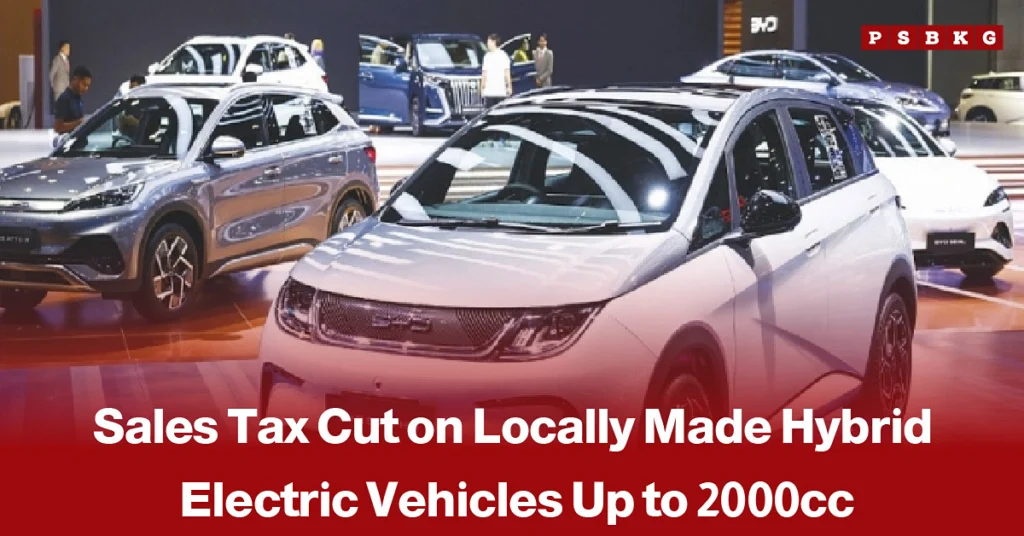
Government Cuts Sales Tax
The federal government has reduced the sales tax on locally manufactured Hybrid Electric Vehicles (HEVs) with engine capacities of up to 2,000 cc. Under the new decision, the sales tax has been reduced from 25% to 18%. The change was introduced through a notification issued by the Finance Division and took effect immediately.
Which Hybrid Cars Are Covered?
The tax relief applies to locally manufactured hybrid vehicles with engines up to 2,000cc. The government has excluded these vehicles from the 25% sales tax provisions listed under Table II of the existing notification. As a result, eligible locally produced hybrids now fall under the standard 18% sales tax rate. The decision does not apply to every hybrid vehicle in the market. Imported vehicles and hybrids outside the specified engine capacity are not covered by this particular change.
Tax Rate Falls by Seven Percentage Points
The latest decision reduces the applicable tax rate by 7 percentage points, from 25% to 18%. Locally manufactured hybrids had previously benefited from lower concessional rates of around 8.5% to 12.75%. Those concessions expired on June 30, 2026, after which some vehicles moved into the higher 25% tax category. The new decision therefore provides some relief to both buyers and local manufacturers.
Hybrid Cars Could Become Cheaper
The reduction in sales tax could lead to lower prices for some locally assembled hybrid cars. However, the final price reduction will depend on how manufacturers and dealers pass the tax savings on to customers. Other costs, including production expenses and duties, can also affect the final price. Some manufacturers have already started announcing revised prices following the tax change.
Hyundai Announces Lower Prices
Hyundai Nishat Motor has announced price reductions for several of its locally assembled hybrid models following the tax cut. The Hyundai Elantra Hybrid has reportedly received a reduction of around Rs639,000. The Tucson Hybrid Smart FWD has become cheaper by about Rs724,000, while the Tucson Hybrid Signature has seen a reduction of around Rs801,000. The biggest reported reductions are in the Santa Fe Hybrid range, with price cuts of more than Rs1.3 million on some variants.
Relief for Local Auto Industry
The government expects the move to provide some support to Pakistan’s local automotive sector. Lower taxes could encourage consumers to consider fuel-efficient hybrid vehicles and may help increase demand for locally assembled models. The decision also comes as Pakistan works on its 2026-31 Auto Policy, with the government reviewing taxes and incentives for electric and hybrid vehicles.
Earlier Tax Concessions Had Ended
The latest reduction follows a period of uncertainty for hybrid vehicle taxation. Before June 30, locally manufactured HEVs benefited from lower sales tax rates. After those concessions expired, some vehicles became subject to the 25% rate, increasing concerns among consumers and manufacturers. The new notification partially reverses that increase by moving qualifying hybrids back to the standard 18% rate.
What It Means for Car Buyers
For people planning to buy a locally manufactured hybrid car up to 2,000cc, the decision could provide some financial relief. The actual savings will depend on the model and the manufacturer’s revised price. Buyers should therefore check the latest official price lists before making a purchase. The tax reduction could also make hybrid vehicles more attractive to consumers looking for better fuel efficiency without moving fully to an electric vehicle.
A Step Toward Cleaner Transport
The government has been reviewing policies aimed at increasing the use of new energy vehicles in Pakistan. Reducing the tax burden on locally manufactured hybrids could support this transition while also giving local manufacturers an incentive to expand their hybrid offerings. For consumers, the immediate benefit is the possibility of lower prices on eligible locally made hybrid vehicles.