
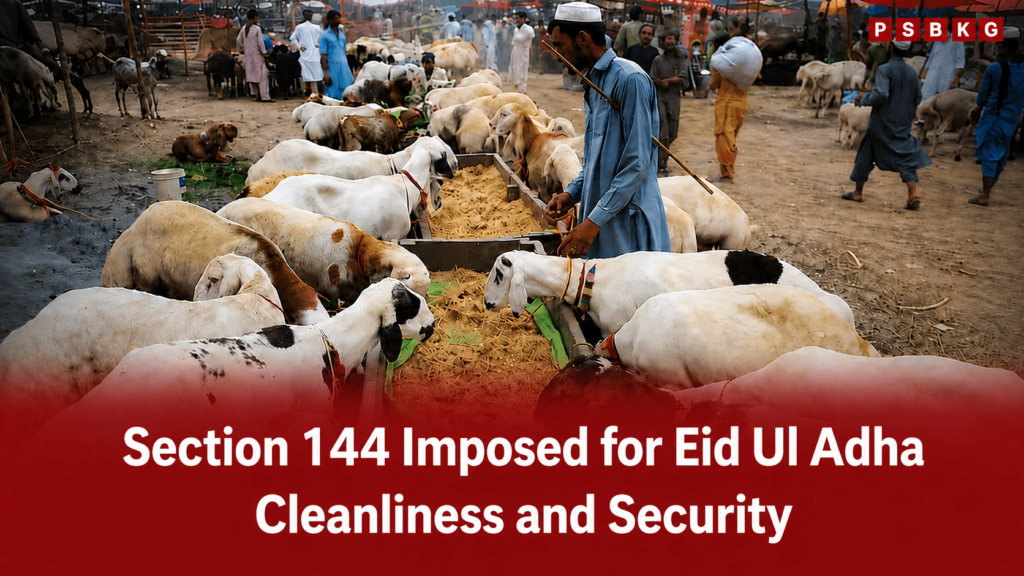
Latest News: Authorities have imposed Section 144 ahead of Eid al-Adha. The aim is to ensure cleanliness, maintain public order, and strengthen security arrangements during the religious festival. The decision comes as administrations across different regions prepare for large gatherings and animal markets. They are also addressing waste management challenges linked to Eid celebrations. Section 144 for Eid Ul Adha imposed to support these preventive measures.
Authorities Introduce Special Measures Before Eid
Government officials have announced special administrative measures to manage public safety and sanitation during Eid al-Adha. With large numbers of people expected to participate in animal sacrifices, authorities are focusing on preventing disorder, maintaining hygiene, and ensuring smooth municipal operations. Section 144 has been imposed to regulate activities during the holiday period and prevent public disturbance as well as environmental and sanitation issues.
What Is Section 144 and Why Is It Used?
Section 144 is a legal provision that allows local administrations to impose temporary restrictions in order to prevent disturbances, protect public safety, and maintain law and order. It is often implemented during sensitive occasions, public gatherings, or emergency situations. During Eid Ul Adha, administrations use these powers to manage crowd control, restrict certain activities, and ensure compliance with cleanliness and security guidelines.
Focus on Cleanliness During Eid Celebrations
One of the primary objectives behind the restrictions is maintaining cleanliness during and after animal sacrifices. Municipal authorities usually face major challenges during Eid days. These include managing animal waste, disposing of remains, and keeping residential areas hygienic. Officials are urging citizens to cooperate with sanitation teams and use designated disposal methods. They are also advised to avoid dumping animal waste in streets, parks, drains, or public spaces.
Enhanced Security Arrangements Across Cities
Security agencies have also strengthened arrangements to ensure peaceful Eid celebrations. Additional police deployment, monitoring teams, and emergency response plans are being introduced in various areas to manage traffic, crowds, and potential security concerns. Authorities aim to provide a safe environment in markets, mosques, public gathering areas, and designated sacrifice locations throughout the holiday period.
Restrictions on Public Activities and Violations
Under Section 144, certain activities may face temporary restrictions depending on local administrative decisions. These can include unauthorized gatherings, improper disposal of sacrificial waste, or activities that could threaten public order or sanitation rules. Officials have warned that violations of the imposed restrictions could result in legal action under applicable laws.
Public Cooperation Seen as Essential
Authorities emphasize that successful implementation of cleanliness and security plans depends heavily on public cooperation. Citizens are being encouraged to follow official guidelines, support sanitation efforts, and report suspicious or disruptive activities when necessary. Community participation is considered crucial for maintaining order and ensuring a smooth Eid experience for everyone.
Preparations Continue Ahead of Eid Ul-Adha
With Eid al-Adha approaching, local governments, municipal departments, and security institutions continue finalizing operational plans. Waste collection systems, emergency services, and law enforcement measures are expected to remain active throughout the festival period. Officials say the goal is to ensure that religious celebrations take place in a safe, organized, and hygienic environment for all communities.