
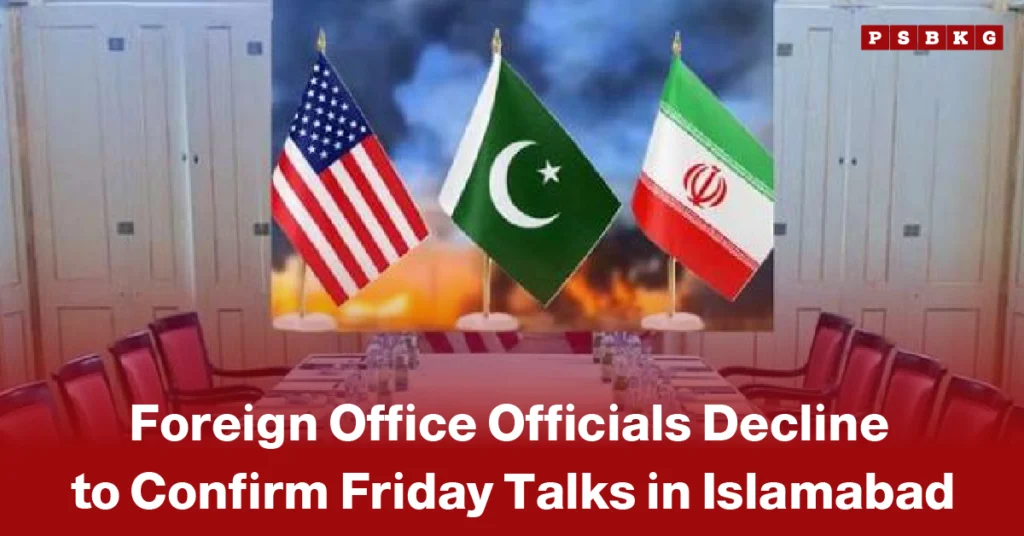
Latest News: Pakistan’s Foreign Office has declined to confirm whether a new round of US-Iran talks will take place in Islamabad on Friday. The statement comes at a time when expectations were building around a possible meeting, but officials chose a cautious tone. It suggests that, behind the scenes, things are still not fully settled.
No Official Confirmation Yet
According to officials, while discussions are ongoing, no final date has been agreed upon. Even though there is willingness from multiple sides, the Foreign Office has avoided giving a clear yes. This kind of silence usually reflects uncertainty rather than rejection. It keeps diplomatic space open.
Talks Still Being Negotiated
Recent developments show that efforts to resume dialogue are continuing, but key details remain unresolved. Mediators, including Pakistan, are still trying to bring both sides back to the table. Reports indicate that while talks are possible, they depend on conditions being met first.
Iran’s Position Creating Delay
One of the main reasons for the delay appears to be Iran’s internal stance. Officials in Tehran are still working toward a unified position before committing to fresh talks. Without that clarity, scheduling a meeting becomes difficult. This has slowed down progress despite ongoing diplomacy.
Earlier Expectations for Friday
There had been earlier reports suggesting that talks could happen as soon as Friday in Islamabad. Preparations and security measures were even discussed. However, the lack of confirmation now shows that those expectations may have been premature.
Pakistan’s Role Remains Active
Despite the uncertainty, Pakistan continues to play a central role as a mediator. Officials remain in contact with both Washington and Tehran. The goal is to keep communication alive and prevent tensions from escalating again. This balancing act is not easy, but it remains ongoing.
Impact of Ongoing Tensions
The broader regional situation is also affecting the talks. Issues like ceasefire conditions, sanctions, and security concerns are still unresolved. These factors make it harder to finalize even the basic details of a meeting. Diplomacy, in such cases, tends to move slowly.
Public and Global Attention
The uncertainty has also drawn attention from both local and international observers. Islamabad has already experienced disruptions due to earlier preparations for talks. Many are now watching closely to see whether the meeting will actually happen or face further delays.
What Happens Next
For now, the situation remains open-ended. Talks are neither confirmed nor canceled. Everything depends on whether both sides can agree on conditions and timing. Until then, official statements are likely to remain careful and non-committal.