
A Sharp Response from Iran
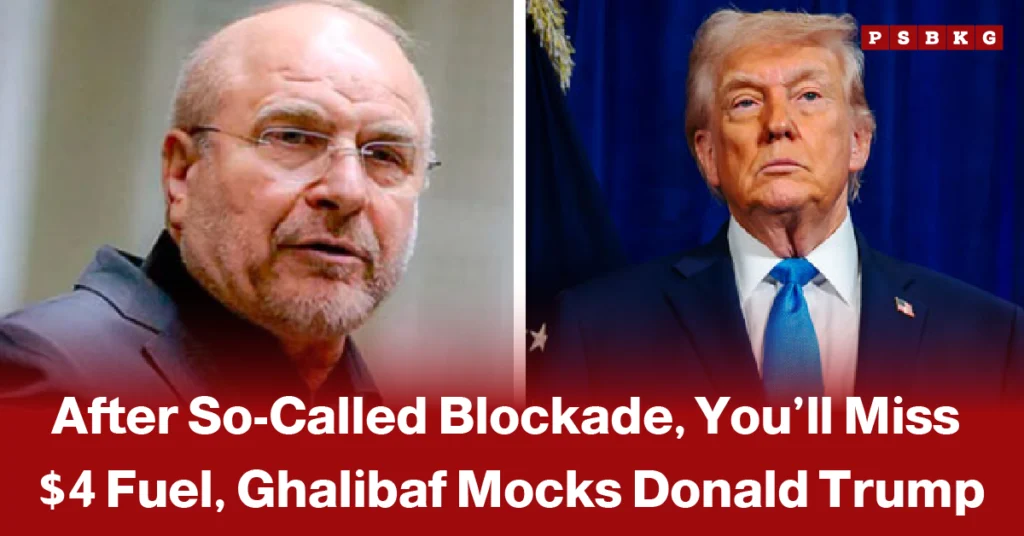
Latest News: Iranian leader Mohammad Bagher Ghalibaf has responded strongly to recent remarks by Donald Trump in a Ghalibaf Trump fuel statement. In a pointed statement, he suggested that after what he called a so-called blockade, Americans might start missing cheap fuel prices. The comment quickly gained attention, reflecting the rising tension between the two sides.
What Ghalibaf Meant
Ghalibaf’s remarks were more than just a political jab. They hinted at the potential impact of escalating tensions on global energy markets. By referencing $4 fuel, he pointed toward how quickly prices could rise if supply routes are disrupted. It was a warning wrapped in sarcasm.
The Blockade Debate
The term blockade has been central to recent discussions. Iran has denied certain claims while criticizing external pressure. Officials argue that narratives around restrictions are exaggerated. At the same time, the situation in key shipping routes remains tense. This back-and-forth has only added to uncertainty.
Fuel Prices in Focus
Global fuel prices are highly sensitive to geopolitical developments. Even a small disruption in supply chains can lead to noticeable price hikes. Markets often react quickly to statements like these. Investors begin factoring in risks, and that alone can push prices higher.
Trump’s Earlier Remarks
Donald Trump had earlier made strong statements regarding Iran and its role in the region. His comments included warnings and demands tied to strategic routes and agreements. These remarks appear to have triggered Ghalibaf’s response. The exchange reflects a broader pattern of escalating rhetoric.
Impact on Global Markets
Energy markets are already on edge due to ongoing tensions. Any threat to supply routes like the Strait of Hormuz can affect oil flow worldwide. Countries that rely heavily on imported fuel could feel the impact quickly. Even speculation can lead to price volatility.
Public and Political Reactions
Reactions to Ghalibaf’s statement have been mixed. Some see it as a strong message defending national interests. Others view it as escalating rhetoric that could worsen tensions. Social media discussions show a wide range of opinions.
A War of Words Continues
This exchange is part of a larger pattern of verbal confrontations between leaders. Statements like these often signal deeper disagreements behind the scenes. While no immediate action follows, the tone matters. It shapes expectations and influences global perception.
What Lies Ahead
For now, the situation remains uncertain. Diplomatic channels may still be active behind closed doors. However, public statements continue to raise concerns about escalation. The coming days will show whether tensions ease or intensify further.