
Wheat Fields Under Stress
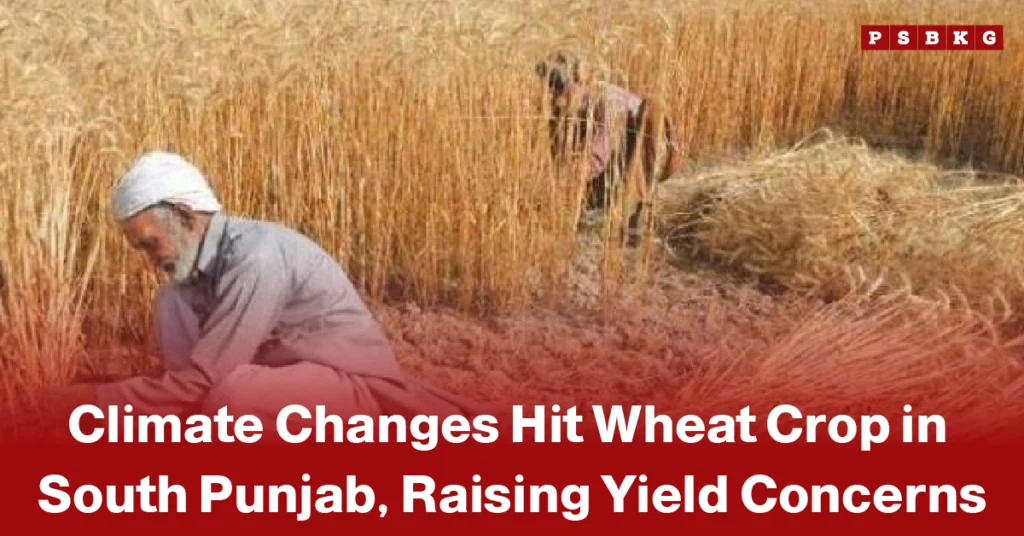
Latest News: Farmers across South Punjab are facing a difficult season as wheat crop climate change Pakistan begins to affect wheat crops. What usually feels like a predictable cycle has become uncertain. This year, the fields are showing signs of stress. For many growers, it’s not just about one crop; it’s about livelihood.
Weather Patterns Shifting
The problem seems to be rooted in shifting climate conditions. Sudden temperature changes, unusual heat, and irregular rainfall have disrupted the crop cycle. Wheat, which depends on stable weather, is particularly sensitive. Even small variations can affect growth stages. Farmers say the timing just hasn’t felt right this season.
Impact on Crop Yield
Early reports suggest that yield may be lower than expected. Crops in several areas have not developed fully. In some cases, grains appear smaller or less dense. This directly affects production levels. For a region that plays a key role in wheat supply, this is a serious concern.
Farmers Voice Their Worries
Local farmers are already expressing concern about potential losses. Many invested heavily in seeds, fertilizers, and irrigation. Now, they are unsure about returns. Some say they have seen similar patterns in recent years, but this time it feels more intense. There is a growing sense of uncertainty.
Economic Ripple Effect
Wheat is not just a crop; it’s a staple food. Any drop in production can have wider consequences. Prices may rise, affecting consumers across the country. Supply chain pressures could also increase. What starts in the fields often reaches markets and households quickly.
Role of Climate Change
Experts link these changes to broader shifts in climate change. Rising temperatures and unpredictable weather are becoming more common. Agriculture is one of the first sectors to feel the impact. Wheat, being a seasonal crop, is especially vulnerable.
Need for Better Planning
Agricultural experts suggest adopting new strategies. These may include climate-resistant seed varieties, improved irrigation methods, and better forecasting systems. Farmers may need more support and guidance to adapt. Without planning, such challenges could become more frequent.
Government’s Role
There is also a call for stronger government support. Farmers expect timely assistance, whether through subsidies or technical help. Monitoring crop conditions and responding early could reduce losses. Policies focused on climate adaptation are becoming more important.
Looking Ahead
For now, the situation remains uncertain. Much will depend on how the remaining season unfolds. Farmers are hoping for stable weather in the coming weeks. But the concerns raised this year may not fade quickly.