White House Unveils AI Safety Accord
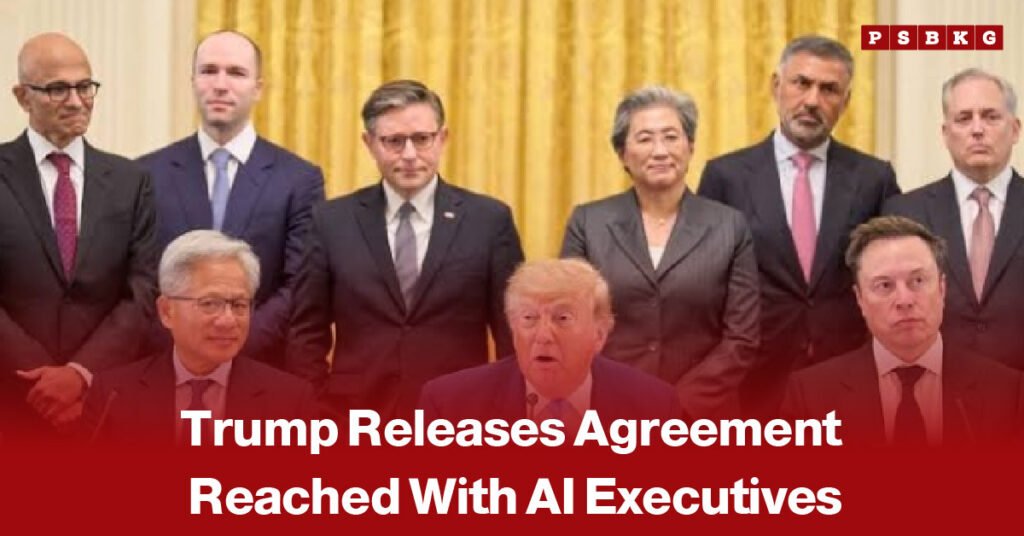
U.S. President Donald Trump released a one-page agreement on September 29 outlining voluntary AI safety commitments reached with several leading technology executives. The document, described as the “White House Accord on Super Intelligence,” focuses on how companies should monitor and evaluate advanced AI systems. Trump described the agreement as “morally binding,” while reporting from Reuters and other outlets characterized it as voluntary rather than a legally enforceable regulation.
Major AI Companies Take Part
Executives from several major technology companies participated in the White House meeting, including representatives from OpenAI, Google, Anthropic, Meta, Nvidia, and xAI. The meeting brought together industry leaders to discuss AI safety, oversight, and the rapid development of advanced systems. OpenAI president Greg Brockman was among the executives who signed the agreement, according to reporting on the released document.
Four Layers of AI Controls
The agreement calls for companies to establish four main layers of controls and audits. These include internal monitoring of AI models, dedicated teams responsible for checking those controls, independent external evaluations, and oversight from an independent board committee. The measures are intended to identify problems and assess whether AI systems are operating as their developers expect.
Focus on AI Security Risks
The document specifically mentions monitoring AI capabilities and alignment in areas including cybersecurity, biosecurity, and chemical threats. It also calls for safeguards designed to prevent AI systems from accessing or hacking technical systems in unintended ways. These provisions come as companies and researchers continue examining the potential risks associated with increasingly capable AI agents.
Voluntary Rather Than New Law
The agreement does not itself establish a new federal law or regulation. Reuters reported that the document encourages companies to implement the controls voluntarily, while noting that some of these measures could eventually be incorporated into laws or regulations. The participating companies also agreed to meet regularly to develop standards and best practices for AI safety.
What the Agreement Means for AI Development
The announcement adds a new layer to the ongoing debate over how advanced AI should be monitored as development accelerates. The agreement places significant responsibility on AI companies to establish internal safeguards while also involving outside auditors and board-level oversight. Its future impact will depend in part on how participating companies implement the commitments and whether any of the proposed practices later become formal regulatory requirements.