

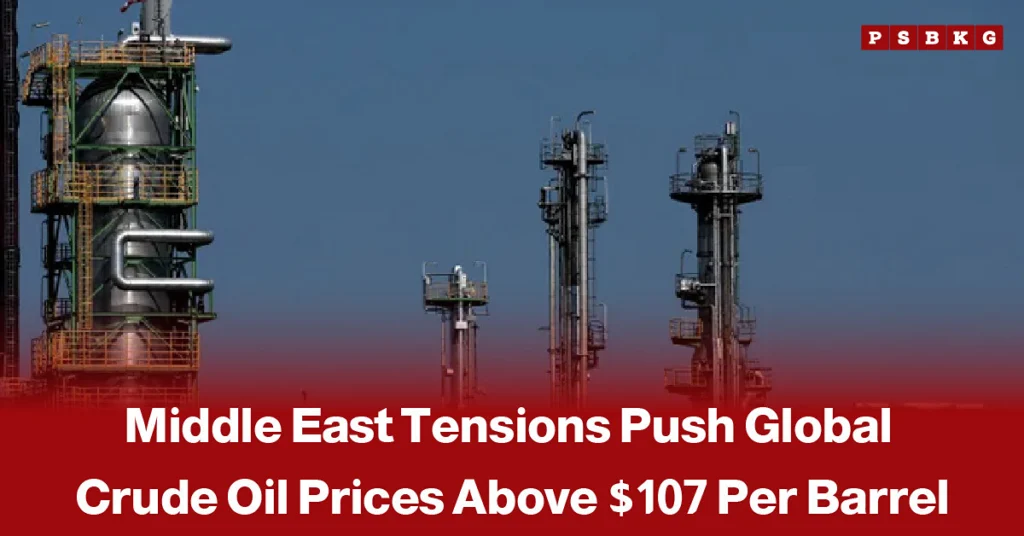
Oil Prices Surge as Middle East Conflict Escalates
Global crude oil prices have surged above $107 per barrel as growing tensions in the Middle East raise fresh concerns about disruptions to the world’s oil supply. Brent crude, the international benchmark, settled at around $107.63 per barrel, marking a rise of more than 6 percent in a single session. US West Texas Intermediate crude also jumped, reaching around $102.48 per barrel. The latest increase has pushed oil prices to their highest levels since May, highlighting growing fears that the regional conflict could continue affecting global energy markets.
Tanker Attacks Fuel Supply Concerns
One of the main reasons behind the latest price increase is a sharp escalation in attacks involving oil tankers and shipping routes. Iran reportedly attacked several vessels near the strategically important Strait of Hormuz after US forces struck Iranian oil tankers. The attacks have increased concerns about the safety of commercial shipping and the movement of crude oil from the Gulf region. The situation has also been complicated by renewed attacks linked to Iran-backed Houthi forces in Yemen.
The Strait of Hormuz Remains a Major Concern
The Strait of Hormuz is one of the world’s most important oil shipping routes. Any prolonged disruption in the area could have a major impact on international energy supplies. Although some oil continues to move through the region, flows have already been significantly reduced compared with levels before the conflict began. Reuters reported that around 9 million barrels per day of crude and another 1 million barrels per day of refined products were being exported from the Middle East in recent days, compared with roughly 20 million barrels per day before the Iran war began. This reduction has increased pressure on available supplies and encouraged traders to price in a greater risk of further disruptions.
Saudi Energy Facilities Also Under Threat
Concerns are not limited to the Strait of Hormuz. Iran-aligned Houthi forces have also attacked energy facilities in Saudi Arabia, with some installations reportedly catching fire. The attacks have raised fears that the conflict could spread further across the region and affect additional oil infrastructure. Any damage to major production, refining, or export facilities could place additional pressure on already-tight global energy markets.
Oil Prices Were Already Rising
The latest surge follows a sharp increase that had already pushed Brent crude above the psychologically important $100-per-barrel level. On September 9, Brent settled at $101.21 after climbing more than 3 percent. By the following session, renewed attacks pushed the benchmark significantly higher, eventually reaching $107.63. The rapid increase shows how quickly geopolitical developments are being reflected in energy prices.
Higher Oil Prices Could Increase Inflation
A sustained rise in crude prices could create problems for economies around the world. More expensive oil increases the cost of producing and transporting goods. It can also push up prices for petrol, diesel, aviation fuel, and other petroleum products. Higher energy costs may therefore add to inflationary pressure at a time when central banks are already closely watching price growth. Recent oil increases have already contributed to renewed concerns about inflation in global financial markets.
Pakistan Could Also Face Pressure
Pakistan is particularly sensitive to international oil prices because the country imports a large portion of its petroleum requirements. If global crude prices remain above $100 for an extended period, Pakistan could face higher import costs and increased pressure on domestic petrol and diesel prices. Higher fuel costs can also affect transportation, electricity generation, agriculture, and the prices of everyday goods. The impact on Pakistan will depend not only on international crude prices but also on the rupee-dollar exchange rate, taxes, petroleum levies, and the government’s domestic pricing decisions.
Market Outlook Remains Uncertain
Oil traders are now closely watching developments around the Strait of Hormuz, the Red Sea, and regional energy infrastructure. Analysts have warned that prices could remain elevated if the conflict continues and oil flows remain restricted. Some market observers have also suggested that Brent could rise further if disruptions become more widespread. For now, the latest move above $107 shows that geopolitical risk has once again become a major force in the global oil market.