

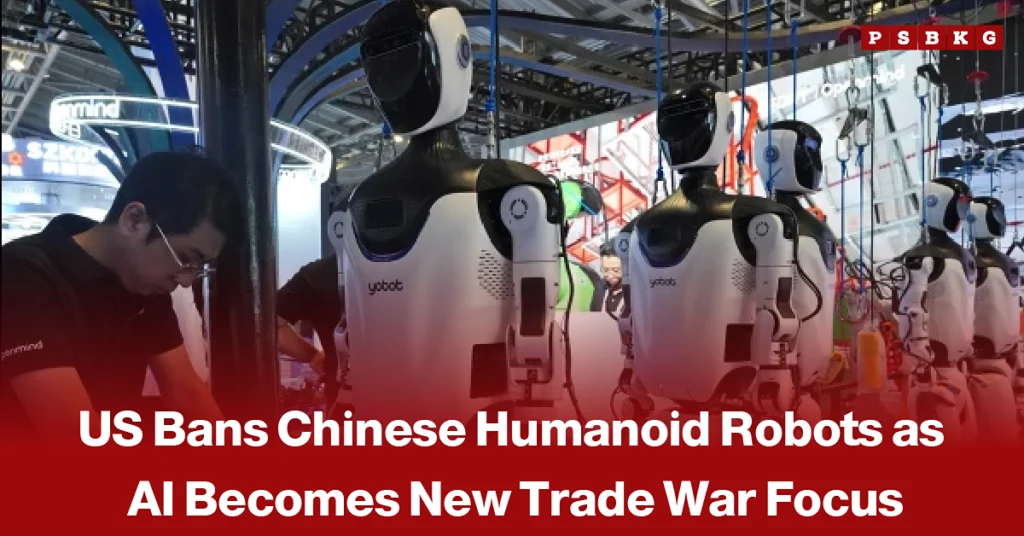
A New Chapter in the US-China Tech Rivalry
The United States has moved to restrict Chinese humanoid robots, adding another fast-growing technology sector to the long-running trade tensions between Washington and Beijing. The decision highlights how artificial intelligence is becoming an increasingly important part of the competition between the world’s two largest economies. Robotics was once mainly viewed as an industrial issue, but the rapid development of AI-powered machines has changed that picture.
Why Humanoid Robots Matter
Humanoid robots are designed to perform tasks that traditionally require human movement and decision-making. With advances in artificial intelligence, these machines are becoming more capable of understanding instructions, recognizing their surroundings, and carrying out complex activities. That has made the technology commercially valuable but also strategically important for governments concerned about future technological leadership.
Washington Raises Security Concerns
US restrictions on Chinese robotics technology are linked to wider concerns about national security, sensitive technologies, and China’s growing role in advanced AI development. American officials have increasingly focused on preventing strategic technologies from being transferred or controlled by potential rivals. The latest move suggests that humanoid robots could become another area where technology and national security overlap.
Beijing Faces Another Technology Challenge
For China, the restrictions add to a series of trade and technology barriers imposed by the United States in recent years. Chinese companies have already faced restrictions involving advanced semiconductors, artificial intelligence systems, and other high-technology products. The growing list of measures is putting additional pressure on Chinese technology firms to develop domestic alternatives and reduce dependence on foreign components.
AI Becomes the New Trade War Front
The latest development shows how different the technology competition has become. Earlier trade disputes focused heavily on manufactured goods, tariffs, and traditional industries. Now artificial intelligence, robotics, chips, and advanced computing are increasingly at the center of the dispute. Both countries understand that leadership in these fields could shape economic and military capabilities for years to come.
Companies Could Feel the Impact
Restrictions on Chinese humanoid robots could affect manufacturers, investors, and businesses looking to adopt the technology. Chinese companies have been working to make humanoid robots more affordable and commercially useful, while American firms are also investing heavily in the sector. A divided global market could make it harder for companies to operate freely across both countries.
The Technology Race Is Moving Fast
Humanoid robotics is still a developing industry, which means today’s policy decisions could influence its direction for years. Governments are increasingly treating advanced AI and robotics as strategic assets rather than ordinary commercial products. That could lead to more controls, export restrictions, and competition over supply chains as the technology improves.
What Comes Next
The US decision signals that the technology rivalry with China is expanding into newer areas. Artificial intelligence and humanoid robotics are likely to remain closely watched as both countries compete for an advantage in advanced technology. For businesses and consumers, the bigger question is whether this growing competition will speed up innovation or create a more divided global technology market.