

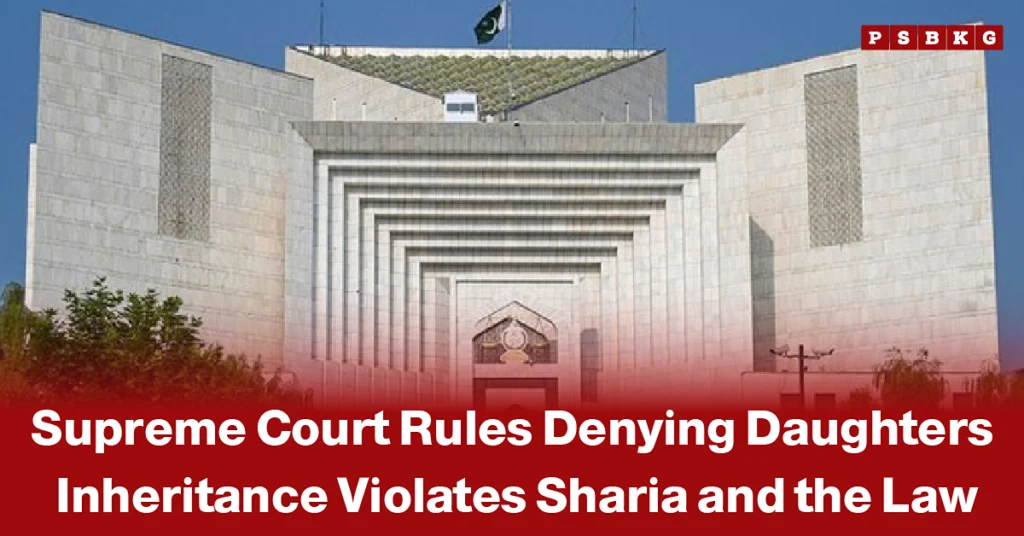
The Supreme Court of Pakistan has ruled that depriving daughters of their rightful share in inheritance is a clear violation of both Islamic teachings and the country’s legal framework. The landmark judgment reinforces the rights of women to inherit family property and sends a strong message that unlawful practices aimed at denying inheritance will not be tolerated. The decision has been widely welcomed by legal experts and rights advocates, who believe it strengthens the protection of women’s property rights. They say the ruling also reminds families that inheritance is not a matter of personal choice but a legal and religious obligation.
Supreme Court Reaffirms Women’s Rights
In its judgment, the Supreme Court emphasized that daughters have a lawful and religious right to inherit property. The court made it clear that no custom, family arrangement, or social pressure can override the inheritance rights guaranteed under Islamic law and Pakistan’s legal system. Legal experts say the ruling provides important guidance for lower courts dealing with inheritance disputes involving female heirs.
Inheritance Is a Legal and Religious Obligation
The court noted that inheritance rights are clearly defined in Islamic principles and are also protected under Pakistani law. Any attempt to deprive daughters of their rightful share goes against both legal requirements and religious teachings. Experts believe the judgment will help increase awareness among families about the importance of respecting inheritance laws.
A Common Problem Across the Country
Despite clear legal protections, many women continue to face difficulties in receiving their inheritance. Social traditions, family pressure, and lengthy legal disputes often discourage daughters from claiming their lawful share of property. Rights advocates say many inheritance cases remain unresolved for years, making strong judicial guidance especially important.
A Step Toward Greater Justice
Legal analysts believe the ruling will strengthen future court decisions involving inheritance disputes. It also sends a clear message that discriminatory practices against daughters have no legal justification. The judgment will likely encourage women to seek legal protection when others unfairly deny their inheritance rights.
Raising Public Awareness
Experts say court decisions alone cannot solve the issue unless people understand the importance of inheritance rights. Moreover, public awareness campaigns, legal education, and family discussions can help reduce disputes and ensure families distribute property according to both the law and Islamic principles. Greater awareness may also help prevent conflicts before they reach the courts.
Looking Ahead
The Supreme Court’s decision will likely influence future inheritance cases across Pakistan. Lawyers believe it will serve as an important legal precedent while encouraging stricter enforcement of existing inheritance laws. Many observers hope the ruling will lead to fairer treatment of daughters and promote greater respect for women’s legal rights within families and society.
Conclusion
The Supreme Court’s ruling that denying daughters their inheritance violates both Sharia and Pakistani law marks an important step in protecting women’s rights. By reaffirming that inheritance is both a legal duty and a religious obligation, the judgment strengthens the position of female heirs and encourages fair implementation of inheritance laws across the country.