
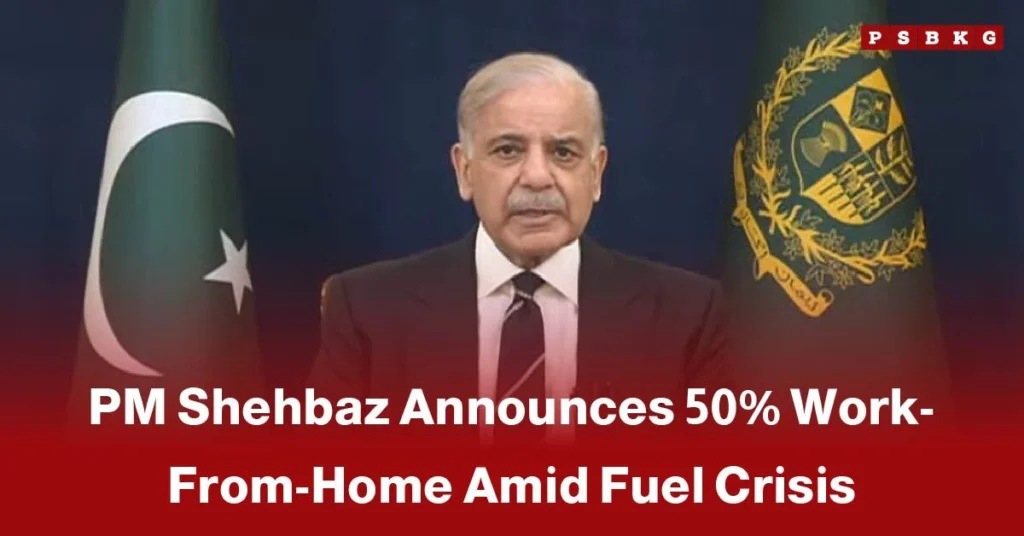
Latest News : Prime Minister Shehbaz Sharif has announced a major austerity measure allowing 50% work-from-home for government offices as Pakistan faces a worsening fuel crisis. The decision aims to reduce fuel consumption and ease pressure on the country’s energy resources. Officials say the move will also help limit transportation costs and traffic congestion in major cities. The government hopes the step will provide temporary relief while broader energy management strategies are implemented.
Fuel Crisis Prompts Government Action
Pakistan has been experiencing growing pressure on fuel supplies due to global market instability and rising import costs. Authorities say the crisis requires immediate steps to manage consumption and maintain national energy reserves. The government believes reducing daily commuting for public employees will significantly cut fuel use. Such measures are being considered essential during the current economic and energy challenges.
50% Staff to Work From Home
Under the new policy, half of government employees will work remotely, while the remaining staff will continue office duties. Ministries and departments have been directed to organize schedules accordingly. The policy aims to maintain administrative operations while minimizing unnecessary travel. Officials say this arrangement could remain in place until fuel supply conditions improve.
Reducing Transport and Energy Costs
Transportation accounts for a significant portion of fuel consumption in urban areas. By encouraging remote work, the government hopes to reduce the number of vehicles on roads. This could also lower public transportation demand and cut overall fuel usage. Authorities believe such changes can make a noticeable difference in national energy consumption levels.
Part of a Wider Austerity Plan
The work-from-home policy is part of a broader austerity plan introduced by the government. Measures include reducing official travel, limiting unnecessary energy use in government buildings, and encouraging departments to adopt cost-saving strategies. These steps are designed to stabilize economic conditions while addressing the immediate fuel shortage.
Public and Expert Reactions
Economists and policy experts have offered mixed reactions to the decision. Some say remote work could help reduce operational costs and environmental pollution. Others argue that long-term solutions must focus on improving energy infrastructure and fuel supply management. Nonetheless, many agree that temporary measures are necessary during times of crisis.
Impact on Major Cities
Cities like Islamabad, Lahore, and Karachi could see reduced traffic if the policy is widely implemented. Less commuting may also help lower fuel demand during peak hours. Urban planners suggest that such initiatives might encourage broader adoption of remote work in both public and private sectors.
What Comes Next
The government will monitor fuel consumption trends and assess the effectiveness of the policy in the coming weeks. If the measures successfully reduce fuel demand, additional adjustments may follow. Officials say the priority remains maintaining economic stability while ensuring that public services continue without disruption.