

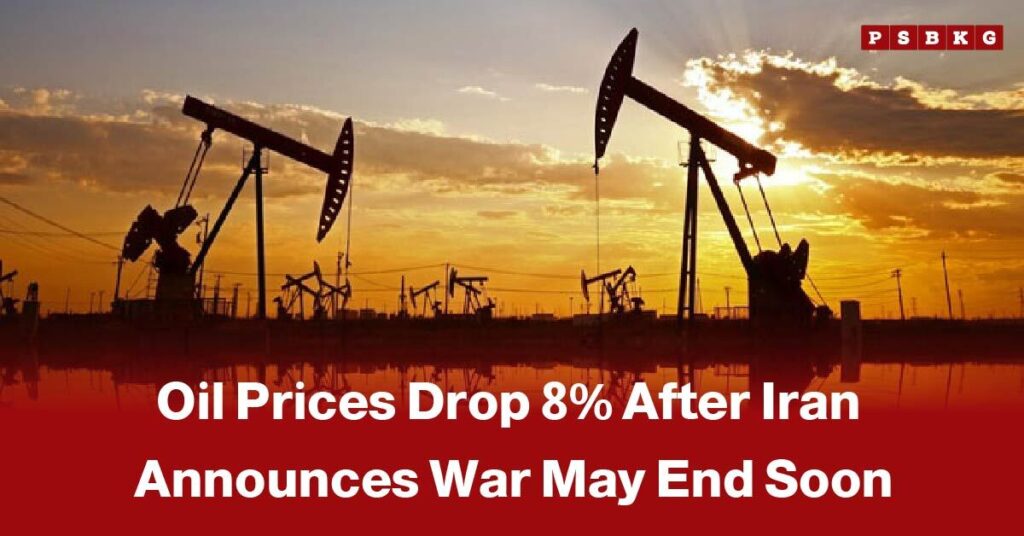
Latest News : Global oil markets witnessed a sharp drop after signals emerged that the ongoing conflict involving Iran may soon come to an end. Crude oil prices fell nearly 8% in a single trading session, reversing a surge that had pushed prices above $100 per barrel earlier. The sudden shift came after comments suggesting the war could be nearing completion, easing fears of prolonged disruptions to global energy supply. Markets reacted quickly as traders adjusted expectations for oil demand and supply stability.
Oil Prices Reverse Earlier Surge
Just a day earlier, global oil prices had surged dramatically due to escalating tensions in the Middle East. Benchmark crude briefly climbed to around $119 per barrel, the highest level in more than three years. Investors feared that continued fighting could severely disrupt production and shipping routes. However, optimism about a potential end to the conflict quickly reversed that trend.
War De-Escalation Eases Market Fears
The sharp drop in prices followed statements indicating the war might soon conclude. Reduced fears of long-term supply disruption caused traders to sell off oil contracts, pushing prices downward. Analysts say energy markets often react instantly to geopolitical developments, especially when major oil-producing regions are involved.
Impact on Global Energy Supply
The conflict had previously threatened key supply routes in the Middle East, particularly the strategic Strait of Hormuz. This narrow waterway carries roughly one-fifth of the world’s oil shipments, making it one of the most critical energy chokepoints in the world. Any disruption there can send shockwaves through global energy markets.
Markets Respond Across Asia
Asian stock markets reacted positively to the fall in oil prices. Major indexes rose as investors interpreted the drop as a sign that energy costs may stabilize in the near future. Lower oil prices typically reduce inflation pressure and ease costs for industries dependent on fuel and transportation.
Still Higher Than Pre-War Levels
Despite the sudden decline, oil prices remain significantly higher than they were before the conflict began. Energy analysts note that uncertainty in the Middle East can quickly push prices up again if tensions return. Markets are therefore expected to remain volatile in the coming weeks.
Global Economic Implications
Changes in oil prices often ripple across the global economy. When crude prices rise sharply, transportation, manufacturing, and electricity costs usually increase as well. Conversely, falling prices can provide relief for consumers and businesses facing higher fuel costs.
What Happens Next
Energy markets will continue watching developments closely. If diplomatic efforts succeed and the conflict ends soon, oil prices could stabilize further. However, analysts warn that geopolitical uncertainty in the Middle East means volatility may remain a constant factor in global energy markets.