
US Secretary of State Says Mission
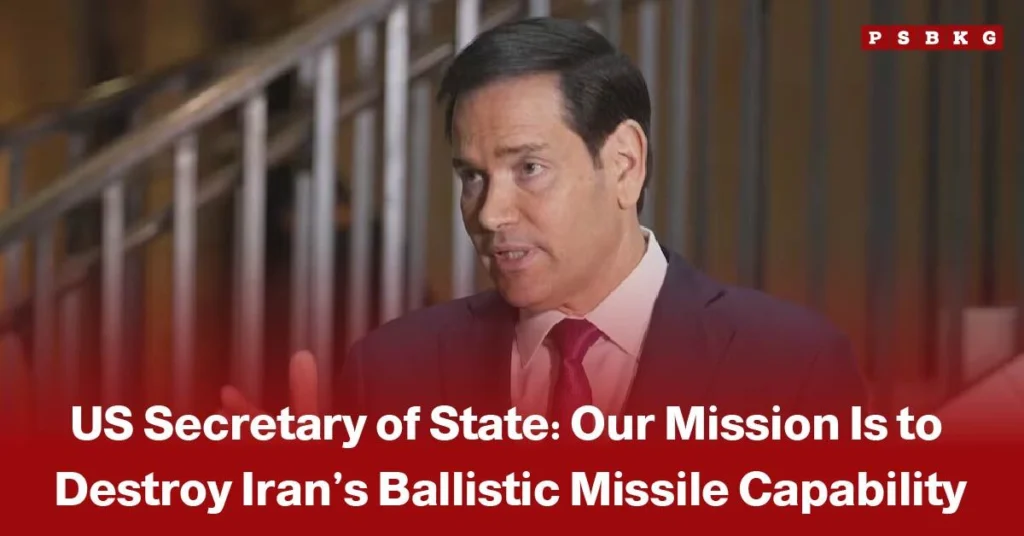
The top U.S. diplomat has made a stark declaration about ongoing military operations involving Iran. According to recent reports, U.S. Secretary of State Marco Rubio said that the United States’ mission in its current campaign against Iran includes destroying Tehran’s ballistic missile capabilities. He described this objective as central to broader military efforts, which have already seen intense conflict unfold between Washington, its allies, and Iranian forces.
A Clear Strategic Objective
Rubio’s comments are among the clearest public statements from U.S. leadership on America’s strategic goals in the evolving conflict. He described the focus on missile capabilities as necessary to reduce what U.S. officials call a threat from Iran’s growing arsenal. By outlining this aim publicly, he signals how seriously the U.S. views the capability gap in the region’s balance of power.
How This Fits the Broader Campaign
The claim comes amid a larger military campaign involving joint U.S. and Israeli actions in and around Iran. These operations have included heavy airstrikes and targeted attacks on senior Iranian leaders and military infrastructure. According to senior officials, the campaign aims to degrade a range of Iranian military assets, from naval forces to missile sites.
Iran’s Response and Regional Tensions
Iran has not taken such remarks lightly. Senior Iranian officials, including the head of national security, have vowed no negotiations with the U.S., even as regional tensions escalate. Tehran has described the foreign strikes as illegal and provocative, and has pledged resistance and retaliation. Allies in the Gulf have also been drawn into the diplomatic fallout.
Geopolitical Implications
Statements about disabling ballistic missile capabilities are not just military in tone, they have big geopolitical resonance. Ballistic missiles are a core part of Iran’s defense posture. Targeting them suggests an effort to limit Tehran’s strategic reach. This approach raises questions about future stability in the Middle East and how other nations, from regional partners to global powers, might respond.
International Reaction and Debate
Around the world, leaders have taken note of Rubio’s remarks. Some have called for de‑escalation and emphasized diplomatic solutions, warning that broad military objectives could deepen conflict. Other voices have echoed the U.S. position, arguing that such measures are necessary for long‑term security. This mix of responses reflects a globe uncertain about how to resolve an increasingly complex confrontation.
What Experts Are Saying
Military analysts say focusing on ballistic missile capabilities can limit the scope of future strikes and curb Iran’s ability to threaten neighboring countries. They also warn that this approach could deepen resistance inside Iran or push Tehran to rely more on proxy groups, a risk that might make the conflict harder to resolve quickly. That could make it harder to achieve a quick end to hostilities.
Looking Ahead
With tensions high and rhetoric strong from both sides, the situation remains unpredictable. Rubio’s statement will be weighed against diplomatic efforts, battlefield developments, and reactions from allies and adversaries alike. Whether the focus on missile capabilities leads to concrete action or fuels further escalation is likely to shape headlines and policy discussions in the coming weeks.