
Trump Says US Killed 48 Top Iranian Figures
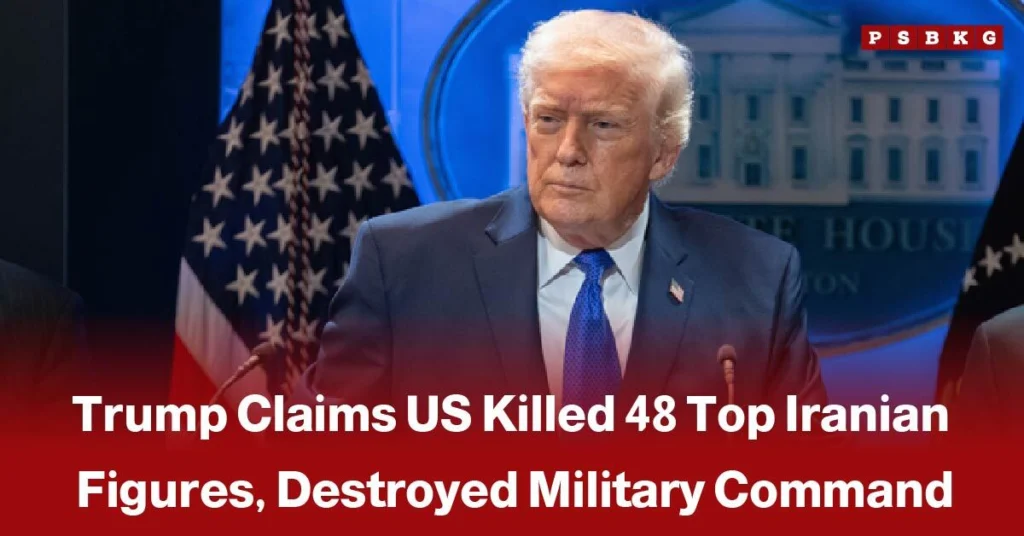
Latest News : In a dramatic escalation of tensions in the Middle East, Donald Trump has claimed that the United States, in coordination with Israel, has killed 48 senior Iranian leaders and essentially destroyed the Iranian military command structure. The remarks, made in interviews and social media posts, came as part of comments on ongoing military strikes against Iran. Trump described the operation as a major success, saying it has delivered a blow to what he called key figures in Tehran’s leadership. The announcement has drawn global attention and raised concerns about regional stability.
Details of the Claims
Trump stated that dozens of Iranian military and intelligence command figures were killed in what he called a highly successful operation. He also claimed that nine Iranian naval ships had been sunk and that the campaign was progressing “ahead of schedule.” According to his account, the strikes have decimated Iran’s command capacity and opened the door for potential diplomatic engagement. The precise identities of all those killed and independent verification are not yet confirmed.
Iran’s Supreme Leader Among Reported Casualties
State media and several reports suggest that Ali Khamenei, Iran’s Supreme Leader, was among those killed in the strikes, prompting official announcements of mourning within Iran. Tehran has declared a period of official mourning after confirming Khamenei’s death, a development that reflects the magnitude of the situation and its symbolic impact. Still, there are conflicting reports about the circumstances and details surrounding his killing.
Escalation and Retaliation
Iran has responded to the strikes with retaliatory missile and drone attacks targeting U.S. bases and other locations in the region, heightening fears of prolonged conflict. According to reports, both sides have suffered casualties, including U.S. service members killed during Iranian counterattacks. These exchanges have underscored the volatility of the conflict and raised alarms about broader regional escalation.
International Reactions
Global reactions have been mixed and cautious. Some world leaders have called for de‑escalation and diplomatic engagement, warning of the risks of a wider war. Others have expressed concern about civilian harm and the humanitarian implications of sustained military operations. International bodies, including the United Nations, are under pressure to respond to the unfolding situation. Amid these calls, governments are also urging restraint on all sides.
Strategic Rationale and Controversy
Trump and his supporters have framed the strikes as a response to what they describe as Iranian threats and provocations, including alleged support for militant groups and regional destabilization. Critics argue that targeting an entire leadership and military command may deepen hostilities and increase risks to global security. Questions about proportionality, legality, and long‑term consequences are central to ongoing international debates.
What It Means for the Middle East
The alleged elimination of so many senior Iranian figures, if accurate, could create a vacuum in leadership that reshapes Tehran’s strategic posture. It might weaken Iran’s military coordination but could also galvanize resistance within the country and among allied groups. Regional powers are watching closely, mindful that shifts in power dynamics could affect alliances, deterrence balances, and the security environment across the Middle East.
Looking Ahead
With ongoing operations, conflicting reports, and high emotions on all sides, the situation remains unpredictable. Diplomatic efforts may intensify even as military actions continue. Analysts say the next few weeks will be critical, both for attempts at negotiation and for monitoring further military responses. The international community is bracing for potential ripple effects that could extend far beyond the region.