
Clarification Issued Amid Public Outrage
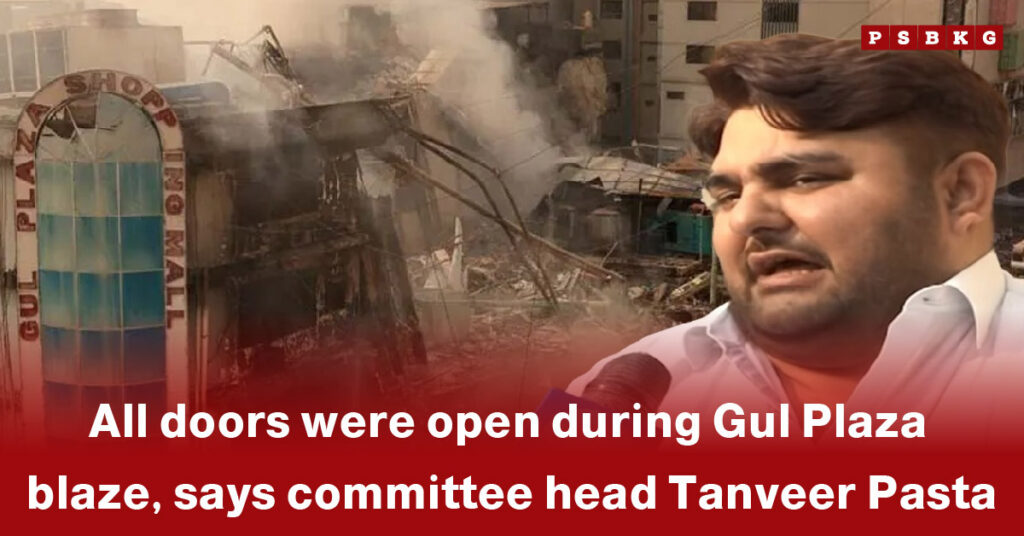
Committee head Tanveer Pasta has stated that all doors of Gul Plaza were open during the devastating fire, countering widespread claims of blocked exits. His remarks came as public anger continued to grow following the deadly blaze that claimed multiple lives. Addressing the media, Pasta emphasized that misinformation was spreading rapidly and needed to be corrected. He said preliminary findings do not support allegations that people were trapped due to locked doors. The clarification aims to bring facts forward while investigations continue.
Fire Incident Sparked Serious Questions
The Gul Plaza fire shocked the city and raised serious questions about building safety and emergency preparedness. Eyewitnesses had earlier claimed that exits were blocked, fueling criticism of authorities and building management. Images and videos circulating on social media intensified public concern. In response, officials formed an inquiry committee to investigate the incident thoroughly. The tragedy has once again highlighted the dangers posed by fires in overcrowded commercial buildings.
Committee’s Initial Findings Shared
Tanveer Pasta explained that the committee conducted on-ground inspections and reviewed available evidence. According to him, emergency exits and main doors were found open at the time of the fire. He added that smoke spread rapidly due to the building’s internal layout, which may have caused confusion during evacuation. The committee is also examining whether fire alarms and other safety systems were functional. Pasta stressed that final conclusions would only be shared after completing a full investigation.
Smoke and Panic Hindered Evacuation
Officials believe that dense smoke played a major role in limiting people’s ability to escape safely. Smoke inhalation is reported to be a leading cause of fatalities in the incident. Panic among occupants further complicated evacuation efforts, especially in upper floors. Rescue teams faced difficulties navigating through smoke-filled corridors. Experts say that even with open exits, poor visibility and lack of training can turn fires into deadly disasters.
Focus Shifts to Safety Compliance
While the committee head rejected claims of locked doors, he acknowledged that broader safety compliance remains under review. Authorities are assessing whether Gul Plaza met required fire safety standards. This includes checking fire alarms, extinguishers, stairwell access, and emergency lighting. Officials admit that enforcement of safety regulations in older buildings has been weak. The incident has renewed calls for stricter inspections and accountability across the city.
Families Demand Transparency
Families of victims have demanded transparency and justice, urging authorities to hold those responsible accountable. Many relatives say they want clear answers rather than conflicting statements. Protesters have called for the inquiry report to be made public. Civil society groups are also monitoring the investigation closely. Trust in official findings, observers say, will depend on whether the process is seen as independent and thorough.
Authorities Urge Patience
Tanveer Pasta urged the public to remain patient and avoid drawing conclusions before the investigation is complete. He assured that the committee would not shield anyone found guilty of negligence. Authorities say legal action will follow if violations are confirmed. The government has also promised to review fire safety laws and improve emergency response mechanisms. Officials insist that lessons from this tragedy must lead to meaningful reforms.
Experts Call for Better Preparedness
Fire safety experts stress that open doors alone do not guarantee safe evacuation. Proper signage, fire drills, and functional alarm systems are equally important. Many buildings in Karachi lack even basic safety training for occupants. Experts argue that regular inspections and penalties are essential to prevent future tragedies. The Gul Plaza incident, they say, should serve as a wake-up call for city planners and regulators.
Public Confidence at Stake
How authorities handle the Gul Plaza investigation could significantly impact public confidence. Clear communication and timely release of findings are seen as crucial. Any perception of cover-up could further damage trust. Citizens are demanding not just explanations but concrete action to prevent similar incidents. The outcome of the inquiry may shape future policies on building safety and emergency preparedness.
Conclusion
Tanveer Pasta’s statement that all doors were open during the Gul Plaza blaze has added a new dimension to the ongoing investigation. While the claim challenges earlier reports, questions about overall safety compliance remain unanswered. As authorities continue their probe, families and citizens await clear and credible findings. The tragedy underscores the urgent need for stronger fire safety enforcement across the city. Ultimately, preventing future disasters will require accountability, transparency, and sustained commitment to public safety.