
Political Tension Refuses to Cool Down
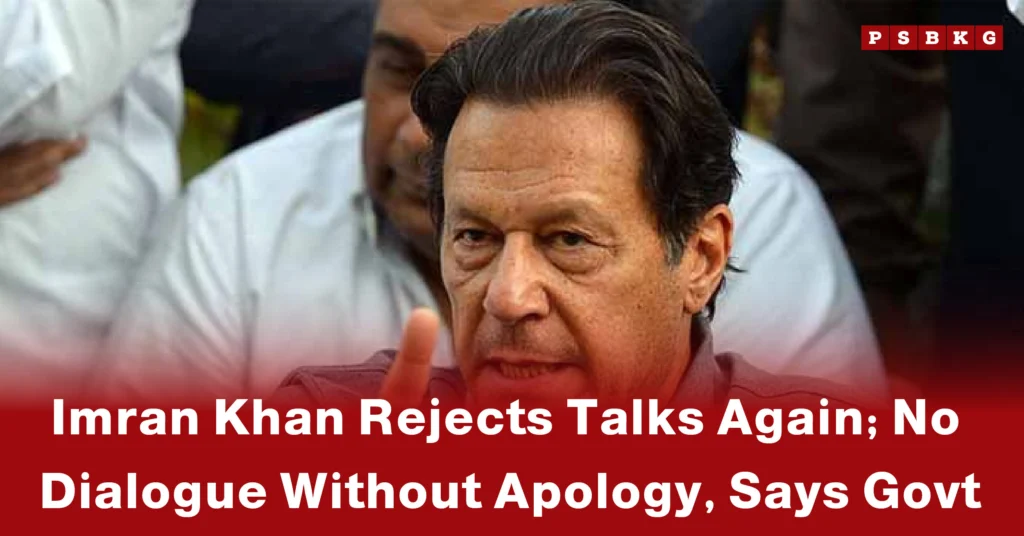
Latest News: Pakistan’s political landscape remains tense as former prime minister Imran Khan rejects talks with the government once again. The issue of dialogue has surfaced repeatedly in recent months, but no breakthrough seems in sight. This time, the government has responded firmly, stating that negotiations cannot move forward unless an apology is offered. The standoff highlights the deep trust deficit that continues to define national politics.
Imran Khan’s Firm Position
Imran Khan rejects talks and has remained consistent in his stance. He makes it clear that he does not see room for dialogue under the current circumstances. According to his party, talks without addressing what they describe as political injustice would be meaningless. Supporters argue that Khan is standing by his principles, even if it means prolonged political uncertainty. Critics, however, believe his refusal risks further instability.
Government Draws a Clear Line
The government responds by setting conditions of its own. Officials say that dialogue can proceed only if Imran Khan apologizes for statements and actions they claim crossed political and institutional boundaries. According to government representatives, respect for state institutions is non-negotiable. They argue that reconciliation cannot happen without accountability, especially after months of confrontational politics, as Imran Khan rejects talks.
Impact on Political Climate
The deadlock has further polarized the political environment. Parliament remains divided, and cooperation between ruling and opposition parties appears unlikely in the near future. Analysts warn that prolonged political conflict can affect governance and economic stability, especially as Imran Khan rejects talks. With important policy decisions pending, the lack of consensus continues to raise concerns among observers and the public alike.
Public Reaction and Political Fatigue
Among the general public, reactions remain mixed. Some citizens support Imran Khan’s refusal, seeing it as resistance against what they perceive as political pressure. Others express frustration, saying the country needs dialogue, not prolonged confrontation, especially as Imran Khan rejects talks. A growing sense of political fatigue emerges, particularly as economic challenges continue to affect everyday life. Many believe leadership on all sides must prioritize the national interest.
Calls for Mediation and Compromise
Several political commentators and civil society figures call for mediation. They argue that compromise, not rigid positions, remains essential for political stability. Some suggest that neutral intermediaries could help bridge the gap. However, with both sides standing firm and Imran Khan rejecting talks, such efforts have yet to gain traction. The lack of trust continues to pose the biggest obstacle to meaningful progress.
Economic and Governance Concerns
The ongoing political impasse also casts a shadow over governance. Investors remain cautious, and economic reforms face delays amid uncertainty, especially as Imran Khan rejects talks. Experts warn that political instability often discourages long-term planning. While both sides blame each other, ordinary citizens continue to feel the consequences, facing inflation, unemployment, and rising living costs.
Historical Context of Failed Dialogues
Pakistan has seen similar political standoffs in the past. Attempts at dialogue often collapse due to mistrust and rigid demands, particularly when Imran Khan rejects talks. History suggests that prolonged confrontations rarely end without compromise. Observers note that lessons from previous political crises remain largely unheeded, contributing to recurring instability. The current situation appears to follow a familiar pattern.
What Lies Ahead
As things stand, the possibility of talks appears distant. Neither side seems willing to soften its position. Political analysts believe that external pressure, public opinion, or changing circumstances may eventually force a rethink. Until then, the political stalemate is likely to continue, with implications for governance and national unity.
Conclusion
Imran Khan’s renewed rejection of talks and the government’s insistence on an apology underline the deep divisions shaping Pakistan’s politics. While both sides defend their positions, the absence of dialogue continues to raise concerns about stability and progress. For now, the path forward remains uncertain. Whether compromise emerges or confrontation deepens will shape the country’s political future in the months ahead.