
PM’s Strong Remarks on Regional Tensions
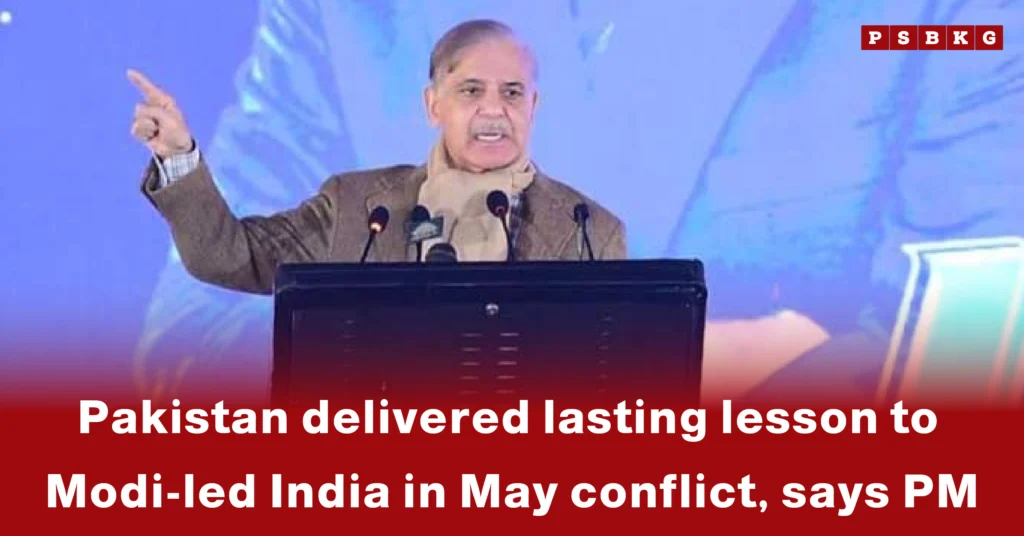
Latest News: Prime Minister Shehbaz Sharif said that Pakistan delivered a lasting lesson to Modi-led India during the Pakistan India May conflict. His remarks came while addressing a public gathering, where he spoke about national security, sovereignty, and Pakistan’s response to regional challenges. The prime minister’s words reflected confidence and resolve, signaling that Pakistan considers its response effective and measured rather than aggressive.
Context of the May Conflict
The Pakistan India May conflict raised tensions between the two countries, drawing regional and international attention. While details of the confrontation varied across narratives, the situation remained tense for days. PM Shehbaz said Pakistan acted responsibly and decisively, ensuring its actions were defensive and focused on protecting national interests. He emphasized that Pakistan neither sought escalation nor compromised on sovereignty.
Message to Modi-Led Government
In his statement on the Pakistan India May conflict, the prime minister directly referenced India’s current leadership, saying the lesson delivered should remind that aggressive policies do not bring stability. According to him, Pakistan has the capacity and will to defend itself against any threat. He also noted that strength should be paired with wisdom, emphasizing that peace remains Pakistan’s preferred path.
Pakistan’s Defense and Preparedness
PM Shehbaz praised Pakistan’s armed forces, calling them disciplined, professional, and fully prepared during the Pakistan India May conflict. He said the military’s readiness played a key role in deterring further escalation. The prime minister highlighted that Pakistan’s defense posture is based on deterrence, not provocation. This balance, he added, ensures peace while safeguarding national dignity and territorial integrity.
Diplomatic Signals to the World
Beyond regional messaging, the prime minister’s remarks on the Pakistan India May conflict also targeted the international community. He stressed that Pakistan handled the situation in line with international norms. By exercising restraint, Pakistan demonstrated maturity and responsibility. The PM added that global powers should encourage dialogue rather than allow unilateral actions to destabilize the region.
Domestic Response and Public Sentiment
The prime minister’s statement on the Pakistan India May conflict resonated strongly within Pakistan. Many viewed it as reassurance that the country can protect its interests without rushing into conflict. Analysts note that public confidence often rises when leadership speaks clearly during times of tension. The remarks also reinforced the narrative of unity between civilian leadership and state institutions.
Peace Still the Preferred Choice
Despite the strong tone, PM Shehbaz reiterated that Pakistan does not seek hostility with its neighbors during the Pakistan India May conflict. He said lasting peace in South Asia can only be achieved through dialogue, mutual respect, and resolution of long-standing disputes. According to him, confrontation may create headlines, but diplomacy builds futures. The lesson delivered in May, he added, should encourage reflection rather than rivalry.
Looking Ahead in a Fragile Region
South Asia remains a sensitive region where small incidents can quickly escalate. The prime minister, speaking on the Pakistan India May conflict, urged caution and responsibility on all sides. He said Pakistan will continue to pursue peace while remaining vigilant. Analysts believe such statements aim to project both strength and stability, sending a message to domestic audiences and international observers alike.
Conclusion
Prime Minister Shehbaz Sharif’s statement about the May conflict reflects Pakistan’s confidence in its response and its broader strategic posture. By saying a lasting lesson was delivered to Modi-led India, he reinforced Pakistan’s stance on deterrence and sovereignty. At the same time, his remarks underlined a continued preference for peace and dialogue. In a region shaped by history and tension, such messages seek to balance firmness with restraint, reminding the world that stability depends on responsible leadership.