
A landmark move for women’s health
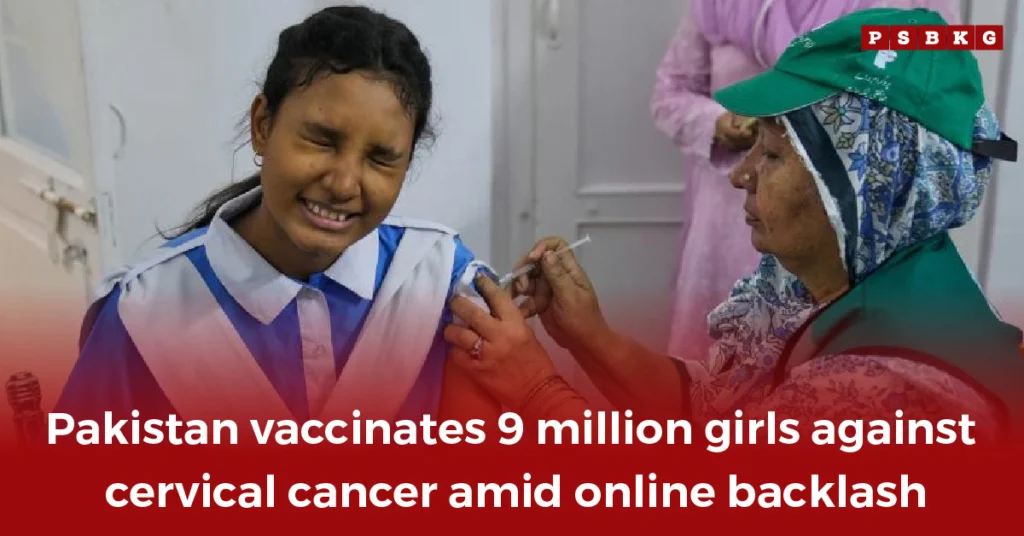
Latest News : Pakistan has rolled out one of its most ambitious health campaigns in years, vaccinating nine million school-aged girls against cervical cancer. The initiative is being hailed as a public health breakthrough, not just for the scale but also for the subject it tackles. Cervical cancer has long been a silent killer in many countries, including Pakistan, where late detection often leaves little chance for treatment. This mass vaccination effort brings a ray of hope. For millions of families, it signals that the government is ready to invest in women’s health in a serious way.
Why cervical cancer matters in Pakistan
Cervical cancer is caused by the human papillomavirus, commonly known as HPV. It spreads quietly, without symptoms at first, and by the time many women are diagnosed, it is often too late for effective treatment. In a country where regular health screening is limited and social barriers prevent open discussions on women’s health, the disease has claimed far too many lives. The vaccine, if given at the right age, can prevent infections before they even begin. Health experts stress that vaccinating girls between 9 and 15 years old is crucial. That is why schools became the center of this drive, with health workers coordinating closely with teachers to reach classrooms directly.
Rolling out the campaign
The Ministry of Health worked alongside NGOs, local hospitals, and international partners to make sure the campaign ran smoothly. From cold-chain transport to training frontline staff, every detail was planned to handle the sheer size of the program. Health workers visited schools, often addressing parents’ questions on the spot, before administering the vaccine. Many girls received their shots in familiar classroom settings, which helped reduce fear. Teachers played a vital role too, encouraging families to see the vaccine as a positive investment in their daughters’ futures.
Social media backlash and misinformation
But it hasn’t all been smooth. The campaign quickly became a topic of debate online. Rumors spread across social media claiming the HPV vaccine might cause infertility or other long-term problems. Some critics questioned why so much focus was being given to cervical cancer when the country still battles diseases like polio and dengue. Doctors and health officials were quick to respond. They emphasized that the HPV vaccine is used safely across the world, with millions of doses given over the years. Global health agencies, including the World Health Organization, have repeatedly confirmed its safety.
Officials also urged parents to ignore misinformation and instead focus on scientific evidence. The campaign, they reminded people, is voluntary but strongly recommended.
Global support and recognition
International organizations such as UNICEF and Gavi, the Vaccine Alliance, have backed the program with funding and technical expertise. The effort has also been recognized globally as a sign that Pakistan is beginning to prioritize women’s health more openly. Health experts say vaccinating nine million girls in one drive is a remarkable feat. Many developing countries still struggle to launch such large-scale prevention programs, but Pakistan has now set an example for the region.
What families are saying
On the ground, reactions have been mixed. Some parents expressed gratitude, calling the campaign a blessing. A mother in Lahore shared that she felt relieved knowing her daughter would have protection against a deadly disease. Others remained hesitant, influenced by online debates and cultural sensitivities. In rural areas, health workers often had to spend extra time convincing families. One health worker noted that community trust was key, and conversations with parents sometimes lasted longer than the vaccination process itself.
Beyond vaccines: a shift in priorities
This campaign is not only about preventing one disease. It also points to a broader shift in how Pakistan views women’s health. For decades, national health priorities have focused on polio, hepatitis, or child malnutrition. Issues like cervical cancer rarely made it to the top of the agenda. By launching this vaccination drive, the government has opened doors to bigger conversations. Topics such as reproductive health, early detection, and gender-focused healthcare are now slowly finding space in the public sphere.
Looking ahead
Officials have hinted that the HPV vaccine may become part of Pakistan’s routine immunization program. If that happens, future generations of girls could automatically receive protection as part of standard healthcare. Challenges remain, of course. Combating misinformation will be an ongoing battle. Building community trust will take time. But the first step has been taken, and it is a bold one. If the program continues at this scale, experts believe Pakistan could reduce cervical cancer cases significantly over the next few decades. More importantly, it would signal that women’s health is no longer a side note but a central part of public health policy.
Closing Thoughts
Vaccinating nine million girls is a milestone Pakistan can be proud of. The backlash online is a reminder of how difficult it can be to change public attitudes, yet the science is clear, and the benefits are undeniable. This campaign is about prevention, dignity, and hope for a healthier generation of women.