
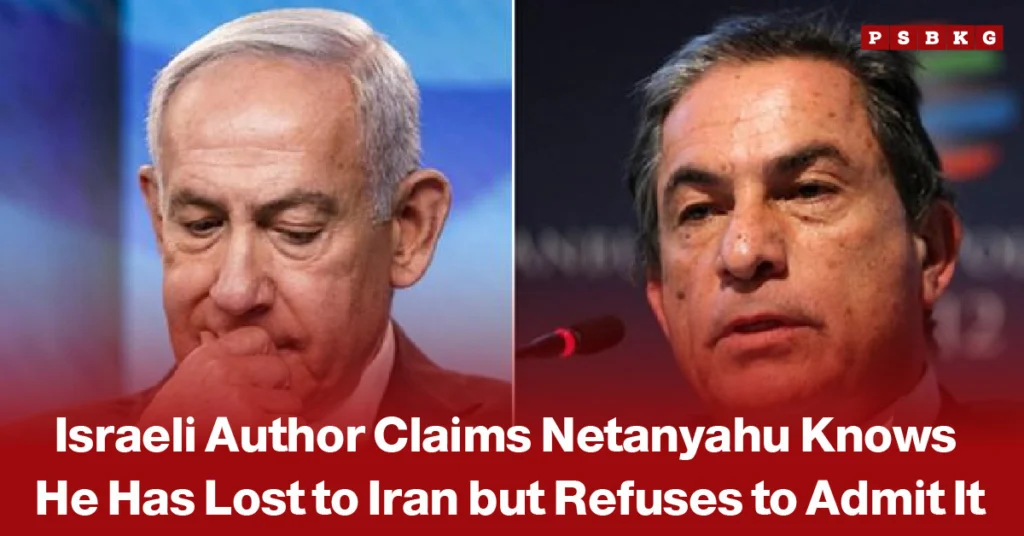
Latest News: An Israeli author has claimed that Prime Minister Benjamin Netanyahu privately understands that Israel has failed to achieve its key objectives against Iran but is unwilling to publicly acknowledge the outcome. The remarks have added to ongoing debate within Israel about the effectiveness of recent military actions and the broader direction of the conflict, with some commentators even framing the situation as Netanyahu Lost to Iran. Reports in recent weeks have also highlighted growing political and strategic disagreements surrounding Israel’s approach to Iran.
Criticism of Netanyahu’s Strategy
According to the author, Netanyahu is attempting to project an image of success despite mounting challenges. The criticism suggests that while Israeli leaders continue to emphasize military achievements, the broader strategic goals of weakening Iran and its regional influence remain difficult to achieve.
Debate Over the Outcome of the Conflict
The comments come amid an ongoing debate among analysts, politicians, and commentators regarding the outcome of the confrontation between Israel and Iran. While supporters of the government argue that Israeli operations have damaged Iranian capabilities, critics contend that Iran has remained resilient and continues to exert influence across the region.
Growing Pressure on Netanyahu
Prime Minister Netanyahu has faced increasing political pressure over security, foreign policy, and domestic issues. Recent reports indicate that differences have emerged between Israel and its allies regarding the handling of tensions with Iran, adding another layer of complexity to the situation.
Questions Over Long-Term Objectives
Analysts continue to question whether the goals outlined at the start of the conflict can be fully achieved. While military operations may have produced tactical results, critics argue that lasting political and strategic outcomes remain uncertain.
Political Implications Inside Israel
The author’s remarks have fueled discussion within Israeli political circles about leadership, accountability, and future policy decisions. Opposition figures and some commentators have called for a reassessment of current strategies, while government supporters maintain that continued pressure on Iran remains necessary.
Regional Impact Remains Significant
The conflict has affected regional security, diplomacy, and global markets. Neighboring countries and international organizations continue to monitor developments closely, urging restraint and renewed diplomatic engagement to prevent further escalation.
Differing Narratives Persist
Both Israel and Iran continue to present competing narratives regarding the conflict’s outcome. Each side has claimed success while criticizing the other’s actions, making it difficult to establish a universally accepted assessment of who gained the upper hand.
Conclusion
The claim by an Israeli author that Benjamin Netanyahu knows he has lost to Iran but refuses to admit it reflects the growing debate over the results of the conflict and Israel’s broader strategy. As political discussions continue and regional tensions remain high, questions about the long-term consequences of the confrontation are likely to remain a major topic of public and political debate.