
A day of high-level diplomacy
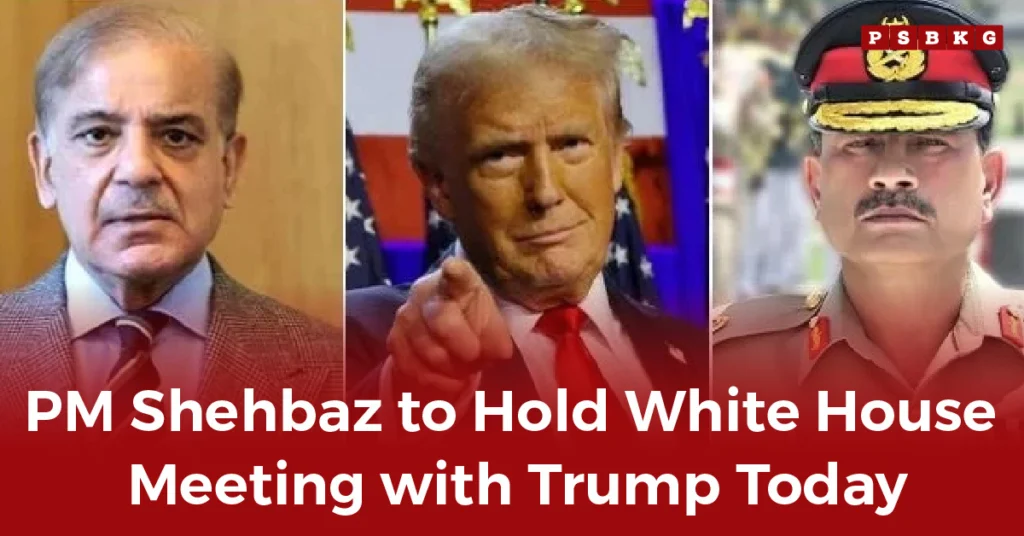
Latest News : Prime Minister Shehbaz Sharif is set to meet Donald Trump at the White House today, in what many observers are calling one of the most closely watched diplomatic encounters of the season. The announcement, confirmed by a U.S. official, has already sparked discussions in both Washington and Islamabad. For Pakistan, the Shehbaz Trump meeting comes at a sensitive time, with economic pressures at home and shifting alliances abroad. For Trump, it is another chance to engage with a Muslim-majority nation while signaling America’s approach to South Asia.
Why the meeting matters
Pakistan and the United States have shared a long and complicated history. From Cold War alliances to the war on terror, their relationship has been marked by both cooperation and friction. Now, as the global landscape continues to change, a Shehbaz Trump meeting at the White House carries both symbolic and practical weight. It shows that both sides are interested in keeping dialogue open, even if they disagree on many issues.
The agenda behind closed doors
While officials have kept details limited, several topics are expected to dominate the discussion. Trade and investment are likely to be high on the list, with Pakistan seeking greater access to U.S. markets. Security cooperation will also be crucial, particularly regarding Afghanistan and counterterrorism. Sources suggest that climate change and humanitarian issues, including flood recovery, could also be raised. And with tensions simmering in Gaza and Ukraine, Pakistan may push for a stronger role in promoting peace.
A boost for Shehbaz at home
For Shehbaz Sharif, the Shehbaz Trump meeting offers more than just foreign policy engagement. Back home, his government is facing economic struggles, inflation, and criticism over governance. Appearing on the global stage alongside the U.S. President gives him political leverage. Supporters argue it shows Pakistan is not isolated but still part of international conversations. For his critics, however, the risk is that he may appear too eager to please Washington, possibly at the cost of independence in policy decisions.
Trump’s Motivations
From Trump’s side, the decision to host Shehbaz Sharif also carries political meaning. Engaging with leaders from Muslim countries allows him to project a softer diplomatic side, even while maintaining a tough stance on security. Some analysts believe the timing may also have domestic political undertones, with Trump seeking to highlight his ability to shape international relations. A meeting with Pakistan’s Prime Minister signals to American voters that he remains active on global issues that affect U.S. security and trade.
Public Reaction and Expectations
In Pakistan, reactions have been mixed. Many welcome the opportunity to reset ties with Washington and to potentially attract investment or aid. Others worry about over-reliance on the U.S., pointing out that Pakistan also needs to maintain strong relations with China, Saudi Arabia, and regional partners. On social media, the debate around the Shehbaz Trump meeting has been lively, with some praising Shehbaz for securing the meeting and others questioning what Pakistan will actually gain from it.
Historical Backdrop
To understand today’s encounter, it helps to recall the past. Pakistan-U.S. relations have swung between warmth and hostility for decades. In times of mutual interest, such as during the Soviet war in Afghanistan or the early years of the war on terror, cooperation was close. But disagreements over drone strikes, aid conditions, and regional policy often created mistrust. Today’s meeting, while symbolic, is another chapter in that long story. Whether it marks a turning point or just another photo opportunity remains to be seen.
Regional Implications
Beyond the bilateral dimension, this meeting has regional significance. South Asia is a complicated neighborhood, with India, China, and Afghanistan shaping its politics. A closer U.S. relationship with Pakistan could alter dynamics in subtle ways. For instance, Pakistan’s efforts to mediate or influence outcomes in Afghanistan might get stronger backing. At the same time, India will be watching carefully, wary of any shifts in Washington’s position toward Islamabad. The Shehbaz Trump meeting highlights these regional sensitivities, signaling potential changes in diplomatic and strategic alignments.
Challenges Ahead
Even if the meeting goes smoothly, challenges remain. Pakistan’s economic crisis cannot be solved overnight, and its foreign policy requires balancing multiple powers at once. The U.S., for its part, is increasingly focused on competition with China and managing conflicts elsewhere. This means Pakistan may not always get the attention it wants. Still, having an open line of communication at the White House is valuable, and Shehbaz Sharif will likely use it to the fullest.
A moment in focus
For now, today’s Shehbaz Trump meeting is as much about symbolism as substance. It signals that Pakistan is still part of Washington’s radar and that Shehbaz Sharif is eager to position his country as a key player in international affairs. Whether the meeting leads to new agreements or not, it will be remembered as a moment when both nations chose dialogue over silence.