

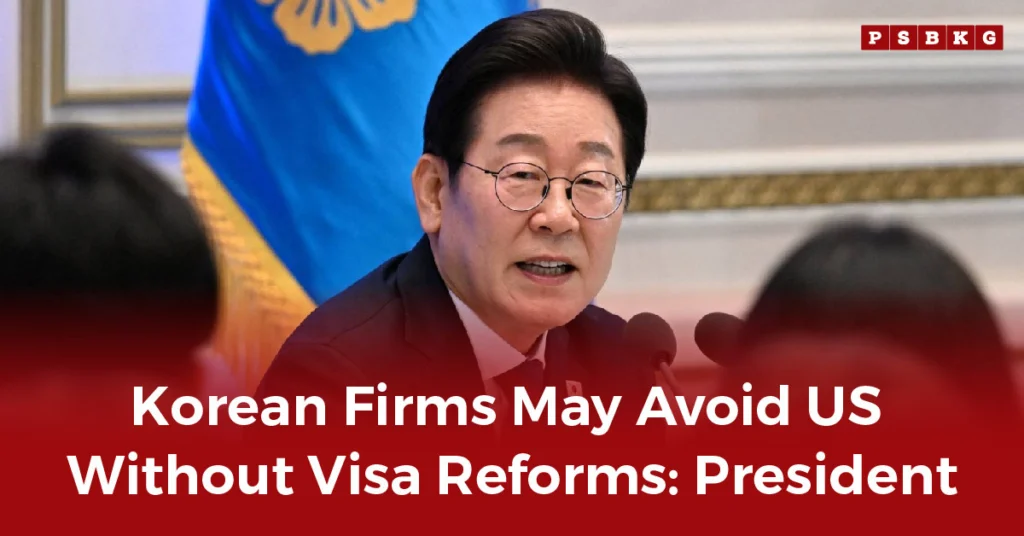
Korean Companies and the U.S.: A Growing Hesitation
Latest News: South Korean investment has become a key topic of discussion as South Korea’s President Lee Jae-myung recently raised concerns that are likely to resonate across boardrooms in Seoul and Washington. He pointed out that South Korean companies may hesitate to invest in the United States if the visa system for Korean workers doesn’t improve. It’s a delicate situation, because investment isn’t just about capital. It’s about people, expertise, and being able to send skilled workers where they’re needed.
The issue came into sharp focus following a September 4 immigration raid in Georgia. Over 300 Korean workers were arrested at a Hyundai battery factory under construction. They weren’t long-term employees, but technicians brought in for specific setup tasks. Now, after negotiations between the two countries, these workers are expected to return to South Korea on a chartered plane. The incident has highlighted a gap between the U.S.’s demand for investment and its visa policies.
Visa Challenges: A Bottleneck for Industrial Growth
President Lee stressed that the current U.S. visa system isn’t accommodating enough. Some workers had crossed the border illegally, while others had expired visas or were on visa waivers that prohibited work. For companies that rely on precise technical skills for manufacturing and setup, these restrictions can be crippling.
Investment Hesitation Isn’t Just About Money
Lee’s point was clear: hesitation isn’t financial, it’s practical. You can have all the funding in the world, but without the right workforce, factories can’t run, and projects stall. The U.S. doesn’t have enough technicians on-site, yet its visa rules prevent Korean experts from doing the work.
This mismatch could affect not just Hyundai or a single factory but the broader landscape of South Korean industrial investment in the U.S. Companies weigh risk heavily, and legal uncertainties about visas add a layer of complexity they’d rather avoid.
Calls for Policy Reform
The President urged improvements to the U.S. visa system for skilled Korean workers. Negotiations are underway, but Seoul has long been pressing Washington to create a visa pathway that matches its industrial ambitions. Meanwhile, the U.S. continues to encourage South Korea to expand investments, creating a tension between expectation and practicality.
Experts in both countries agree that a workable visa system is critical. Without it, investment could slow, plans could be delayed, and both sides might miss opportunities for industrial growth and collaboration.
A Broader Implication
This isn’t only about one factory or one workforce issue. It reflects the larger challenge of global investment in a world where borders and bureaucracies still matter. Skilled labor mobility is increasingly vital, yet policies haven’t caught up. For South Korea, it’s a question of protecting companies’ interests abroad. For the U.S., it’s about ensuring industries can get the expertise they need while maintaining immigration standards.