
What Is a Cloudburst?
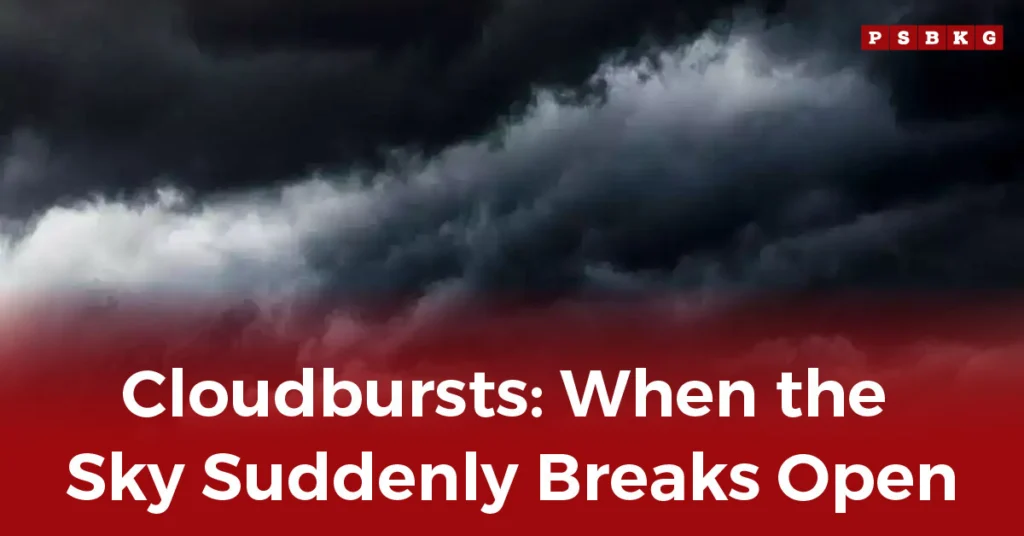
Latest News: A cloudburst isn’t your everyday rain. It doesn’t build up. It just hits. Sudden. Hard. It feels like the sky just tears open, all of it falling at once. Within an hour, streets and homes can be drowning. People barely get time to look up before the streets are already rivers.
What Exactly Happens During a Cloudburst?
Mostly in the mountains. The warm, damp air climbs. Above it, the air turns cold, almost biting. They meet, clouds swell, heavy, darker by the minute. They keep filling. More, and more. At some point, they can’t take it. And then, they burst. It isn’t a light drizzle, not even what we’d call a heavy rain. Just a crash. One second nothing, next second you can’t see through the rain. Thunder sometimes follows, but it’s the water that does the damage.
Why Are They So Dangerous?
Because a cloudburst doesn’t wait. No warning. A small stream can turn wild, breaking through fields and houses. Hillsides slip, roads vanish. Whole villages get trapped. By the time people notice, it’s already on them. No chance to move, no time at all. That’s what scares people most. It isn’t like the usual rain at all.
Climate Change, A Bigger Worry
The air is hotter now. Hotter air holds more water. So when clouds break, the rain is heavier than it used to be. Add in deforestation, blocked drains, unplanned houses on slopes, everything makes it worse. What used to be rare now shows up more often. And every time, the destruction is bigger.
What Can We Do
We can’t stop a cloudburst. Nothing can hold it back. But we can be ready. Keep the trees, they hold the hills together. Don’t block rivers with trash. Don’t build on soft slopes. Small choices, but they matter. And even a few minutes’ warning can save lives. The rain will still fall, fast and heavy, but maybe it won’t sweep everything away.