

August Sets a New Global Heat Record
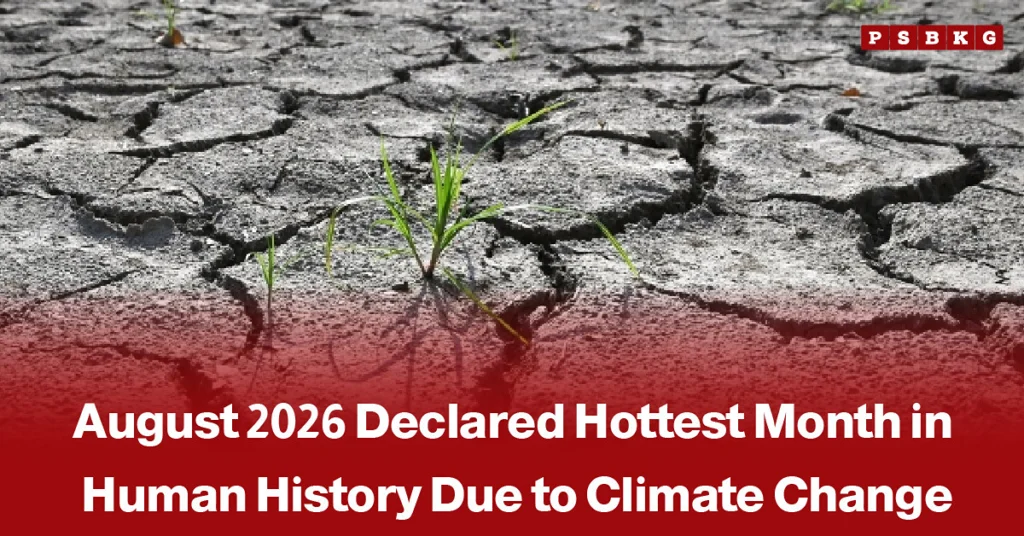
August 2026 has become the warmest August ever recorded globally and tied with July 2023 as the hottest month in recorded history. According to the European Union’s Copernicus Climate Change Service, the global average surface air temperature reached 16.96°C in August. This was 0.85°C above the 1991 to 2020 average for the month.
Temperature rose 1.65°C. Above Pre-Industrial Levels
The record heat becomes even more significant when compared with the pre-industrial period. August 2026 was 1.65°C above the estimated 1850 to 1900 average. It was the first month since November 2025 to rise above the 1.5°C level used as a key benchmark in discussions around the Paris climate targets. However, a single month above 1.5°C does not mean the Paris Agreement’s long-term temperature goal has officially been exceeded. That target is assessed over much longer periods.
Climate Change Remains the Main Driver
Scientists say the continuing rise in global temperatures is mainly linked to human-caused climate change. The burning of coal, oil, and gas releases greenhouse gases that trap heat in the atmosphere. This has steadily raised global temperatures and increased the likelihood of extreme heat events. The strong El Niño conditions developing in the Pacific also contributed to the unusually high temperatures in 2026.
Oceans Also Reached Record Heat
The record was not limited to land. Average sea surface temperatures across the extra-polar oceans reached 21.07°C in August, the highest August value recorded. It also matched the highest monthly value ever recorded across all calendar months. Scientists say unusually warm ocean temperatures can influence weather patterns and add energy to extreme climate events.
Western Europe Faces Extreme Heat
The record global temperature came after an exceptionally hot summer in several parts of the world. Western Europe experienced its warmest summer on record in 2026. Countries including France, Spain, Italy, Switzerland, and Austria recorded unusually high temperatures during the June to August period. Extreme heat was accompanied by drought, wildfires, and very low water levels in some major European rivers.
Extreme Weather Raises Concerns
The rising global temperature is also being linked to a growing risk of extreme weather. During the summer, different parts of the world experienced heatwaves, wildfires, droughts, floods, and other climate-related events. Scientists warn that continued warming can place greater pressure on agriculture, water supplies, ecosystems, and human health. These impacts can also create economic problems by damaging infrastructure and reducing agricultural production.
2026 Could Become Another Record Year
August’s record also adds to concerns about the temperature of the entire year. Copernicus data shows that January to August 2026 currently ranks as the second-warmest such period on record, behind 2024. Strong El Niño conditions are expected to develop further, which could keep global temperatures unusually high during the remaining months of the year. Scientists will continue monitoring temperatures to determine where 2026 eventually ranks among the warmest years ever recorded.
A Growing Warning for the Future
The record heat of August 2026 is another sign of how quickly the global climate is changing. While natural climate patterns such as El Niño can temporarily increase temperatures, the long-term warming trend is being driven mainly by human greenhouse gas emissions. Experts say reducing fossil fuel use and cutting greenhouse gas emissions remain essential to limit further warming and reduce the risks of increasingly frequent extreme weather events.