
Islamabad Could Get a New Governance Structure
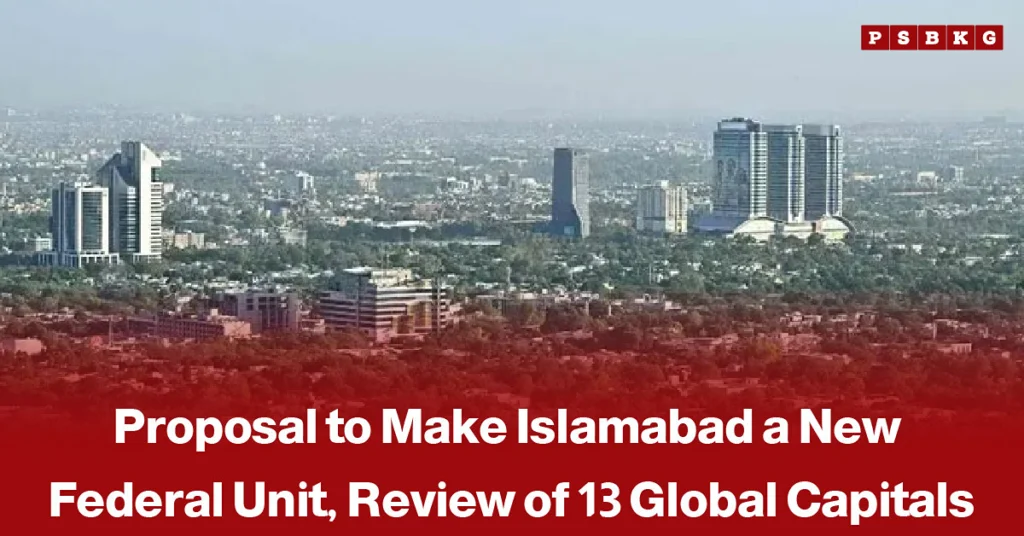
The federal government is considering a major change to the administrative structure of Islamabad, with a proposal to develop the capital as a separate federal unit with an elected local government structure. A high-level committee headed by Planning Minister Ahsan Iqbal has studied governance models from 13 major international capitals before preparing recommendations for the Islamabad Capital Territory. The objective is to create a system that gives residents greater political representation while keeping the capital’s strategic functions under federal oversight. The proposed model would move some administrative authority away from the existing bureaucratic structure and place greater responsibility in the hands of elected representatives.
13 Global Capitals Studied
The committee examined governance arrangements in Washington, Berlin, Singapore, Ottawa, Tokyo, Paris, Copenhagen, Stockholm, Canberra, Kuala Lumpur, Seoul, New Delhi, and Kathmandu. The review focused on how these capitals balance local representation with the authority of national governments. According to the report, successful capital cities generally share several characteristics, including administrative efficiency, transparency, citizen participation, and long-term urban planning.
Washington, DC, Model Considered
One of the models examined was Washington, D.C., which operates as a federal district rather than a U.S. state. Washington has an elected mayor and council, but the U.S. Congress retains significant authority over the district, including powers relating to its budget and local legislation. The model therefore provides local representation while maintaining a strong federal role. The committee appears to have considered this balance particularly relevant to Islamabad because the Pakistani capital also needs to perform national and diplomatic functions while providing effective municipal services to its residents.
Proposed Islamabad Assembly
Under the proposed structure, Islamabad could have a 27-member assembly. The plan envisages 21 directly elected members, with seven representatives coming from each of Islamabad’s three National Assembly constituencies. Five seats would reportedly be reserved for women, while one seat would be reserved for a religious minority representative. The assembly would then choose the head of the executive administration, who could be designated as either a chief minister or mayor. The proposed system would also replace the existing chief commissioner arrangement with a chief secretary-type position.
Federal Government Would Retain Key Powers
The proposal does not mean that the federal government would completely withdraw from Islamabad’s administration. According to the reported recommendations, sensitive areas such as law and order and master planning would remain under federal control. This would allow the capital to have greater local political representation while ensuring that matters directly connected with the country’s federal institutions, diplomatic missions, and strategic planning remain centrally supervised.
Why the Change Is Being Proposed
Supporters of the proposal argue that Islamabad’s residents contribute through various taxes but do not currently receive the same type of provincial representation or access to revenue-sharing mechanisms as residents of Pakistan’s provinces. PML-N’s Islamabad chapter has also backed the idea of giving the capital provincial or equivalent political status. Raja Khurram Shahzad Nawaz, who chairs the National Assembly’s parliamentary committee on interior affairs, said the demand for greater status and representation has existed among Islamabad residents for years. The proposed system could improve accountability, strengthen citizen participation, and make day-to-day administration more responsive.
Local Elections Could Also Be Affected
The proposed restructuring could have implications for Islamabad’s long-delayed local government elections. The Election Commission is already working on delimitation for the capital. Reports indicate that changes to the governance structure could require amendments to existing legislation and potentially affect the electoral process. Islamabad’s previous local government term ended in February 2021, and elections have faced repeated delays. The introduction of a new governance model could therefore add another layer of legal and administrative work before elections can take place.
A New Direction for Islamabad
The proposed federal-unit model has sparked significant debate over how authorities should govern Pakistan’s capital. Rather than treating Islamabad solely as an administrative territory managed through federal institutions, the proposal seeks to introduce a stronger elected structure while preserving federal control over the capital’s most important strategic functions. However, the proposal still requires the necessary legal and constitutional steps before it can become a permanent governance arrangement. For now, the recommendations remain part of the federal government’s broader effort to redesign Islamabad’s administrative system.