

Inquiry Exposes Serious Emergency Preparedness Failures
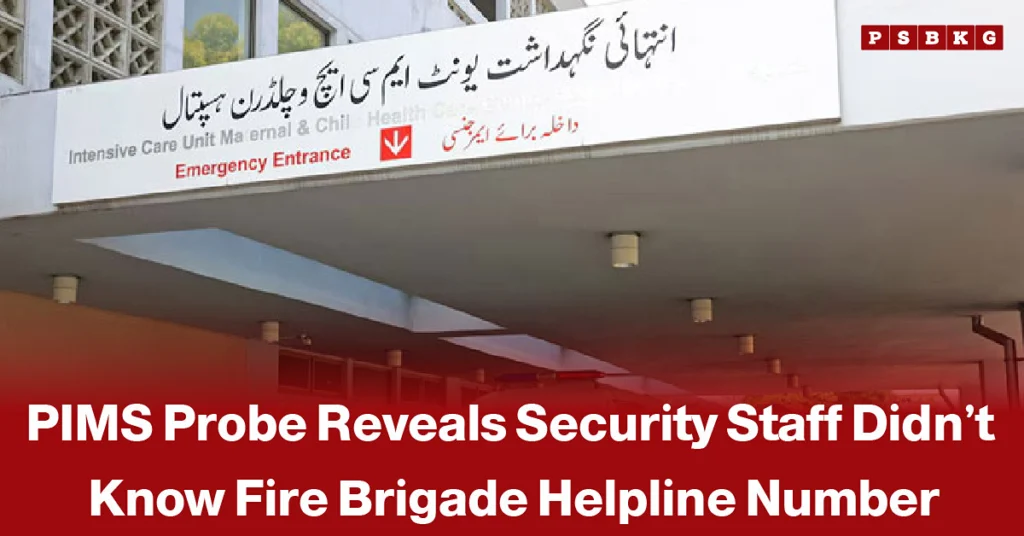
The investigation into the deadly fire at Pakistan Institute of Medical Sciences, PIMS, has revealed serious shortcomings in the hospital’s emergency preparedness, including a lack of awareness among security staff about how to contact emergency services. The inquiry examined the response to the fire that broke out in the hospital’s nursery, where 14 newborn babies lost their lives. Investigators found wider failures in emergency procedures, staff training and fire safety arrangements.
Delay in Calling Emergency Services
One of the major concerns raised during the investigation was the delay in contacting emergency responders. The interim inquiry found that emergency services were not called immediately after the fire began. CCTV footage and emergency records were examined to establish the exact sequence of events, while investigators also sought further records to determine whether an earlier call had been made.
Security Staff’s Role Under Scrutiny
The findings have placed the hospital’s security arrangements under serious scrutiny. In an emergency, security personnel are often among the first people expected to respond, raise an alarm and contact the relevant rescue services. The inquiry highlighted broader concerns about whether staff had been properly trained and whether clear emergency procedures were available and understood across the hospital.
Lack of Clear Emergency Procedures
Investigators found that PIMS lacked a detailed and properly rehearsed emergency response system for a fire inside a sensitive area such as a nursery. The inquiry raised questions about who was responsible for sounding the alarm, contacting emergency services, opening exits and coordinating the evacuation of critically ill newborns.
Nursery Had No Fire Alarm or Sprinkler System
The probe also identified major deficiencies in the nursery’s fire safety arrangements. According to the inquiry findings, the nursery did not have a fire alarm or sprinkler system. The hospital was also found to have inadequate emergency procedures and insufficient training for responding to a major fire.
Locked and Obstructed Escape Routes
Emergency exits and escape routes also came under attention during the investigation. The inquiry found serious concerns regarding some exits and escape routes, with firefighters reportedly having to deal with locked or obstructed doors while responding to the emergency.
Questions Over Training and Preparedness
The findings have raised an important question about whether hospital staff and security personnel were adequately prepared to handle a life-threatening emergency. Hospitals require clear procedures for fires and other emergencies, particularly in departments where patients are unable to evacuate without assistance. Regular drills and training can help ensure that every staff member knows their responsibilities when seconds matter.
Government Takes Action After Inquiry
Following the interim inquiry report, Prime Minister Shehbaz Sharif ordered the suspension of eight officials and directed that departmental and criminal proceedings be initiated against those found responsible for negligence. The government also ordered action against the company responsible for hospital security arrangements.
A Tragedy That Exposed Institutional Failures
The PIMS fire investigation has shown that the tragedy was not only about determining how the fire started. It has also raised serious questions about the hospital’s ability to respond once the emergency began. The reported lack of awareness about emergency contact procedures, combined with shortcomings in alarms, evacuation planning and staff training, has highlighted the urgent need for stronger fire safety systems in healthcare facilities.
Focus Turns to Preventing Another Tragedy
The findings are likely to increase pressure on hospitals across Pakistan to review their fire safety arrangements and emergency response procedures. For the families who lost their newborn children, the most important outcome will be a transparent investigation and meaningful action to ensure that similar failures are not repeated.