
Smoking Ban Announced Across Hospitals
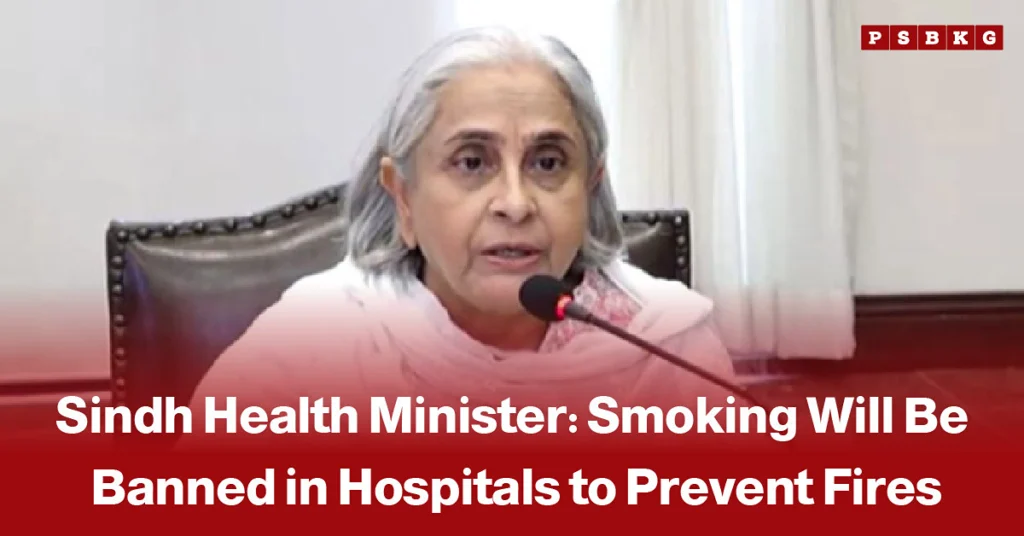
Sindh Health Minister Dr Azra Fazal Pechuho has announced a strict ban on smoking inside hospital premises across the province as part of wider measures aimed at improving patient safety. The announcement comes at a time when fire safety in healthcare facilities has come under renewed attention following the devastating PIMS nursery fire in Islamabad, where 14 newborn babies lost their lives.
Why Hospitals Need Extra Protection
Hospitals are different from ordinary public buildings. Patients may be unable to move quickly, while newborns, elderly people, and seriously ill patients often depend completely on medical staff during an emergency. A cigarette or other smoking material may appear to be a small risk, but inside a busy hospital, even a minor fire can become dangerous very quickly. Keeping smoking away from hospital premises is therefore also a basic safety measure.
PIMS Tragedy Raises Fresh Concerns
The decision comes shortly after the tragic fire at PIMS in Islamabad. The blaze broke out in the mother and child health ward and killed 14 newborn babies, according to hospital and government reports. Investigators are still examining the incident. Initial information from PIMS pointed to a spark followed by a rapid fire in an oxygen-rich nursery, while other reports have raised questions about emergency exits and fire safety arrangements.
Sindh Wants Safer Hospitals
The smoking ban is part of a broader push to improve healthcare facilities in Sindh. The provincial health department is also focusing on safety, infrastructure, and other improvements across hospitals. The idea is fairly straightforward: hospitals should be places where patients can feel protected, not buildings where avoidable fire risks are allowed to continue.
A Rule That Needs Enforcement
Simply announcing a ban is one thing; making sure it is followed is another. Hospital administrations will need to clearly communicate the rule to patients, visitors, doctors, nurses, support staff, and other employees. There will also need to be proper monitoring. If smoking continues inside hospital buildings despite the ban, the safety objective behind the decision could quickly lose its impact.
Staff and Visitors Both Matter
Smoking restrictions inside hospitals should not only apply to employees. Visitors and attendants can also create risks if they smoke in corridors, waiting areas, staircases, or other parts of a medical facility. Clear signs, designated enforcement teams, and penalties for violations could make the policy easier to implement.
Fire Prevention Cannot Stop Here
The smoking ban is useful, but hospital fire safety requires much more than preventing cigarettes. Electrical systems, generators, oxygen equipment, fire alarms, extinguishers, emergency exits, and evacuation plans all need regular inspection. The PIMS tragedy has shown how quickly a fire can become catastrophic when vulnerable patients are involved.
Lessons From Recent Tragedies
Recent hospital fire concerns have made safety a national issue. The loss of newborn lives at PIMS has led to demands for stronger inspections and better emergency arrangements in healthcare facilities. Sindh’s decision can therefore be seen as one preventive step, although experts and hospital administrations will need to address the wider safety picture as well.
A Small Rule With a Bigger Purpose
Banning smoking inside hospitals may seem like a simple administrative decision, but it carries a wider message. Medical facilities need to reduce every avoidable source of danger, particularly in areas where patients cannot protect themselves.
The success of the policy will ultimately depend on enforcement and whether it becomes part of a broader culture of fire prevention across Sindh’s hospitals.