
PIMS Nursery Incident Raises New Questions
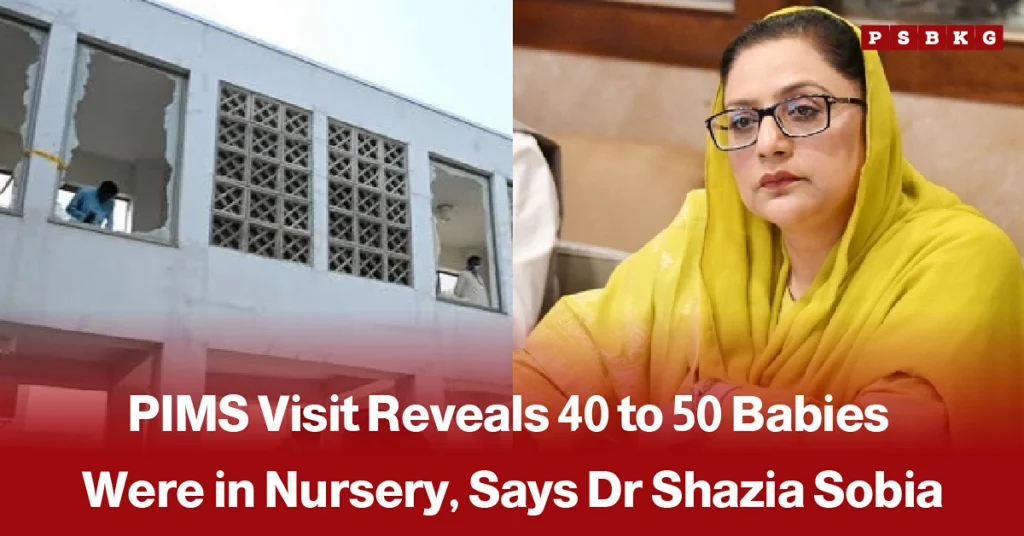
A recent visit to the Pakistan Institute of Medical Sciences, PIMS, has brought new details about the number of babies present in the hospital nursery at the time of the tragic incident. According to Dr. Shazia Sobia, around 40 to 50 babies were in the nursery. The figure has added another layer to concerns surrounding the incident and the safety arrangements available for newborns.
Dozens of Babies Were Inside
Dr. Shazia Sobia said the nursery was dealing with a large number of newborns when the incident occurred. Babies in such units usually require continuous monitoring, medical equipment, and close attention from healthcare staff. The presence of dozens of vulnerable infants makes any emergency particularly difficult. Unlike older patients, newborns cannot move or protect themselves, so hospital staff have to act immediately when a serious situation develops.
A Difficult Situation for Hospital Staff
Managing an emergency inside a nursery can be extremely challenging. Medical teams have to protect the babies while also dealing with equipment, limited movement, and the need to keep critically ill infants stable. The reported number of babies has therefore raised questions about whether emergency procedures were sufficient for such a sensitive area. It also highlights the importance of having clear evacuation arrangements in neonatal units.
Safety Arrangements Under Focus
The latest information is likely to increase attention on fire and emergency safety measures at PIMS. Hospitals need working alarms, accessible exits, emergency equipment, and staff who know exactly what to do during a crisis. For a nursery, these precautions become even more important. A delay during an emergency can have serious consequences when patients are newborns and medically dependent.
Families Waiting for Answers
For parents and relatives, the situation is understandably painful. Families place their trust in hospitals when their newborns require specialist care, expecting them to be protected in a controlled and safe environment. Any tragedy inside a nursery can therefore leave families with difficult questions. They want to know what happened, how staff responded, and whether the incident could have been prevented.
Investigation Could Provide Clarity
The reported details from the PIMS visit may become relevant as authorities examine the incident. Investigators can look at the number of babies present, staffing arrangements, emergency procedures, and the condition of safety equipment. A complete investigation should help establish what happened and whether any shortcomings contributed to the tragedy.
Importance of Emergency Planning
The incident also highlights a wider issue for hospitals across Pakistan. Emergency plans need to be practical, regularly tested, and understood by staff working in every department. In newborn units, this can include designated evacuation routes, backup power, fire detection systems, emergency equipment, and enough trained staff to move vulnerable patients safely.
A Reminder for Healthcare Facilities
The information shared by Dr. Shazia Sobia has brought attention to the scale of the situation inside the PIMS nursery. With 40 to 50 babies reportedly present, the need for strong safety arrangements becomes even clearer. Hospitals are places where people expect care and protection, especially for newborn children. Ensuring that emergency systems are ready should remain a basic priority.
What Happens Next
Further investigation and official findings will be important in establishing the complete picture. The reported number of babies is only one part of the story, and authorities will need to examine the incident from every relevant angle. For affected families, the hope is that the truth becomes clear and that any lessons from the tragedy lead to stronger safety measures in hospital nurseries across the country.