

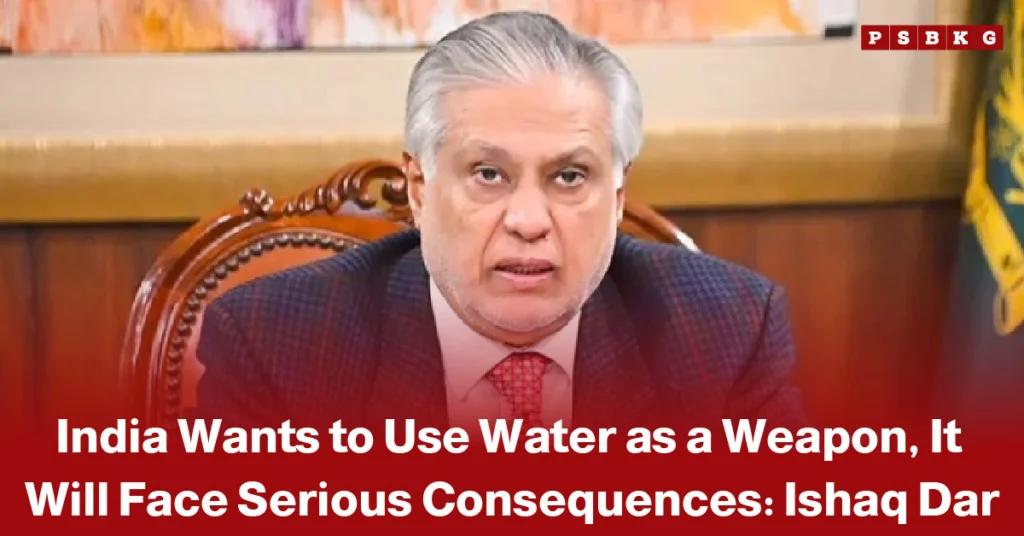
Pakistan’s Deputy Prime Minister and Foreign Minister Ishaq Dar has issued a strong warning to India, stating that any attempt to use water as a weapon against Pakistan would have serious consequences. His remarks come at a time when concerns over regional water resources and bilateral tensions continue to attract attention on both sides of the border. The statement has sparked fresh debate about water security in South Asia, with experts emphasizing the importance of cooperation and adherence to international agreements governing shared rivers.
Strong Response from Pakistan
Ishaq Dar made it clear that Pakistan considers water a vital national interest and would not accept any action that threatens its access to essential water resources. He stressed that water should never be used as a political tool or a means of exerting pressure on another country. According to Pakistani officials, any effort to disrupt water flows could affect millions of people who depend on these resources for agriculture, drinking water, and economic activities.
Why Water Matters So Much
Water plays a crucial role in Pakistan’s economy, particularly in the agricultural sector. Millions of farmers rely on river systems for irrigation, making consistent water supplies essential for food production and rural livelihoods. Any uncertainty regarding water availability can have wide-ranging consequences, impacting crops, industries, and communities across the country. This is why water-related issues are often treated as matters of national security.
Concerns Over Regional Stability
Analysts believe that disputes over shared water resources can increase tensions between neighboring countries if not managed carefully. Regional stability depends heavily on dialogue, cooperation, and mutual respect for existing agreements. Many experts argue that long-term solutions require collaboration rather than confrontation, especially as climate change and growing populations place additional pressure on water resources.
Importance of Existing Agreements
Pakistan has repeatedly emphasized the importance of honoring international agreements that govern water sharing between the two countries. These arrangements were designed to prevent conflicts and provide a framework for resolving disputes peacefully. Officials maintain that all concerns should be addressed through legal and diplomatic channels instead of unilateral actions that could undermine trust and regional cooperation.
Pakistan Calls for Dialogue
While issuing a strong warning, Pakistan has also continued to advocate for dialogue as the preferred way to address bilateral concerns. Government representatives believe that constructive engagement remains the most effective path toward resolving disputes and maintaining peace. Diplomatic efforts are seen as essential for ensuring that disagreements do not escalate and that both countries can manage shared resources responsibly.
Public Attention on Water Security
Ishaq Dar’s comments have drawn significant public attention, with many Pakistanis viewing water security as one of the country’s most important challenges. The issue has also highlighted the need for improved water management, conservation efforts, and infrastructure development within Pakistan. As discussions continue, water remains a topic that affects not only government policy but also the daily lives of millions of people.
Conclusion
Ishaq Dar’s warning reflects Pakistan’s firm stance on protecting its water rights and national interests. While concerns over water security remain a sensitive issue, Pakistan continues to support dialogue and peaceful solutions based on international agreements. As regional challenges evolve, cooperation and responsible resource management will remain essential for maintaining stability and preventing future disputes.