
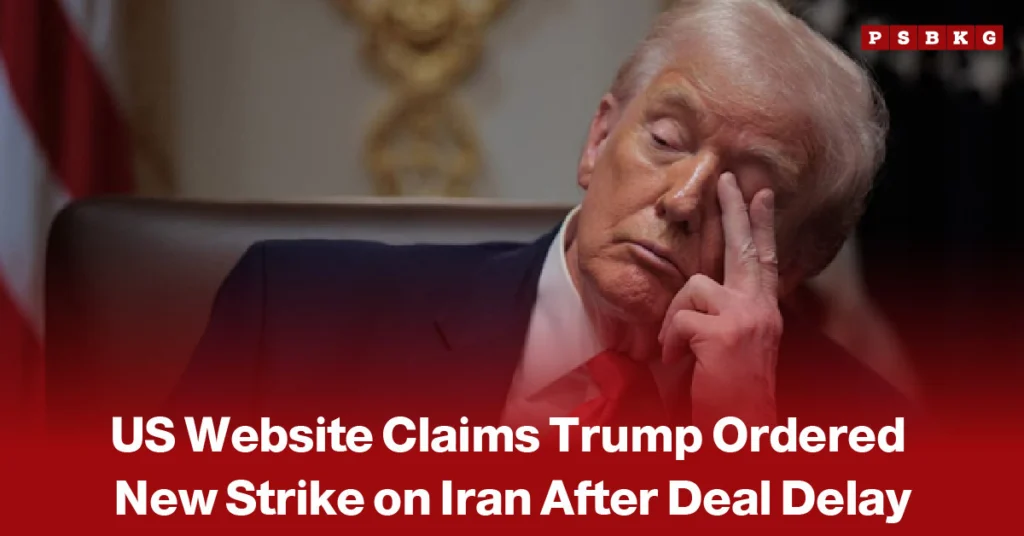
Latest News: Reports from a US-based news website claim that President Donald Trump Orders Iran Strike after frustration over delays in negotiations on a peace and nuclear deal. The reported move comes amid rising tensions between Washington and Tehran following recent military confrontations in the region.
Report Links Strike to Stalled Negotiations
Military Action Followed Recent Escalation
The reported strike came after the downing of a US Apache helicopter near the Strait of Hormuz, an incident that sharply increased tensions between the two countries. US military officials described subsequent attacks as defensive and proportional responses to Iranian actions. American forces reportedly targeted Iranian radar systems, air-defense infrastructure, and military control facilities during the operation.
Trump Warns Iran Over Delays
Trump publicly criticized Iran for taking too long to reach an agreement and warned that Tehran would “pay the price” for delaying negotiations. He also stated that the United States was prepared to take further action if diplomatic efforts continued to stall. The comments signaled a tougher US stance while maintaining pressure on Iran to accept terms proposed by Washington.
Diplomatic Efforts Continue
Despite the military escalation, diplomatic activity has not completely stopped. Mediators from regional countries, including Qatar, have continued efforts to revive talks and prevent a broader conflict. Reports indicate that discussions between US and Iranian representatives remain ongoing through indirect channels. Officials on both sides have expressed interest in avoiding a full-scale war, although significant disagreements remain over nuclear issues, sanctions relief, and regional security concerns.
Regional Tensions Remain High
The latest developments have raised concerns about stability in the Middle East. Iran has responded to previous US strikes with missile and drone attacks targeting American positions in the region, while both sides have exchanged warnings of further retaliation. Analysts warn that continued military exchanges could undermine ceasefire efforts and increase risks for global energy markets, particularly around the strategically important Strait of Hormuz.
International Attention Focuses on Peace Talks
The international community is closely monitoring the situation as governments and diplomatic organizations call for restraint. Observers believe that the future of US-Iran negotiations will play a major role in determining whether tensions ease or continue to escalate. Many experts argue that both sides face increasing pressure to find a diplomatic solution before the crisis expands further.
Conclusion
Reports claiming that Trump ordered a new strike on Iran after delays in a proposed agreement highlight the fragile state of US-Iran relations. While military actions and strong rhetoric have intensified tensions, diplomatic efforts remain active. The coming days are expected to be crucial in determining whether negotiations can be revived or whether the confrontation moves toward further escalation.