
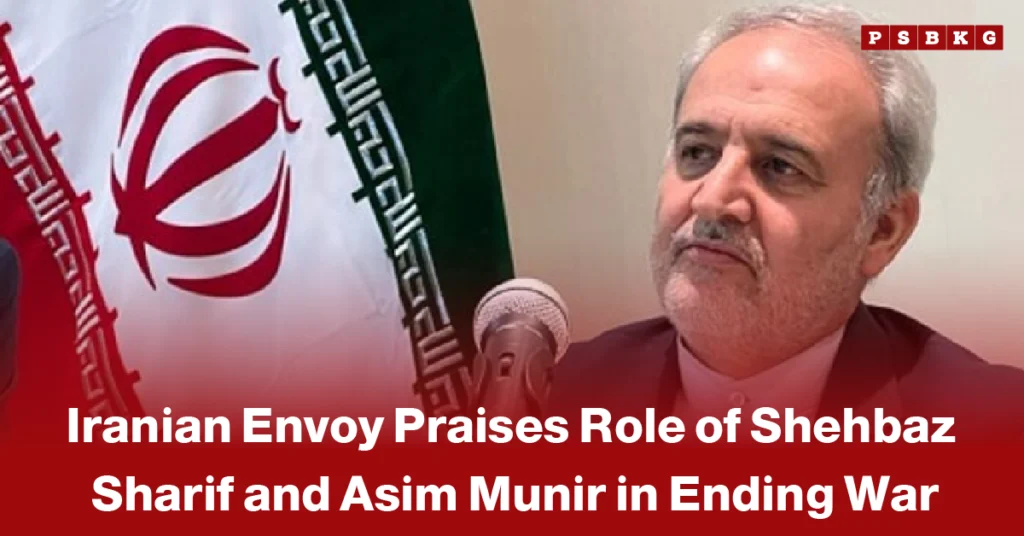
An Iranian envoy has appreciated Pakistan’s leadership for its role in helping reduce tensions during a recent regional conflict. The remarks highlighted the efforts made behind the scenes, suggesting that quiet diplomacy played a bigger role than many initially realized. It was a rare moment of public acknowledgment, and it caught attention quickly.
Credit to Civil and Military Leadership
The envoy specifically praised Prime Minister Shehbaz Sharif and Army Chief Asim Munir for their contribution. According to the statement, both leaders worked actively to support peace efforts. Their coordination, it seems, helped keep communication channels open at a critical time.
Diplomatic Efforts Behind the Scenes
While much of the focus was on public statements, a lot of the work happened quietly. Pakistan reportedly engaged with multiple stakeholders, encouraging restraint and dialogue. These efforts may not always be visible, but they often shape outcomes. In this case, they appear to have made a difference.
Regional Conflict and Its Impact
The conflict had raised concerns across the region, with fears of escalation affecting both security and economic stability. Countries were watching closely, and any move toward de-escalation was seen as important. Even small diplomatic steps can help prevent larger crises.
Recognition from Iran
The envoy’s remarks reflect a level of trust in Pakistan’s approach. Public praise in diplomatic circles is not always common, especially in sensitive situations. This acknowledgment suggests that Pakistan’s role was meaningful from Iran’s perspective.
Pakistan’s Mediation Approach
Pakistan has often positioned itself as a supporter of dialogue in regional conflicts. Rather than taking sides, it tends to encourage negotiations and peaceful solutions. This approach can sometimes create space for progress when direct talks become difficult.
Public and Political Reaction
Back home, the statement has been viewed positively by many observers. It adds to the perception that Pakistan played a constructive role during a tense period. At the same time, analysts note that such praise also comes with expectations for continued engagement.
What It Means Going Forward
The recognition may strengthen Pakistan’s position in future diplomatic efforts. It also highlights the importance of coordination between political and military leadership in foreign policy. Whether this momentum continues will depend on how regional dynamics evolve.
A Moment of Diplomatic Visibility
For now, the envoy’s statement has brought Pakistan’s role into clearer view. It shows how behind-the-scenes efforts can eventually come into the spotlight. In complex situations, even a small shift toward peace can matter.