
Govt Focus on Fuel Policy
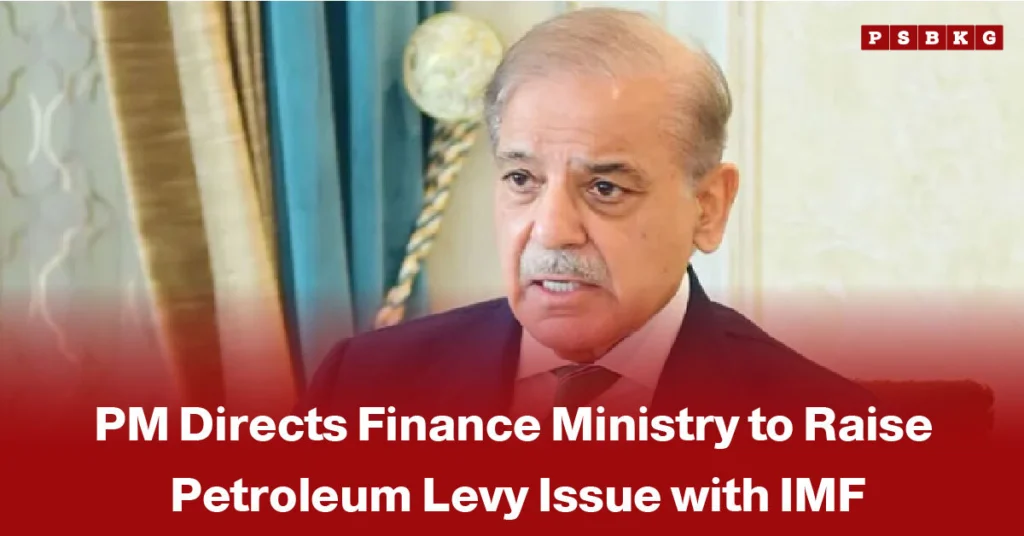
Latest News: The Prime Minister directed the finance ministry to address the Petroleum levy Pakistan issue with the International Monetary Fund. Fuel prices remain a sensitive topic, and people feel the pressure of rising costs. The government seeks flexibility while balancing commitments and public relief.
What Is Petroleum Levy
A Petroleum levy Pakistan is a tax imposed on fuel products. It directly affects the price people pay at petrol pumps. Governments use it to manage revenue, but higher levies increase the burden on consumers. This makes every discussion about it very important.
Why IMF Matters Here
Pakistan’s economic program includes agreements with the IMF. These agreements often cover taxes and subsidies, including the Petroleum levy Pakistan. Any changes require consultation with the IMF, so the finance ministry must raise the issue formally.
Pressure on Fuel Prices
Fuel prices directly affect daily life. Transportation, food, and basic goods all depend on fuel costs. Even small changes in the Petroleum levy Pakistan can ripple through the economy. Citizens are already adjusting their budgets, and the government cannot ignore this pressure for long.
Govt.’s Possible Approach
By raising the issue, the government may seek relief or adjustments in the Petroleum levy Pakistan. Officials could push to reduce or restructure the levy to ease the burden on the public while ensuring they meet fiscal commitments. The process requires careful negotiation.
Economic Challenges
Pakistan is already facing inflation and slow growth. Generating revenue is critical, but so is maintaining public stability. Adjusting the Petroleum levy Pakistan involves trade-offs: cutting it may reduce government income, while keeping it high can increase public frustration. Policymakers face this challenge regularly.
Public Reaction
People are watching closely. Any change in the Petroleum levy Pakistan directly affects households. Citizens hope the government will find a fair solution, but skepticism remains due to past experiences. Public trust depends on how these decisions are communicated and implemented.
What Comes Next
The finance ministry is expected to engage with the IMF soon. Discussions may take time and involve multiple factors. The outcome will determine future fuel pricing policies. For now, the situation remains under review.
A Sensitive Decision
This issue highlights how complex economic management can be. Every decision has trade-offs. The government must balance international commitments with local realities. Fuel pricing, in particular, is always a sensitive topic. The coming weeks will be important in shaping the next steps.