
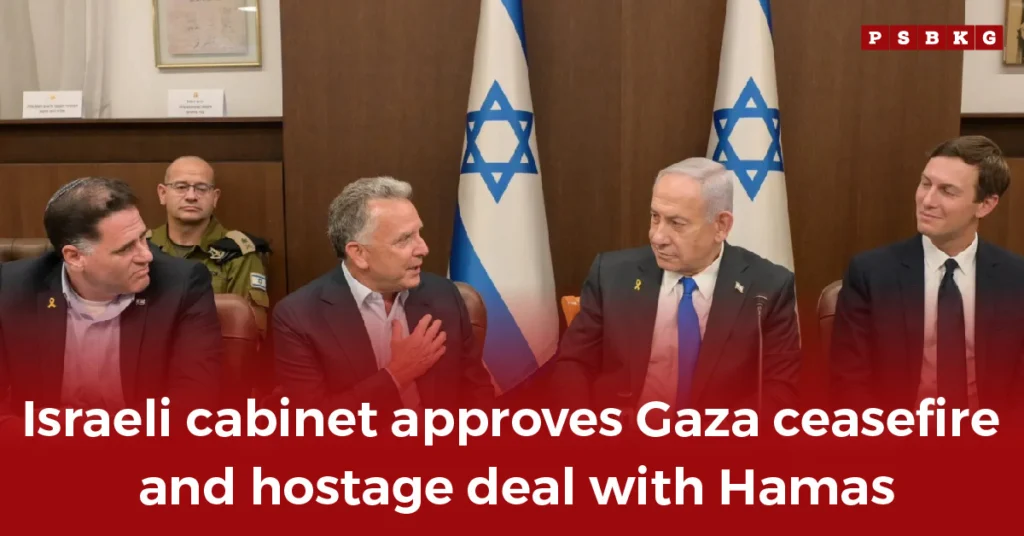
Israel Approves Gaza Ceasefire and Hostage Exchange Deal
Latest News : It finally happened. After months of negotiations, tense moments, and quiet diplomatic maneuvers, Israel’s cabinet gave its approval to a Gaza ceasefire deal approve and hostage exchange with Hamas. The decision came after a marathon night of debate, political wrangling, and moral arguments that stretched far beyond politics. For families of the hostages, it was a moment of relief mixed with cautious hope. The deal, reached after weeks of international pressure, marks one of the most significant steps toward ending the latest round of conflict in Gaza. It’s not peace yet, but for many, it’s the first breath after months of holding it.
A Decision Shaped by Pressure and Pain
Inside the cabinet room, the atmosphere was described as tense, emotional, and divided. Some ministers argued that agreeing to the Gaza ceasefire deal approve meant rewarding violence, while others insisted it was the only humane way forward. The faces around the table reflected a country torn between principle and compassion. Outside, families of hostages gathered in the streets, holding pictures of loved ones. Their message was simple: bring them home, whatever it takes. That emotional pressure, combined with international mediation led by Egypt, Qatar, and the United States, eventually tipped the balance in favor of approval. For Prime Minister Benjamin Netanyahu, it was a deeply complex call. On one hand, he faces hardliners who oppose any concession to Hamas. On the other, the public’s demand for action and closure grew impossible to ignore.
What the Deal Actually Includes
The Human Side of the Decision
Reactions Across the Region
International reactions came swiftly. Western leaders welcomed the move as a humanitarian breakthrough. Egypt and Qatar, who played central roles in mediating between Israel and Hamas, hailed it as proof that sustained diplomacy still works, even in the most divided corners of the Middle East. But not everyone is convinced. Some Israeli politicians fear Hamas will exploit the pause to regroup. Others in Gaza question whether Israel will truly stop strikes or if the ceasefire is just another pause before fighting resumes. In a region shaped by cycles of violence and fragile truces, skepticism is inevitable. Still, for the first time in months, there’s a sense of movement however tentative toward de-escalation.
A Small Step, But a Meaningful One
This deal doesn’t end the conflict. It doesn’t solve the political deadlock or heal decades of distrust. But it shows that even amid anger and exhaustion, negotiation is still possible. Analysts say it could become the foundation for broader talks if both sides uphold their commitments. That’s a big if, but in a place where hope has often been a luxury, even small steps matter. For now, the focus is on the coming days ensuring the hostages are released safely, aid reaches those in need, and that the ceasefire holds. The world will be watching closely.