
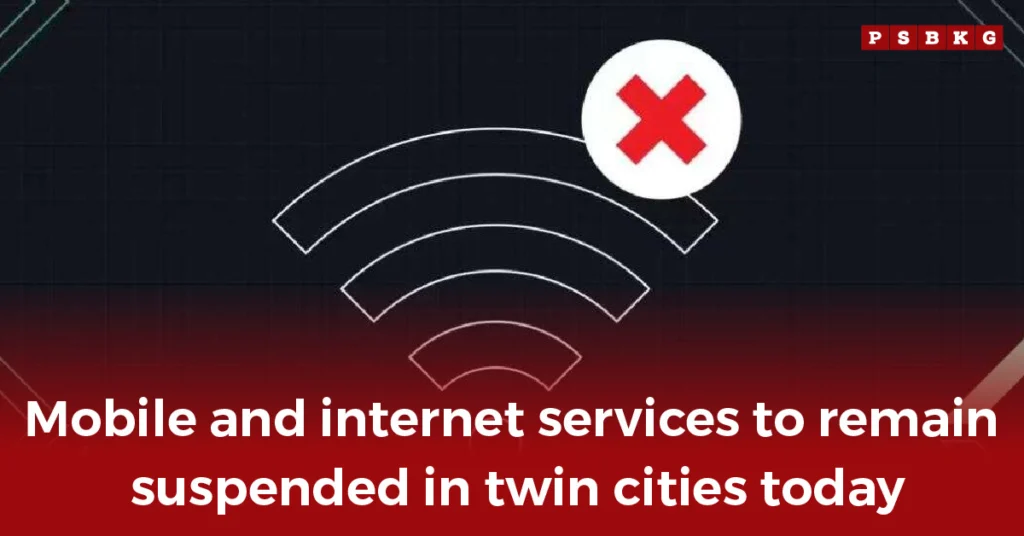
Mobile and internet services to remain suspended
Latest News: Today, residents of Islamabad and Rawalpindi wake up to another day without mobile and internet services. Authorities announced that the twin cities service suspension will continue until further notice, citing security concerns and ongoing law enforcement operations. While such decisions are not new in sensitive situations, they spark conversation and concern among citizens who rely heavily on digital connectivity for work, communication, and daily life. For many, the disruption is more than an inconvenience it interrupts their daily routines.
Why services are suspended
Officials say the twin cities service suspension is a precautionary measure to prevent misinformation and maintain public order. In recent weeks, the twin cities have seen heightened activity, including political rallies, security operations, and public gatherings that kept authorities on alert. Residents describe the communication blackout amid these developments. Police and security agencies say restricting mobile and internet access helps ensure situations on the ground do not escalate. Controlling information flow forms part of a broader strategy to safeguard lives and maintain stability, especially when credible threats or intelligence suggest possible unrest.
Impact on residents and businesses
For citizens, the twin cities service suspension means more than losing internet access. Students cannot attend online classes, businesses that rely on digital payments and communication face delays, and ordinary communication with friends or family is interrupted. Local vendors, freelancers, and small businesses feel the impact the most. Many operate through online platforms, and the suspension directly affects their earnings. Daily wage earners who coordinate work through mobile messages face additional challenges. ‘It’s difficult, especially for those who work online,’ said a resident of Islamabad. ‘But if it’s for security, we understand. Still, it makes things harder.’ Small business owners in Rawalpindi shared similar concerns, emphasizing that prolonged suspensions could have lasting economic effects.
A precaution, not a punishment
Authorities stress that the twin cities service suspension is a temporary measure. Officials say they will restore services as soon as the security situation stabilizes and public safety is no longer at risk. They also assure residents that they review the decision regularly to avoid unnecessary hardship. Security experts note that such restrictions are common in volatile situations. They explain that controlling mobile and internet connectivity, even temporarily, can reduce rumors, prevent coordination of unlawful activities, and give security forces the space they need to operate. Still, many citizens call for more transparency about the reasons and duration of the measure. Clear communication, they say, would help prevent panic and frustration.
Broader implications of service suspensions
The twin cities service suspension often sparks debates about balancing security and civil freedoms. Critics say it can limit access to information, hinder emergency communications, and affect trust between the public and authorities. Supporters argue that during heightened risk, temporary restrictions are necessary to ensure safety. They note that controlling communication in critical situations can prevent escalation and save lives. In the twin cities today, both perspectives are visible. Some residents accept it as a necessary step, while others see it as an inconvenience that disrupts daily life.
Looking ahead
Authorities have assured the public that they are closely monitoring the situation. Updates about the restoration of services are expected to be shared through official channels. Residents, meanwhile, are adapting. Businesses are finding alternate ways to communicate, families are relying on in-person contact, and students are seeking offline study options where possible. There is also a sense of patience many understand that safety comes first. But there is a shared hope that services will resume soon, and life will return to normal.
Why this matters
Mobile and internet access has become a lifeline for modern life, connecting people, enabling business, and supporting education. Any suspension, even temporary, has significant implications. Today’s suspension in Islamabad and Rawalpindi is more than a technical issue. It reflects the tensions and challenges in managing security while maintaining access to essential services. It’s a reminder of how interconnected our lives are with technology and how fragile that connection can be in times of crisis. The twin cities are now waiting watching for news, hoping for safety, and anticipating the return of connectivity that they rely on so much.