

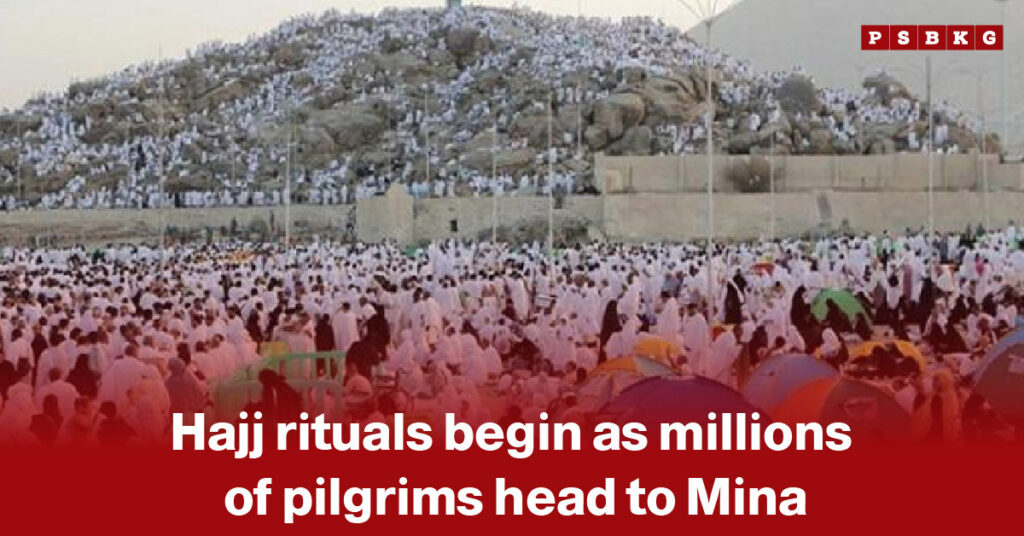
Hajj rituals begin as pilgrims head to Mina, where millions of Muslim pilgrims start the sacred annual pilgrimage. The journey to Mina marks the first major stage of Hajj, one of Islam’s most important religious obligations, and brings together worshippers from around the world in a powerful display of faith, unity, and devotion.
Pilgrims Arrive in Mina to Begin Hajj
Pilgrims started making their way to Mina, a vast tent city near the holy city of Makkah, to begin the first major stage of Hajj. Worshippers will spend time in prayer, reflection, and preparation before continuing with the remaining rituals. The gathering represents one of the largest annual religious events in the world.
Importance of Mina in Hajj Rituals
Mina holds great significance during Hajj and is often referred to as the “city of tents.” Pilgrims traditionally spend specific days there performing prayers and preparing spiritually for the next stages of the pilgrimage. The site contains thousands of air-conditioned tents designed to accommodate large numbers of worshippers.
Millions Gather From Around the World
Muslims from numerous countries travel to Saudi Arabia each year to perform Hajj, fulfilling one of the five pillars of Islam for those physically and financially able to undertake the journey. The pilgrimage symbolizes unity, equality, and devotion, with pilgrims dressed in simple attire regardless of nationality or social background.
Extensive Arrangements by Saudi Authorities
Saudi authorities have implemented extensive operational plans to manage crowds, transportation, healthcare, and safety measures during the pilgrimage season. Special arrangements include medical services, transport coordination, security monitoring, and technology-based systems to facilitate smoother movement of pilgrims.
Focus on Safety and Crowd Management
Managing millions of people during Hajj requires large-scale planning and coordination. Officials continue to focus on crowd control, emergency response readiness, and public health measures to ensure safe completion of the rituals. Authorities regularly issue guidance to pilgrims regarding movement schedules and safety procedures.
Spiritual Significance of the Pilgrimage
Hajj is regarded as one of the most spiritually significant acts in Islam. For pilgrims, the journey represents worship, repentance, sacrifice, and a deep sense of religious connection. Many believers spend years preparing for the opportunity to perform the pilgrimage.
Rituals to Continue in Coming Days
Following their stay in Mina, pilgrims will continue to key Hajj rituals, including standing at Arafat, spending time in Muzdalifah, and performing symbolic acts linked to the traditions of Prophet Ibrahim (AS). The pilgrimage will continue over several days according to the Islamic calendar.
Conclusion
As Hajj rituals begin and pilgrims head to Mina, millions of Muslims gather for the world’s largest annual Islamic pilgrimage. This sacred journey highlights the enduring values of faith, unity, and devotion, bringing together worshippers from across the globe in a powerful display of spiritual commitment and brotherhood.
Saudi Arabia: 1.5 million pilgrims join Hajj despite war concerns