

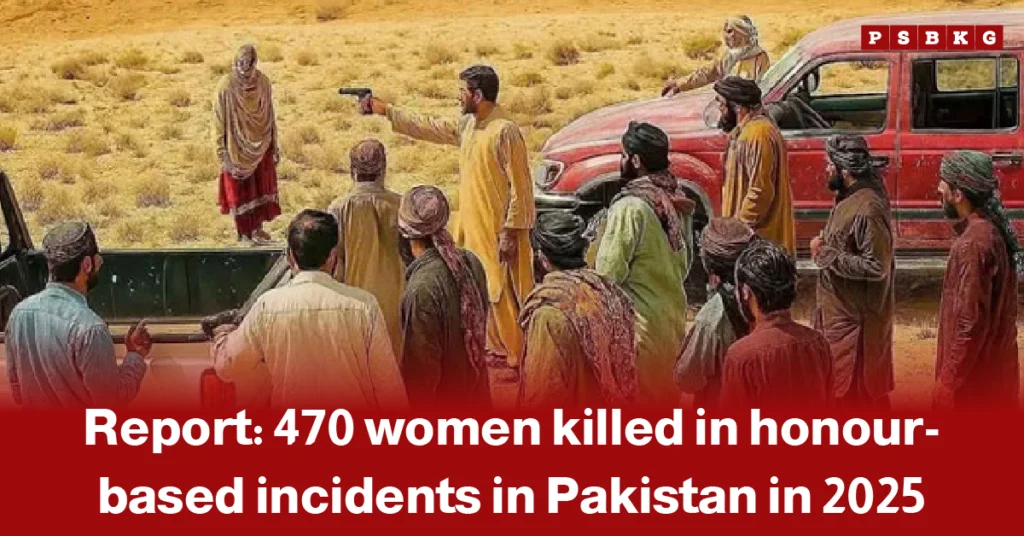
Latest News: A recent report has raised serious concern by claiming that around 470 women were killed in honor-based incidents in Pakistan during 2025, as highlighted in the honour killing Pakistan 2025 report. The figure underscores the continued challenge of gender-based violence in parts of the country, despite legal reforms and awareness campaigns aimed at curbing such crimes.
What the Report Indicates
Understanding Honour-Based Violence
Underreporting Remains a Major Issue
Experts caution that official numbers may not reflect the full reality. Many cases go unreported, misclassified, or are settled privately within families, making it difficult to determine exact figures. This means the actual number of victims could be higher than reported estimates.
Legal Framework and Challenges
Pakistan introduced stricter laws in 2016 to address honor killings, making them punishable even if family members forgive the offender. However, enforcement remains inconsistent, and conviction rates are still very low in many cases.
Continuing Human Rights Concerns
Human rights groups continue to describe honor killings as a serious ongoing crisis in Pakistan. While awareness has increased and public condemnation is stronger than before, activists argue that practical implementation of laws remains a major challenge.
Broader Gender-Based Violence Context
The issue exists within a wider pattern of gender-based violence, including domestic abuse and forced marriages. Reports show that such violence affects a significant number of women across the country, highlighting systemic social and legal gaps.
Calls for Stronger Action
Activists are calling for better enforcement of laws, faster legal proceedings, and stronger protection systems for at-risk women. They argue that without consistent implementation, legal reforms alone are not enough to stop such incidents.
Conclusion
The reported figure of 470 cases in 2025 once again puts a spotlight on a deeply sensitive issue in Pakistan. While legal progress has been made, experts stress that real change depends on both stronger enforcement and long-term social awareness.