
IMF Conditions Raise Concerns
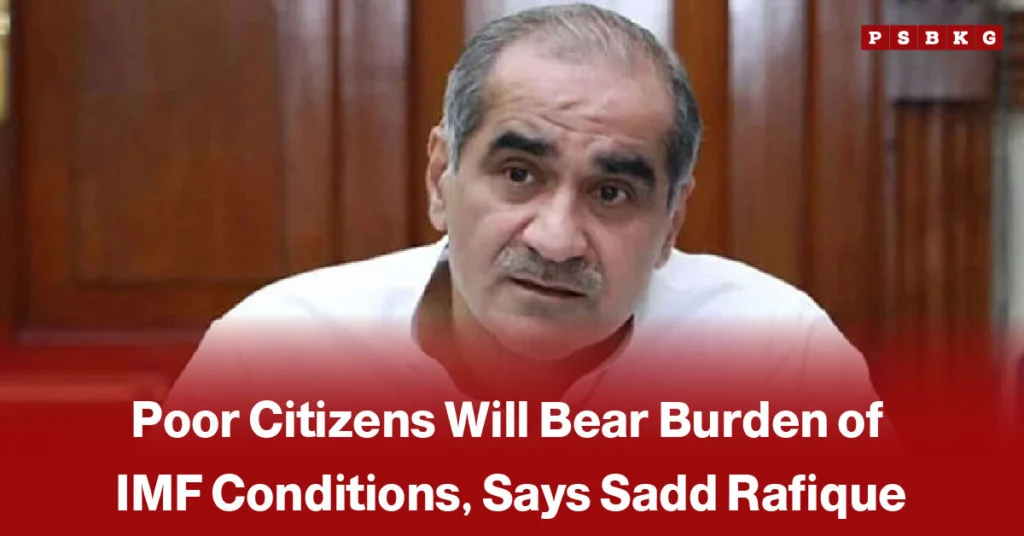
Latest News : Sadd Rafique has voiced strong concerns over Pakistan’s economic situation. He warned that poor citizens are likely to bear the brunt of IMF-imposed conditions. According to him, these agreements may lead to higher prices and reduced subsidies. The statement comes amid ongoing talks between Pakistan and international lenders.
What Sadd Rafique Said
Rafique emphasized that policy decisions under IMF agreements often affect everyday people first. Electricity, fuel, and essential commodities may become more expensive. He cautioned that while the government negotiates loans and relief, citizens on low incomes may face tough times. The message was clear: financial pressure will not be evenly distributed.
IMF Agreements and Public Impact
IMF conditions typically include measures to stabilize the economy. These can mean reducing subsidies, increasing taxes, or adjusting energy prices. While these steps aim to improve fiscal health, the immediate effect on ordinary households can be harsh. Analysts often warn that the poor feel the impact the most.
Rising Cost of Living
Citizens may see daily life become more expensive. Food prices, transport costs, and utility bills could rise quickly. Even small price hikes affect families who already spend most of their income on essentials. Many people worry about how they will manage in the coming months.
Government Response
Officials maintain that IMF agreements are necessary to secure financial aid and keep the economy afloat. They argue that the measures are temporary and aimed at long-term stability. Critics, however, argue that the government is shifting the burden unfairly onto ordinary citizens instead of distributing it across the economy.
Political Reactions
The Bigger Picture
Pakistan’s reliance on external loans highlights economic vulnerabilities. Decisions made at the international level can have immediate consequences locally. Experts suggest that careful planning and targeted support for low-income families are essential. Without it, social tensions may rise alongside economic strain.
What Comes Next
For now, citizens are waiting for detailed announcements on subsidies, fuel, and electricity rates. Negotiations with the IMF continue, and future policy decisions will determine how hard ordinary people are affected. Meanwhile, voices like Sadd Rafique’s remind the government to consider the human cost of economic reforms.