
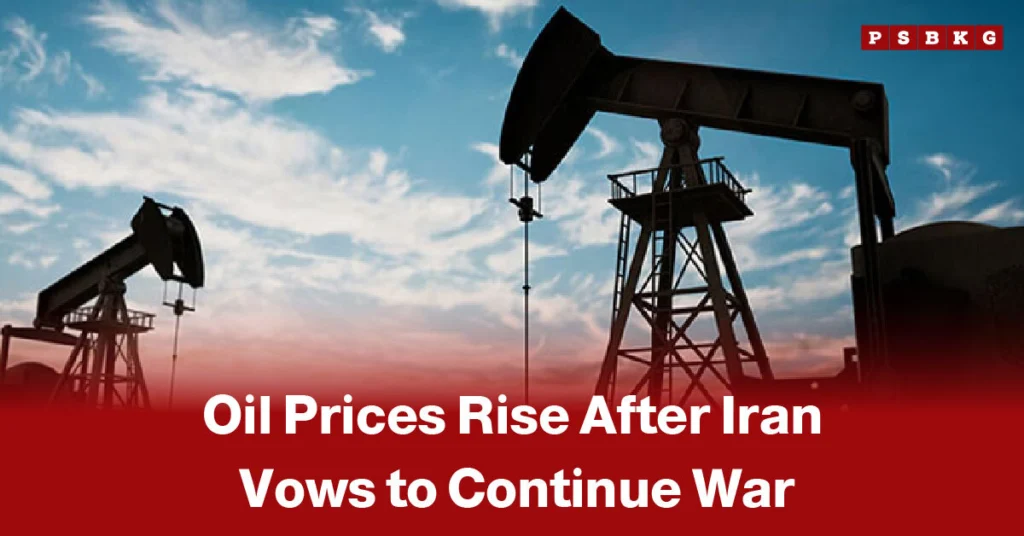
Oil Prices Climb Again
Latest News: Global oil prices are rising once more, and the reason is hard to ignore. The Oil prices Iran war situation has become a major concern as Iran has made it clear that the conflict will continue on its own terms. Markets reacted almost immediately. Traders don’t wait for outcomes; they respond to signals. And this signal was strong. The uncertainty alone is enough to push prices upward.
Iran’s Strong Message
Iran’s leadership has taken a firm stance. Officials say the war will not end under outside pressure. Instead, they insist it will conclude only when their objectives are met. The Oil prices Iran war crisis is now sending shockwaves through global markets. This kind of messaging often shakes investor confidence and suggests the conflict could last longer than expected. And that uncertainty feeds directly into oil prices.
Why Oil Reacts So Fast
Oil markets are extremely sensitive to geopolitical tensions. The Oil prices Iran war crisis has once again highlighted how closely global energy markets respond to conflict. The Middle East plays a key role in global energy supply. Any disruption, or even the risk of it, can push prices higher. Investors begin to factor in delays, shortages, and shipping risks. It’s not always about what has happened; sometimes it’s about what might happen next.
Strait of Hormuz Concerns
One major concern in the Oil prices Iran war crisis is the Strait of Hormuz. It’s a narrow passage through which a large portion of the world’s oil flows. Any threat to this route can send shockwaves through the market. Reports suggest shipping activity has already been affected. Even partial disruptions can tighten supply quickly.
Numbers Tell the Story
Oil prices Iran war concerns have already pushed crude above the $100 mark, and prices continue to fluctuate sharply. In some cases, prices jumped by around 5% in a single day as tensions escalated. Analysts say this volatility reflects fear more than actual shortage, at least for now. But fear itself can drive markets just as strongly.
Impact on Everyday Life
For ordinary people, the Oil prices Iran war crisis means higher fuel costs and broader economic pressure. Transport becomes expensive, and that affects food and goods. In countries like Pakistan, the impact can be immediate. Households may need to adjust spending, and inflation pressures could increase further. It’s a chain reaction that starts with oil but spreads widely.
Global Economic Pressure
Beyond households, the Oil prices Iran war crisis is putting pressure on entire economies. Industries that depend on fuel face higher costs. Airlines, shipping companies, and manufacturers all get affected. Stock markets also react to rising energy prices. Experts warn that prolonged instability could slow global growth.
What Could Happen Next
Everything now depends on how the Oil prices Iran war situation unfolds. If tensions ease, prices may stabilize. But if the situation escalates, further spikes are likely. Some analysts even warn of extreme scenarios if supply routes are heavily disrupted. For now, the market remains on edge, watching every development closely.
A Market Driven by Uncertainty
In the end, this isn’t just about oil. It’s about uncertainty, risk, and global stability. Iran’s stance has added another layer to an already complex situation. Prices are reacting not just to reality, but to possibility. And until there is clarity, volatility is likely to continue.