
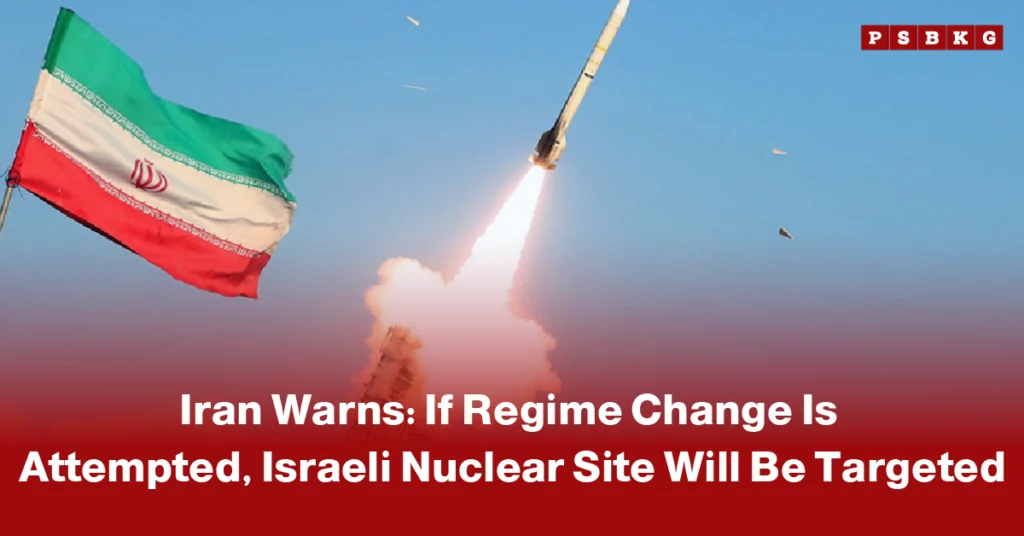
Latest News: Senior Iranian military officials have issued a strong warning that Tehran could target Israel’s Dimona nuclear site if the United States and Israel pursue a regime‑change strategy against Iran’s government, highlighting the Iran warns Israeli nuclear target. The semi‑official ISNA news agency reported the warning, quoting an Iranian military spokesperson outlining possible retaliation scenarios. This striking condition reflects rising tensions after recent military exchanges in the region and sharp criticism of foreign involvement in Iran’s internal politics.
What the Warning Says
According to the Iranian official, if Washington and Jerusalem move forward “in practice” with plans to change Iran’s regime, Iran’s effective missile systems would be directed at the Dimona facility in Israel’s Negev desert. Dimona is widely understood to be central to Israel’s undeclared nuclear infrastructure, making it a symbolically and strategically sensitive target. The official added that other energy infrastructure in the region could also be targeted in such a scenario.
Why This Matters
Targeting a nuclear site even in rhetoric raises alarms because such facilities are typically among the most heavily defended and politically sensitive in a country. Israel has never officially acknowledged possessing nuclear weapons but is widely believed by analysts to have the capability. The warning underscores how far rhetoric has escalated amid ongoing hostilities in the Middle East and growing concerns over external interference in Iran’s political future. Observers say tensions continue to rise, with both regional and international actors closely monitoring developments. Analysts warn that further escalation could have serious consequences for stability in the region.
Iran’s Concerns About Regime Change
Regional Tensions Still High
The wider context includes escalating conflict between U.S.‑led forces and Iranian military infrastructure, with strikes reported on multiple fronts. Tehran has already fired missiles and drones in retaliation, and regional countries are on alert for further flare‑ups. Analysts warn that such public warnings increase the risk of miscalculation or unintended escalation in a conflict that already shows few signs of cooling.
International Reaction
World leaders and diplomatic sources are watching the situation carefully. Many nations emphasize the importance of avoiding actions that could spiral into broader conflict. Calls for restraint and diplomatic engagement have come from multiple capitals, even as global powers maintain differing positions on military strategy and regional security. The possibility of threats to nuclear sites adds a serious dimension to these discussions.
Security and Defence Considerations
Experts say that targeting nuclear or energy infrastructure could have devastating consequences, both environmentally and geopolitically. Nuclear sites require layers of safety and security precisely because of the risks involved. Attacks on such locations, even threats, could stoke public fear and prompt defensive or preemptive strategies from the targeted state. The region’s militaries are likely studying potential scenarios closely.
Political Messaging at Home
Within Iran, the warning also serves a domestic political purpose. Officials use strong rhetoric to signal resolve to their own population. In times of external pressure, such public statements are often aimed at solidifying internal support and presenting a unified front. National media reiterate the message of resistance against foreign interference.
Looking Ahead
For now, the warning remains just that a warning. There is no confirmation of any planned attack on the Dimona site. But analysts say such rhetoric increases volatility in an already tense environment. Diplomatic channels may be testing ways to ease tensions, yet military and strategic postures appear firmly in place. The coming days will be crucial in seeing whether words escalate or give way to negotiation.