

An Unusual Discovery from Waste
Latest News: What if the oil left behind after frying food could turn into something strong enough to tow a car? It sounds unlikely, but scientists have made it happen. Researchers developed a powerful Used cooking oil glue, transforming everyday waste into a high-strength industrial material. The idea began as an effort to reduce waste, but it produced surprising results.
How the Glue Was Developed
The process begins with collecting used cooking oil, which people usually discard or recycle poorly. Scientists chemically modify the oil to create polymers, the building blocks of strong adhesives. By carefully heating and bonding the oil, they turn it into a thick, durable Used cooking oil glue. Lab tests showed that the final product exhibits remarkable strength.
Strength That Shocked Researchers
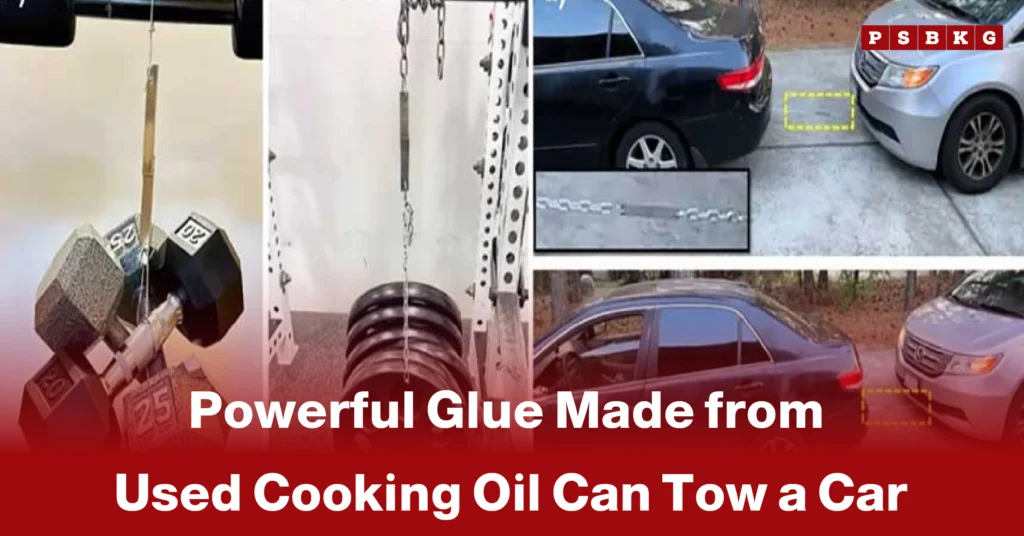
During experiments, the Used cooking oil glue held and pulled heavy objects. In one controlled test, it proved strong enough to tow a car without breaking its bond. Researchers said the results exceeded expectations. The glue maintained its grip even under intense pressure, showing that sustainable materials can match traditional industrial products.
Why This Breakthrough Matters
Used cooking oil is a major environmental problem. Large quantities are thrown away every day, often clogging drainage systems or polluting water. Turning this waste into Used cooking oil glue offers a practical solution. This innovation reduces environmental damage while creating a high-value material, making it a win for both industry and sustainability.
Potential Industrial Uses
Industries can use the used cooking oil glue in construction, automotive manufacturing, packaging, and furniture production. Its eco-friendly origin makes it especially appealing to industries seeking greener alternatives. Unlike some chemical adhesives, this glue has the potential to be less toxic and more biodegradable, depending on further refinement.
Cost and Accessibility Advantages
One of the most promising aspects of Used cooking oil glue is cost. Used cooking oil is cheap and widely available. Converting waste into adhesive could significantly lower production costs compared to petroleum-based glues. This also opens opportunities for developing countries to produce advanced materials locally using readily available resources.
Environmental Impact and Sustainability
Environmental experts say used cooking oil glue supports circular economy principles. Waste is reused instead of discarded, reducing landfill pressure and pollution. If scaled properly, this technology could significantly cut down on harmful waste oils entering sewage systems. It also reduces reliance on fossil fuel-based raw materials.
Challenges Still Ahead
Despite its success, used cooking oil glue is still in the research phase. Scientists need to test its long-term durability, temperature resistance, and performance under different conditions. Large-scale production methods also need refinement. Regulatory approvals and safety testing will be required before it can enter commercial markets.
Public and Scientific Reaction
The discovery has drawn attention from both environmentalists and engineers. Many see it as proof that innovation can come from unexpected places. Social media reactions have ranged from curiosity to excitement, with people amazed that something as ordinary as used cooking oil could become so powerful.
What This Means for the Future
This breakthrough highlights the growing potential of sustainable science. As industries look for greener alternatives, materials like this glue could redefine manufacturing standards. It also encourages further research into converting waste into valuable products, pushing innovation toward a cleaner future.
Conclusion
A glue made from used cooking oil strong enough to tow a car sounds like science fiction, but it is now a scientific reality. This discovery proves that waste can be transformed into powerful, practical solutions. With further development, this eco-friendly adhesive could change industries, reduce pollution, and reshape how we view everyday waste.