

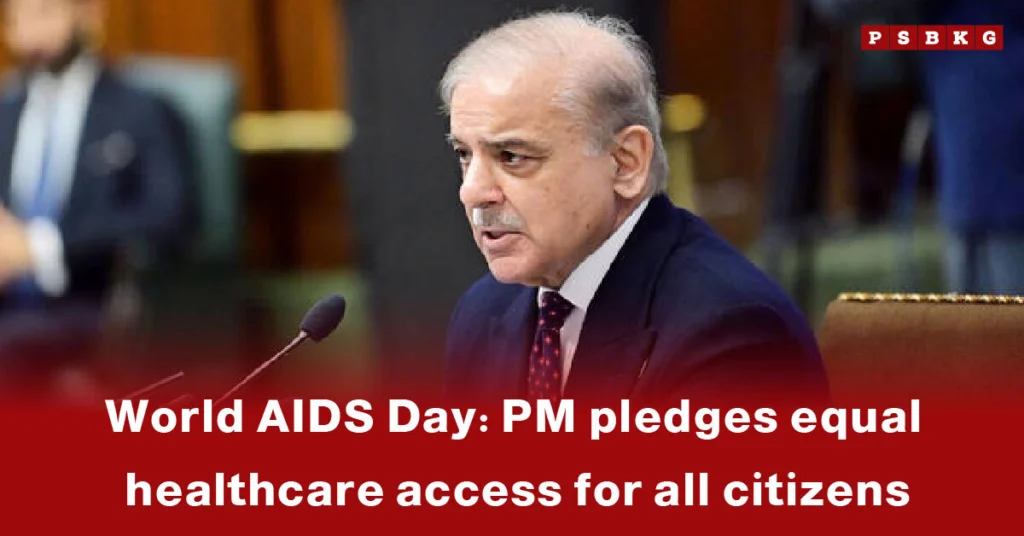
A Renewed Commitment on World AIDS Day
Latest News : On World AIDS Day, the Prime Minister reaffirmed the government’s promise to provide equal healthcare access for every citizen across the country. His message focused on ensuring that people living with HIV receive treatment without discrimination or fear. This day serves as a reminder of the global struggle against the disease, but also highlights Pakistan’s own challenges in reducing stigma and improving awareness. The PM stressed that healthcare is not a privilege but a right, and the government aims to make treatment easier, safer, and more accessible. His statement reflects a growing recognition that real progress requires both medical support and social acceptance.
Healthcare Without Discrimination
The Prime Minister reminds the nation that no one should be denied medical care because of their identity, background, or health condition. For people living with HIV, social discrimination can sometimes be more painful than the disease itself. On World AIDS Day, attention is drawn to the fact that some hospitals and clinics still fail to provide proper support due to stigma or poor awareness. The Prime Minister called for a nationwide change in mindset, stressing that dignity, compassion, and equal treatment must be at the heart of healthcare services. By strengthening awareness on World AIDS Day, the government aims to build a health system where everyone feels safe seeking help and support.
Strengthening Testing and Treatment Facilities
A major focus of the PM’s message was the need to expand testing centers and treatment facilities across both urban and rural regions. Many individuals remain undiagnosed simply because they cannot access reliable testing. According to health officials, early diagnosis is crucial, as it leads to better treatment outcomes and reduces the chance of further transmission. The new plan aims to increase community-level testing, provide more trained workers, and ensure that essential medicines are available without interruption. These improvements are especially important for remote communities that often face long travel distances for basic medical services.
Raising Awareness to Fight Stigma
Stigma remains one of the biggest barriers preventing people from seeking help. The Prime Minister urged media, educational institutions, and community leaders to play a stronger role in raising awareness. Misconceptions about HIV still exist, creating unnecessary fear and isolation for those affected. Better information can change public attitudes and encourage more people to get tested without hesitation. Awareness campaigns will focus on spreading accurate knowledge, teaching prevention strategies, and promoting empathy instead of judgment. The PM highlighted that fighting HIV requires fighting stigma at the same time.
Empowering Youth Through Education
Young people form one of the most vulnerable groups due to a lack of awareness, limited access to accurate information, and social taboos that discourage open discussion. On World AIDS Day, attention is drawn to the urgent need for better education around safe practices, prevention, and the importance of regular health checkups. By empowering the youth with knowledge, officials hope to reduce the number of new infections in the coming years. Schools and colleges will actively hold workshops and interactive sessions to help students understand the issue in a responsible and informed way. The Prime Minister stated that an informed and educated youth can become the strongest force for change.
Support for Families and Communities
HIV does not only affect individuals, it impacts families, caregivers, and entire communities. To address this, the PM announced plans to strengthen support networks that help families navigate medical, emotional, and financial challenges. Community health workers will be trained to provide counseling and guidance, ensuring that people living with HIV are not left alone. Support programs will also help caregivers learn how to provide safe care at home. By involving families in the healing process, the government hopes to reduce isolation and promote understanding within communities.
A Vision for a Healthier Future
In his concluding message, the Prime Minister highlighted the need for long-term planning and continuous investment in the country’s healthcare system. He said that the fight against HIV requires cooperation between the government, medical professionals, civil society, and the public. The vision is to build a future where no person is afraid to seek treatment and where healthcare is accessible to every citizen without exception. World AIDS Day serves as a powerful reminder that progress is possible, but only if everyone plays their part in creating a healthier, more compassionate society.