
A Decision That Extends Regional Tension
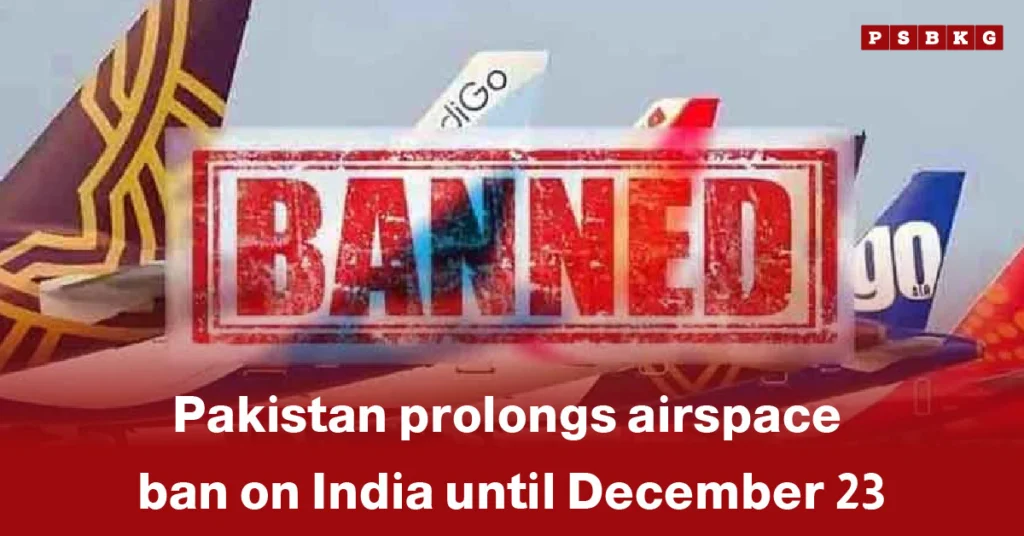
Latest News: Pakistan’s move to prolong its Pakistan India airspace ban until December 23 has once again placed attention on an already strained regional atmosphere. The decision, announced after careful internal consultations, reflects a security environment where caution outweighs convenience. For months, both countries have operated with limited aerial routes, forcing airlines to adjust schedules, add longer routes, and cope with rising operational costs. While the ban affects daily travel, it also points toward deeper unresolved issues between the two neighbors. The extension feels less like a temporary adjustment and more like a quiet signal that tensions remain far from resolution.
The Background of the Ban
The Pakistan India airspace ban began during a period of sharp political and military tension between the two countries. What started as a precaution quickly became a long-term diplomatic marker. Pakistan’s decision to keep the ban in place stems from safety concerns and ongoing regional sensitivities. Officials have emphasized that stability must be restored before normal routes can resume. The delay in lifting restrictions suggests that trust, essential for aviation coordination, remains fragile.
Impact Felt Beyond Borders
The Pakistan India airspace ban extension does not affect Pakistan and India alone. Airlines from the Middle East, Europe, and Southeast Asia have also faced disruptions, adjusting flight paths to avoid restricted zones. Passengers experience longer flight times, unexpected layovers, and higher ticket prices. For global travelers, it shows how quickly geopolitical tensions can impact aviation networks. Airlines continue to absorb operational strain, hoping for a diplomatic breakthrough to ease pressure on international routes.
Aviation Industry Struggles With Uncertainty
Inside the aviation sector, the Pakistan India airspace ban has created significant uncertainty. Flight planners, pilots, and airline managers have grown used to redrawing routes almost weekly, never sure when the skies might reopen. These adjustments carry financial costs that eventually affect passengers. For Pakistan’s aviation authorities, the decision is serious, as they weigh economic and logistical consequences. Yet security remains the priority. As December approaches, airlines hesitate to predict the outcome of the next review.
Political Reactions on Both Sides
The Pakistan India airspace ban triggered predictable political statements from both countries, each framing the move in its own way. In Pakistan, the focus remained on security, a reminder that governance sometimes requires tough choices. In India, the discussion centered on diplomacy and avoiding escalation. Analysts note that the ban has become symbolic, reflecting the state of relations between the neighbors. It is a quiet but clear indicator of how fragile the situation remains.
Public Sentiments Reflect Fatigue
Among ordinary people, the Pakistan India airspace ban extension revived feelings of fatigue. Travelers who frequently fly between international hubs face another month of inconvenient journeys. Business communities worry as travel delays affect partnerships and supply chains. For many, the ban is a reminder that political issues eventually impact daily life. Conversations in markets, offices, and online forums show a desire for de-escalation, even if expectations remain low. People simply want a return to normal routines.
Looking Ahead to December 23
With the Pakistan India airspace ban extended until December 23, hope remains that diplomatic channels might pave the way for reopening. The weeks ahead will bring internal assessments, quiet dialogues, and security evaluations. For both countries, the airspace decision is strategic, not just technical. Whether the skies reopen or the ban continues depends on regional developments. For now, caution, uncertainty, and expectation dominate. The coming month will be closely watched by travelers, airlines, and policymakers.