

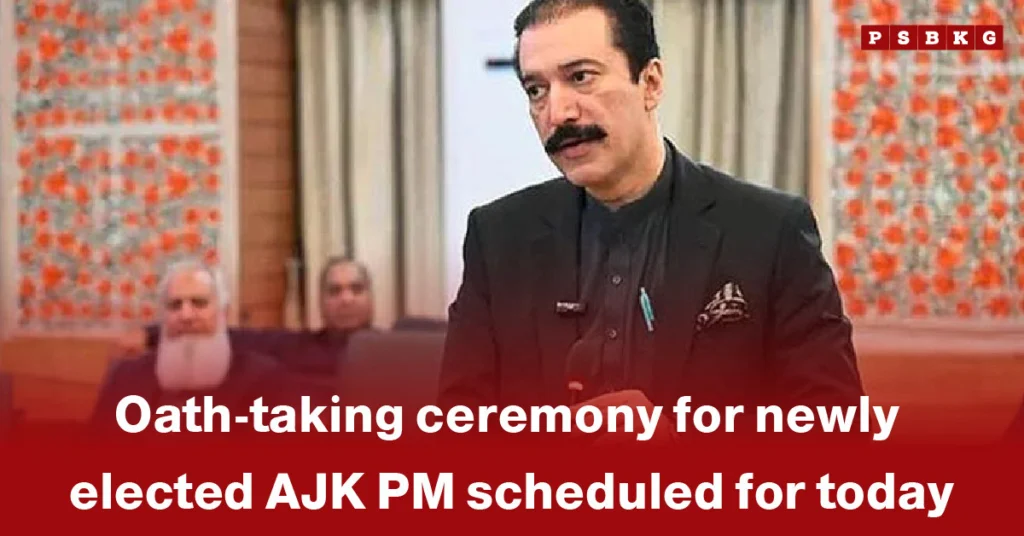
A Day of Political Transition
Latest News: Azad Jammu and Kashmir is stepping into a new political chapter today as the newly elected Prime Minister prepares for the AJK PM oath-taking ceremony. The mood across the region carries a blend of anticipation and quiet reflection, as people wait to see how the new leader will shape the future. The election stirred plenty of conversations—some hopeful, some cautious—but today marks the moment everything becomes official. As the ceremony approaches, many in the AJK political circle view it as an opportunity for a reset, a chance to realign priorities and bring stability after weeks of fast-paced political maneuvering.
A Ceremony That Holds Symbolism
The AJK PM oath-taking ceremony is expected to be more than just a formality. It carries symbolic weight, representing the transfer of responsibility and the beginning of a new governing journey. Senior officials, party workers, and regional representatives will gather to witness the transition. For the people of AJK, these moments often reflect their hopes for stronger governance, economic progress, and better representation. Ceremonies like this are reminders that leadership changes are not just political events—they shape the rhythm of everyday life for citizens who rely on their government’s direction.
A Leadership Tested from the Start
Even before taking office, the incoming Prime Minister faces a demanding political landscape. With the AJK PM oath-taking marking the official start of this new chapter, governance challenges, development gaps, and public expectations are already waiting on the desk. The weeks ahead will likely test leadership qualities, decision-making, and the ability to unify different political voices. Observers say the new PM will need confidence and patience. Every move in the early days will face scrutiny. The ceremony today is celebratory. But it also marks the start of responsibilities that go far beyond the applause.
People Watching With Quiet Expectations
Across AJK, conversations in markets, offices, and homes reveal a common theme — expectations. With the AJK PM oath-taking setting the tone for a new administrative term, people want relief from long-standing delays, improved services, and clearer communication from leadership. Many residents say they want a government that listens more closely and addresses everyday issues without turning them into political debates. This quiet hope spreads through every community, whether in the urban centers or the hilly rural areas. The oath-taking today will be watched by many who simply want life to become a little easier and more predictable.
Political Parties Preparing for a New Phase
Political parties in AJK are also adjusting to the change. Supporters of the new PM see the AJK PM oath-taking as a moment of victory and fresh possibilities. Opponents, meanwhile, prepare for a role of active oversight, promising to hold the government accountable. In a way, the ceremony resets the tone for the entire assembly. With new leadership often comes new alliances, new rivalries, and new priorities. Party members know that this early period will determine how effectively they can navigate the coming months, particularly as the government begins setting its agenda.
Challenges Waiting Beyond the Ceremony
Once the oath is taken and the applause fades, the real work begins. With the AJK PM oath-taking now complete, budget concerns, administrative reforms, and regional development projects all await immediate attention. The new Prime Minister will also need to establish a strong working relationship with federal authorities, ensuring that AJK’s concerns stay visible at the national level. There are issues related to infrastructure, tourism, employment, and governance efficiency that cannot be postponed for long. The ceremony may be a highlight, but it is only the starting point of a long list of responsibilities.
A Moment That Could Redefine Direction
Today’s AJK PM oath-taking ceremony holds the potential to redefine AJK’s political direction. Leadership changes can sometimes bring unexpected energy, shifting priorities in ways that impact everyone from government workers to ordinary shopkeepers. Many hope the new PM will focus on unity, development, and building trust between government and citizens. If managed well, this transition could strengthen public confidence in regional institutions. As the ceremony begins, one thing is clear — people are watching closely, hoping that today marks the beginning of something better, more stable, and more responsive.