
New steps for border security
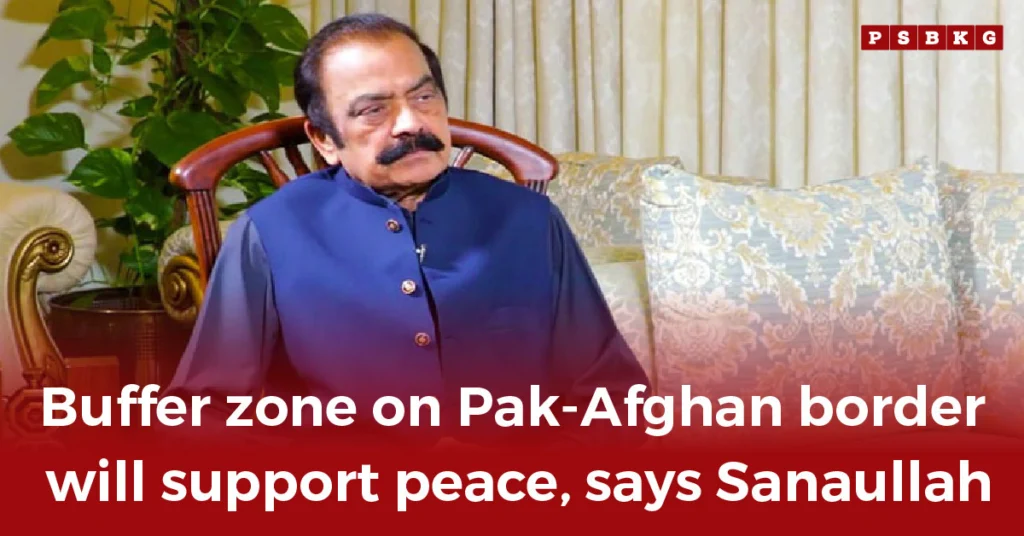
Latest News : Interior Minister Rana Sanaullah has announced plans for a buffer zone along the Pak-Afghan border, describing it as a key measure to enhance peace and stability. The proposed zone aims to reduce cross-border tensions, prevent illegal movement, and restrict militant activity that threatens both countries.
Officials said the buffer zone will be equipped with modern surveillance systems, patrol units, and controlled checkpoints. Sanaullah stressed that this initiative is part of Pakistan’s broader commitment to regional security and cooperation with Afghanistan.
Reducing cross-border violence
The Interior Minister highlighted that the border has long been a hotspot for criminal activity, smuggling, and terrorist infiltration. By creating a Pak-Afghan buffer zone, Pakistan hopes to curb illegal movements that have historically fueled instability. Security experts believe this measure could significantly reduce militant attacks and provide law enforcement with better control over remote areas. It’s a preventive approach aimed at maintaining law and order along the volatile frontier.
Cooperation with Afghanistan
Rana Sanaullah emphasized that Pakistan is working closely with Afghan authorities to ensure the zone does not disrupt the local population. The plan involves joint monitoring and communication between border officials from both sides. This collaboration, officials say, is crucial for long-term stability. Pakistan wants to show that security measures can go hand-in-hand with humanitarian considerations, minimizing any negative impact on border communities.
Technology and surveillance
The buffer zone will reportedly include drones, thermal cameras, and advanced communication networks to monitor movement. Such technology aims to enhance early warning systems and improve the speed of response to security threats. Officials believe combining human patrols with technology will make the border far more secure than before. The strategy also reflects Pakistan’s intent to modernize border management without creating tension with neighbors.
Ensuring community safety
Sanaullah assured residents living near the border that the buffer zone is designed to protect civilians. Measures will focus on reducing smuggling, kidnapping, and illegal crossings that have endangered local communities for years. Community leaders have welcomed the plan, saying it shows a proactive approach by the government. People hope this initiative will not only improve security but also help revive trade and movement in controlled areas.
Long-term vision for peace
The Interior Minister described the buffer zone as part of a broader vision for lasting peace in the region. He said Pakistan seeks not only to secure its own borders but also to encourage Afghanistan to strengthen law enforcement and combat extremism on its side. Security analysts note that if properly implemented, the zone could serve as a model for conflict prevention along other sensitive borders in South Asia. It reflects a shift toward preventive, collaborative measures rather than reactive responses.
Strategic and humanitarian balance
Pakistan’s plan aims to balance security with humanity. While the buffer zone addresses serious threats, officials stress that it will not isolate communities or hinder legitimate movement. The government sees this as a step toward stability that benefits everyone living along the border. Sanaullah concluded that peace and security require both vigilance and cooperation. With careful planning and mutual trust, the buffer zone could help transform one of the region’s most volatile frontiers into a safer and more stable area.