
A quiet morning turned into tragedy
Latest News It began like any other morning in Islamabad. The streets around the G-11 district court were busy, lawyers arriving for hearings, police guarding the gate, people moving in and out. Then, in a split second, everything changed during the Islamabad suicide attack. A man tried to enter the court premises but was stopped by security. Moments later, a deafening blast tore through the area. The suicide bomber detonated himself near a police vehicle. Within seconds, smoke filled the air, and panic spread. Twelve people lost their lives that morning. Dozens were injured. Sirens wailed, ambulances rushed in, and frightened families tried to reach their loved ones. Islamabad hadn’t seen such a brutal attack in years. The capital, usually calm, was shaken to its core.
The world reacts and the UN speaks out
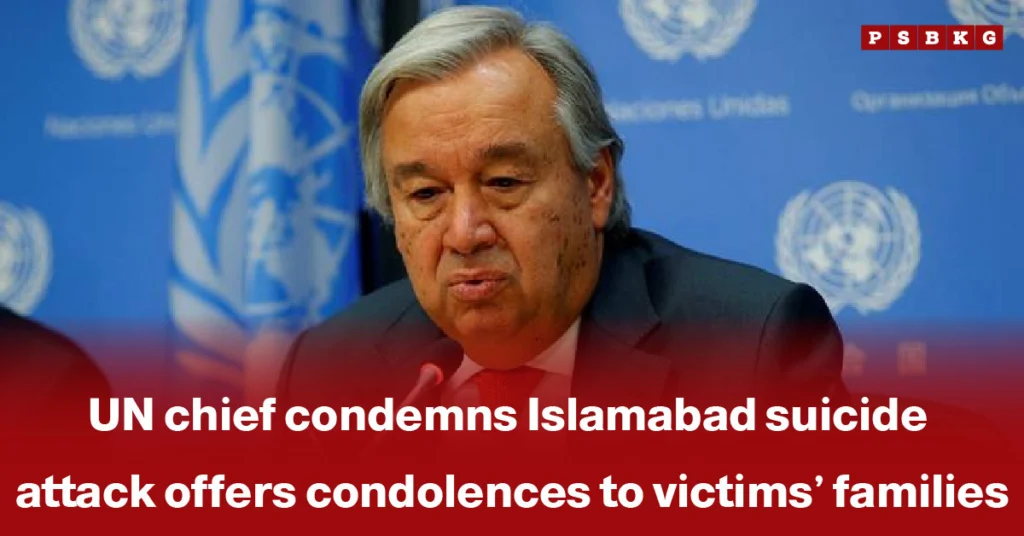
News of the Islamabad suicide attack spread fast. Statements of condemnation came from across the world, but one voice stood out, that of the United Nations Secretary, General António Guterres. He said he was deeply saddened by the loss of life in Islamabad and extended heartfelt condolences to the families of the victims. Guterres also wished a speedy recovery for those injured. His message was simple yet powerful: terrorism in any form is unacceptable. The UN called for justice, urging authorities to hold the perpetrators accountable. It was a reminder that global solidarity still matters, and that acts of violence must be faced with unity, not fear.
Why this attack hits differently
This wasn’t just another tragic incident. The Islamabad suicide attack struck a symbol of law, a court complex, the very place meant to protect justice and order. That made it more than an act of violence; it was a direct challenge to the idea of security itself. Pakistan has seen militant attacks before, but the capital city had been relatively peaceful. This one, though, felt different. It showed that extremists could still strike at the heart of power. For many, it revived painful memories of the days when terrorism cast a dark shadow across the country.
Behind every number, there’s a story
When we read “12 killed” or “27 injured,” it sounds like statistics. But every number hides a story, a face, a family, a future cut short in the Islamabad suicide attack. Some of those who died were police officers, others were civilians just passing by. Witnesses described chaos: people running in every direction, windows shattered, a silence after the explosion that felt endless. It’s in those moments, after the dust settles, that the real pain begins, families searching hospitals, hoping for a miracle that often doesn’t come. Condolences and statements help, but recovery takes years. The wounds, both seen and unseen, last long after the headlines fade.
What the UN is calling for
António Guterres urged Pakistan to conduct a full investigation into the Islamabad suicide attack. He called for those behind the attack, whether planners, supporters, or financiers, to be brought to justice. The message was firm: no one should be allowed to destroy lives without consequence. For Pakistan’s government, the attack is a test of resolve. It raises questions about security lapses, intelligence sharing, and the growing threat of militant networks. Officials now face pressure to strengthen counterterrorism measures and reassure the public that the capital remains safe.
Looking at the bigger picture
This Islamabad suicide attack isn’t just about the city itself. It’s about what it represents, the fight between peace and fear. Every incident like this sends shockwaves far beyond one city. It affects national confidence, regional stability, and even international relations. When the UN condemns such violence, it reminds the world that terrorism is not a local issue. It’s a global challenge. And Pakistan, once again, stands at a crossroads, between rebuilding resilience and slipping back into insecurity.
A call for peace and strength
In the aftermath of the tragedy, the people of Islamabad returned to work, their steps slower but their spirits steady. Flowers were placed outside the court. Prayers were held in mosques. Life tried to move forward, quietly, respectfully. The UN’s message echoed across the city: peace must prevail. Condolences turned into commitments, and sorrow into resolve. Pakistan mourned, but it also remembered that unity is stronger than fear.