
A familiar Trump showdown returns
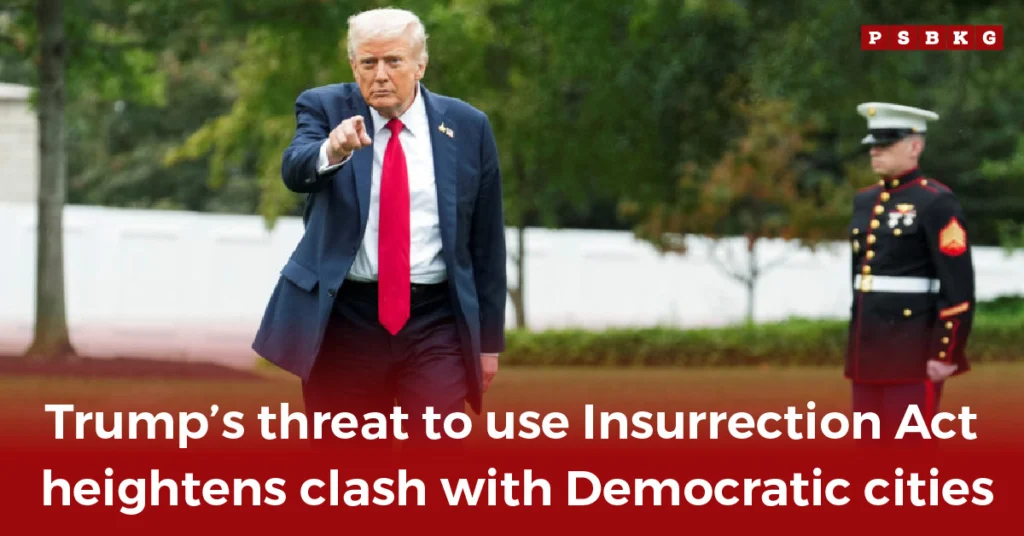
Latest News : Former U.S. President Donald Trump has once again found himself at the center of political controversy, this time over his remarks about invoking the Trump Insurrection Act if re-elected. The statement, delivered during a campaign event, immediately reignited debate over federal power, civil rights, and the boundaries between national security and local autonomy. For many Americans, it felt like déjà vu, a reminder of 2020’s chaotic protests and the intense standoff between Trump’s administration and Democratic-led cities. The tone of his remarks was classic Trump: bold, unfiltered, and intentionally provocative. He accused certain Democratic mayors and governors of failing to maintain order, suggesting that if local officials could not handle unrest, the federal government under his leadership would step in “without hesitation.”
What the Insurrection Act means
The Trump Insurrection Act, based on the Insurrection Act of 1807, allows a U.S. president to deploy military forces within the country in times of extreme civil unrest. While technically legal, its use is rare and highly controversial. Historically, it has been invoked in extraordinary situations such as enforcing desegregation orders in the 1950s and quelling riots in the 1990s. Trump’s suggestion to use it preemptively against domestic protests raised alarm among critics who view it as a potential threat to civil liberties. Legal experts say that while the act gives the president broad authority, it also risks blurring the line between civilian governance and military power. For Trump’s opponents, that’s precisely the concern, that his interpretation of “law and order” leans too heavily toward force over dialogue.
Democratic response and growing unease
The reaction from Democratic leaders was swift. Mayors from cities like Chicago, New York, and Los Angeles condemned the remarks, calling them dangerous and authoritarian. “We don’t need troops in our streets, we need leadership,” one mayor said in a televised interview. Others accused Trump of using fear to energize his political base ahead of next year’s election. At the same time, Democratic strategists saw the comment as an opportunity. By painting Trump’s vision as one of control rather than cooperation, they hope to rally moderates and independents wary of another term marked by polarization. The issue has quickly become more than a policy debate — it’s a defining line between two opposing visions of governance.
Supporters cheer, critics warn
Trump’s supporters, on the other hand, welcomed his remarks. Many argue that the country has suffered from weak leadership in major cities plagued by crime and unrest. They see the Trump Insurrection Act as a tool of last resort, a way to restore order if local governments fail. “If people can’t feel safe in their own neighborhoods, then something must change,” said one supporter during a campaign stop. This divide reflects the broader political mood across America, deep mistrust between federal and local leadership, particularly in regions split along party lines. To Trump’s base, the promise of action sounds like strength. To his critics, it sounds like overreach.
A history of tension
The tension between Trump and Democratic city leaders is nothing new. During his presidency, clashes over immigration, police reform, and pandemic policies often turned into public spats. The idea of sending federal troops into cities even temporarily reignites those old wounds. Many still remember images from 2020 when federal agents were deployed to Portland and Washington, D.C., during protests, sparking outrage and fear of militarization. This time, the political atmosphere feels even more charged. With another election on the horizon, both sides are preparing for an all-out battle over narrative. Trump’s team frames the issue around “restoring order,” while Democrats describe it as “threatening democracy.”
Legal and political risks ahead
If Trump were to win and act on this idea, the legal challenges would be immediate. Governors could resist federal intervention, and courts would likely become the next battleground. Constitutional scholars have warned that frequent or preventive use of the Trump Insurrection Act could destabilize civil-military relations in the U.S., something the framers of the Constitution sought to avoid. Politically, however, Trump’s threat serves another purpose, it fires up his supporters and keeps his name at the center of public conversation. Every strong statement, every confrontation with his critics, adds to his campaign’s momentum. Whether or not he truly intends to invoke the law, the message is clear: he wants to project strength in an era he portrays as chaotic.
What this means for American politics
The debate over the Insurrection Act is more than a legal argument it’s a reflection of how divided the country has become. Trust in institutions is low, polarization is high, and even the idea of federal authority sparks anxiety. For Trump, that division remains his political terrain. For Democrats, it’s both a warning and an opportunity to defend local governance. As the campaign season heats up, this issue is likely to remain front and center. The lines between campaign rhetoric and policy promise continue to blur, and voters are left to decide whether they want confrontation or cooperation guiding the country forward.
Looking ahead
In many ways, this latest controversy feels like a preview of what’s to come, a battle not just for the presidency but for the very idea of how America governs itself. Trump’s threat to use the Trump Insurrection Act might never materialize, but its political impact is already being felt. It forces voters to confront uncomfortable questions about freedom, authority, and the balance between safety and liberty. For now, both sides are talking tough, drawing lines in familiar sand. The coming months will show whether those lines deepen or give way to something new. But one thing is certain: America’s political stage is once again set for a dramatic and deeply divided showdown.