
A familiar voice for peace
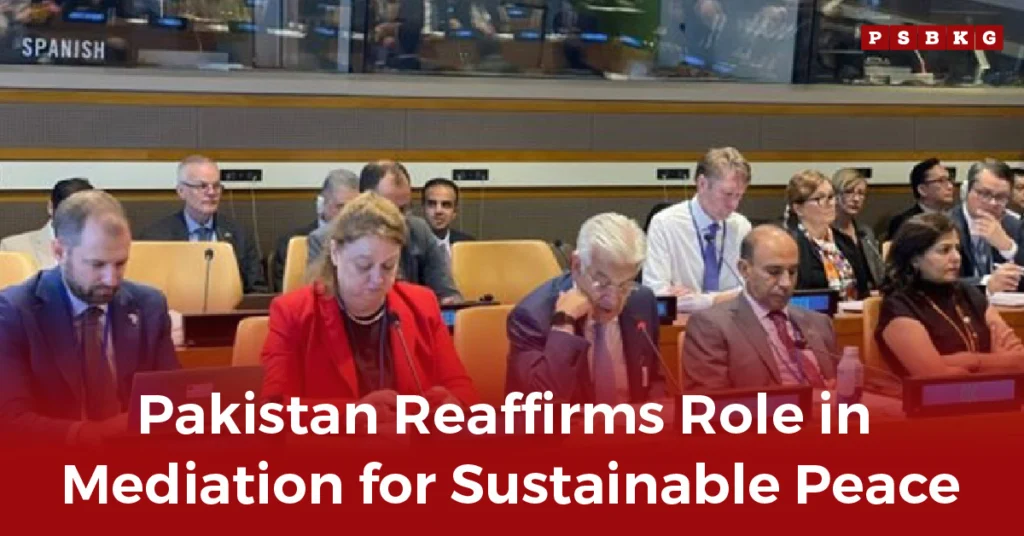
Latest News : Pakistan mediation efforts have once again positioned the country as a voice of moderation and reconciliation on the global stage, reaffirming its support for mediation as a path to lasting peace. The government emphasized that in a world marked by conflict and division, dialogue remains the only sustainable solution. For Islamabad, peace-building is not just a foreign policy priority but also a responsibility it says it owes to future generations.
The global backdrop
The call comes at a time when international crises are multiplying, from wars in Eastern Europe and the Middle East to tensions in Asia. With so many regions embroiled in disputes, the role of countries willing to act as mediators has become increasingly vital. Pakistan, given its strategic position and long-standing diplomatic experience, sees itself as a natural participant in these efforts. Officials made clear that their aim is not to take sides but to encourage bridges where walls exist.
Why mediation matters now
Wars today do not stay confined within borders. They spill over into global energy markets, food supplies, and refugee movements. Pakistan’s leadership reminded the world that mediation is not a luxury, it is a necessity. The human cost of war, whether in lives lost or livelihoods destroyed, is too high. For Pakistan, pushing for talks and dialogue is about addressing these deeper impacts, not just political headlines.
A history of engagement
This is not the first time Pakistan has played a role in mediation. In the past, it has facilitated talks in Afghanistan, supported United Nations peacekeeping missions, and quietly engaged in back-channel diplomacy. While not every effort made headlines, Pakistan points to this track record as proof of its genuine intent. The country has long believed that dialogue and restraint are better investments than prolonged hostility.
Regional dimensions
Support for international initiatives
Pakistan’s renewed statement also highlighted its backing of global mechanisms. The United Nations, the Organization of Islamic Cooperation, and other regional bodies, according to Pakistan, must be strengthened to carry out this work effectively. Islamabad has pledged to remain active in these platforms, aligning itself with other states that see negotiation as the only road toward sustainable peace.
Balancing national interest with global good
Looking ahead
In reaffirming its stance, Pakistan is signaling that its foreign policy will continue to prioritize mediation over confrontation. Officials say this is not about appearing neutral, but about pushing the world toward solutions that work for people rather than against them. With conflicts showing no sign of easing, the challenge will be to translate these commitments into concrete initiatives. Still, Pakistan’s voice adds weight to a growing chorus that believes dialogue is the only durable answer.