
A statement that draws attention
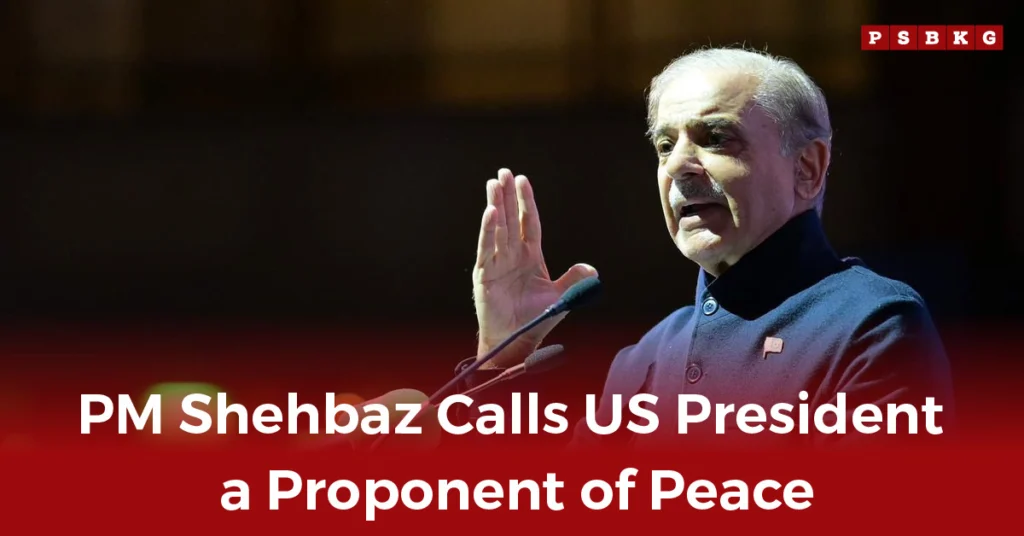
Latest news : Prime Minister Shehbaz Sharif US Peace comment about the US President caught many eyes. He described him as a proponent of peace, a phrase that quickly found its way into headlines. It sounded diplomatic, almost cautious, but also hopeful. In the middle of a world full of conflicts, from Gaza to Ukraine, even a simple phrase like this carries weight. It reflects how Pakistan wants to be seen on the international stage, a country siding with peace, not conflict.
Why these words matter
Pakistan’s relationship with the United States has always been complex. Sometimes close, sometimes strained. For a leader in Islamabad to openly praise the American President is not just a passing remark. It suggests intent. It shows Pakistan is looking for cooperation, for dialogue, and for space to work together despite past disagreements. These words matter not only for diplomacy but also for Pakistan’s image abroad.
A careful diplomatic signal
In politics, leaders often choose words carefully. Shehbaz’s choice to call the US President a proponent of peace wasn’t accidental. It was a gesture, a signal meant for Washington as well as the world. Pakistan faces tough economic times, and it knows that stronger ties with the United States could help. By acknowledging the US leader’s role in promoting peace, Shehbaz created an opening, a way to keep communication channels warm.
Linking peace with Pakistan’s priorities
For Pakistan, peace is not just a noble idea, it’s essential. Stability in Afghanistan, calm in the Middle East, and reduced tensions in South Asia all directly affect Pakistan’s economy and security. When Shehbaz Sharif spoke of the US President’s commitment to peace, he also connected it to Pakistan’s own vision. Without peace, trade and investment slow down, development stalls, and ordinary people suffer. This remark was, in many ways, a reminder of Pakistan’s own goals.
Mixed responses at home
Reactions inside Pakistan were split. Supporters said Shehbaz Sharif was wise to highlight positive aspects of US leadership, noting that Pakistan needs partners during hard times. Critics, however, were skeptical. Some worried the praise might be read as leaning too much toward Washington and away from traditional allies. Social media reflected both sides, with some calling it diplomatic maturity and others asking whether Pakistan was compromising its independent stance.
Looking at the bigger picture
Historically, Pakistan’s ties with the United States have moved in cycles. From close allies during the Cold War to tensions over security in Afghanistan, the story has been long and complicated. Yet both countries continue to need each other, whether in trade, counterterrorism, or regional stability. By framing the US President as a proponent of peace, Shehbaz Sharif seemed to focus on common ground instead of differences. That in itself is significant.
The peace narrative in global affairs
Peace has become central to Pakistan’s foreign policy messaging. At the UN and other forums, Pakistani leaders consistently call for dialogue and restraint. Shehbaz’s words aligned with this approach. They positioned Pakistan as a supporter of diplomacy at a time when wars and conflicts dominate global headlines. For Pakistan, repeating the message of peace also helps shape its image as a country that wants to move past instability.
What comes next
Whether this statement leads to anything concrete is uncertain. Diplomacy often moves slowly. Still, remarks like these can soften the ground for more meaningful talks. Pakistan wants relief in trade, investment, and global partnerships. Stronger US ties could help open some of those doors. The Prime Minister’s words may not solve every issue, but they create a mood for conversation. That alone makes them important.