
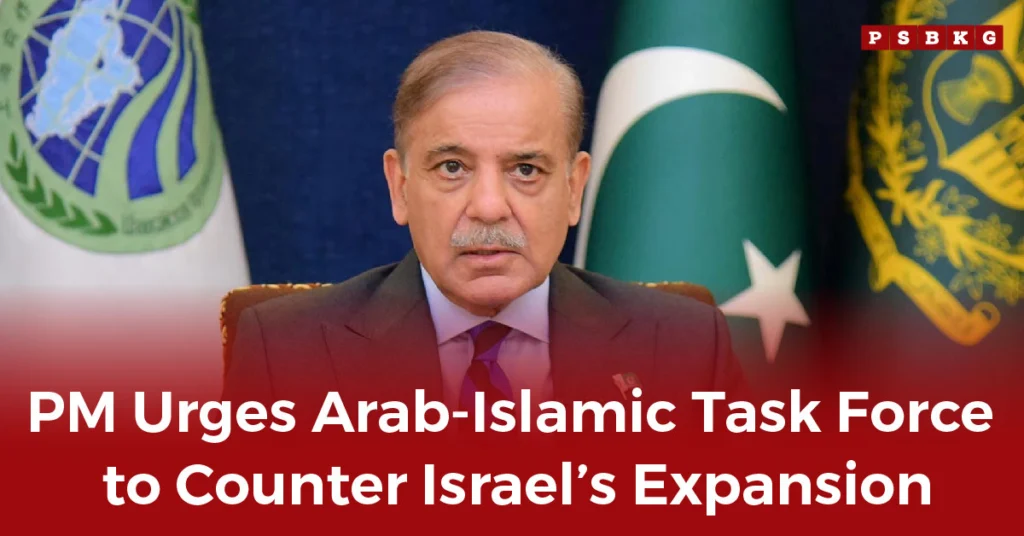
A Call from Pakistan’s Leader
Prime Minister of Pakistan has once again placed Palestine at the heart of his foreign policy message. Speaking at a high-level gathering, he urged Muslim countries to come together and form a joint Arab-Islamic task force that could counter Israel’s expansionist ambitions. His remarks were not just political statements, they carried the weight of long-standing frustration felt across the Muslim world about the suffering of Palestinians.
The Bigger Picture in the Middle East
Regional analysts point out that the call for unity comes at a time when tensions in Gaza and the West Bank are once again dominating headlines. Civilian casualties, displacement, and economic hardship have left many in the region questioning the effectiveness of past international efforts. The Prime Minister believes that the Muslim world, if united, can play a stronger role than external powers who often bring their own interests into peace talks.
Why a Task Force Matters
The proposed task force, according to officials, would not be limited to military considerations. It would aim to combine diplomatic pressure, humanitarian assistance, and collective political strategies. Pakistan has long maintained that peace in the Middle East is impossible without justice for Palestinians. By putting forward this idea, the Prime Minister is signaling that empty condemnations are not enough, action and coordination are now required.
Standing with the Oppressed
For Pakistan, supporting Palestine has always been more than a policy—it is part of its identity in the Muslim world. Successive governments have voiced solidarity, but the urgency in the Prime Minister’s latest speech suggests that Islamabad wants practical steps this time. He stressed that silence or inaction only encourages more aggression. The idea of a joint task force reflects a shift from statements to collective responsibility.
Reactions and Possibilities
So far, the proposal has received mixed reactions in diplomatic circles. Some countries see it as a bold move that could strengthen the Muslim bloc, while others remain cautious, worrying about escalation. Observers note that even if the task force does not materialize quickly, the call itself highlights a growing impatience among Muslim nations. It puts pressure on regional leaders to either step up coordination or explain why they remain divided on such a critical issue.
What It Means for Pakistan
By championing this initiative, Pakistan reinforces its image as a country willing to take risks for regional justice. It also allows Islamabad to play a more visible role on the world stage, rather than being a passive observer. Whether or not the task force becomes a reality, the Prime Minister’s words show that Pakistan is ready to push for solutions that move beyond speeches and symbolic resolutions.