
Waters Rising Again: Chenab Ravi Sutlej Overflow in Punjab
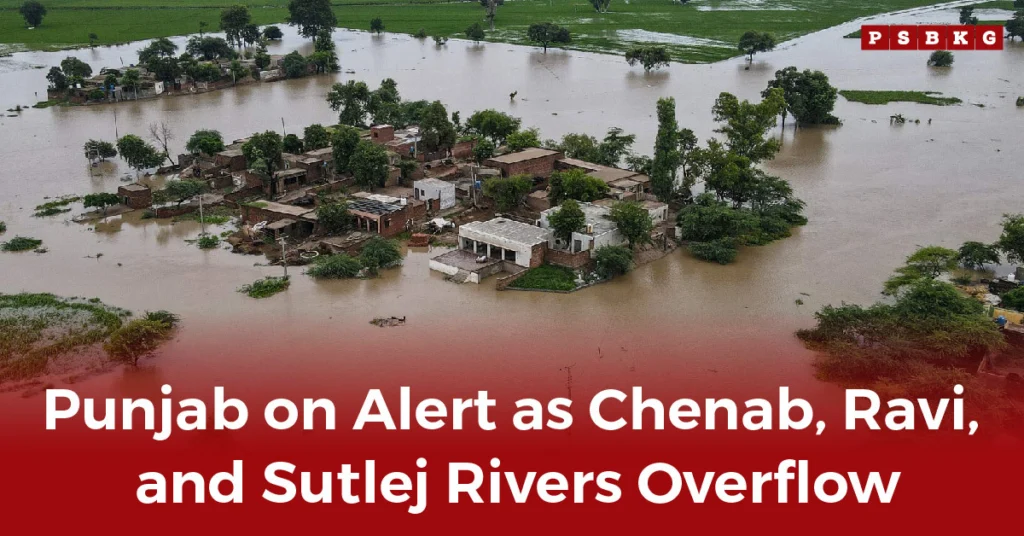
Latest News: Floods in Pakistan have returned with a force that feels painfully familiar. In Punjab, the Chenab Ravi Sutlej overflow has swelled rivers beyond their banks. The surge has sent water rushing into low-lying villages, drowning fields that only weeks ago were green with crops. Officials describe the situation as critical. People living near the rivers have been told to move quickly. For many families, the warning came late. Water has already entered their homes. Families have scattered belongings around them, they tie animals to trees, while children sit on rooftops waiting for rescue boats.
Punjab on High Alert as Rivers Cross Danger Mark
The provincial government has declared a high alert across districts near the rivers. Rescue workers, including army units, are moving in with boats and trucks. Camps are being set up for those displaced. But with the speed of water, officials admit it is impossible to save everything. Roads in some regions are already cut off. Electricity poles have fallen, leaving entire villages without power. At night, only the glow of torches and the noise of rushing water remain.
A Crisis That Repeats Every Year
For people in Punjab, this is not the first time. Floods have struck year after year, and each time the damage feels heavier. Fields that should provide food are washed away. Houses built with years of savings collapse in minutes. Families rebuild, only to lose again. Experts link the pattern to heavier monsoon rains and warn that climate change is making them worse. The Chenab Ravi Sutlej overflow has turned rivers that were once lifelines for farming communities into threats whenever rainfall is more than they can hold.
The Human Toll of Chenab Ravi Sutlej Overflow
Behind the numbers are stories. Farmers who watch their standing wheat or cotton disappear under brown water. Children falling sick from dirty, stagnant pools left behind after floods pass. Old men refusing to leave ancestral homes even when water rises to their doorsteps. Hospitals are filling fast. First with those injured while trying to escape, then with people running fevers. Dengue, malaria, stomach infections, all grow after floods. For families who just lost homes, sickness feels like another wave hitting them.
Relief and Rescue
The government has rushed food supplies, tents, and medicines. The Army is moving side by side with the local administration, trying to reach cut-off areas. Trucks filled with flour, rice, and clean water bottles are being sent. For many in the villages, the sight of these trucks brings a brief sense of relief, even trust. Yet the need is far greater. Crowded relief camps offer too few beds, forcing families to sleep under open skies. Clean drinking water is scarce. Volunteers say the toughest challenge will come once the Chenab Ravi Sutlej overflow waters start receding, when the muddy aftermath breeds disease.
Looking Ahead After Chenab Ravi Sutlej Overflow
Experts warn that Pakistan needs long-term solutions. Stronger embankments, better drainage systems, and early warning networks could reduce the yearly damage. Without them, floods will continue to erase whatever progress families make. For now, the priority is survival. Keeping people safe, delivering food, saving animals that are livelihoods for poor families. As one villager said, “We survive the water, then we fight the hunger.”
A Familiar Struggle
The floods of 2025 are not new, but they are devastating all the same. They remind people of past disasters, and they raise fears about what comes next. Punjab is once again caught between the fury of the Chenab Ravi Sutlej overflow and the limits of human preparedness. For those on the ground, this is not about statistics. It is about waking up each morning wondering whether the water has risen higher than the night before. It is about finding strength when everything seems washed away.