
Counterfeit Medicines | A Growing Threat in Pakistan
Latest News: In cities and small towns, pharmacies stay busy. Shelves are lined with medicines people depend on daily. But behind this trust, a bigger problem hides, counterfeit medicines in Pakistan, fake drugs that look real but have no healing power, continue to spread across markets. Mustafa Kamal recently raised his voice on this issue, calling it one of the most dangerous threats facing our healthcare system today. For ordinary patients, spotting the difference is almost impossible. That is why strong measures, according to Kamal, are not optional anymore. They are a must.
Mustafa Kamal’s Concern
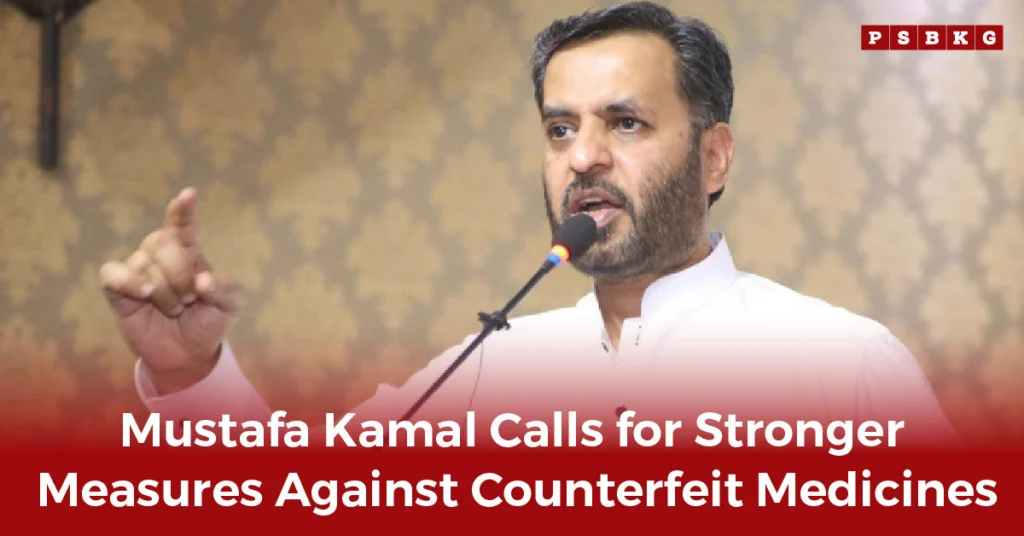
Talking about the issue, Mustafa Kamal said fake medicines aren’t just about business or trade, they are far more dangerous. They are a silent attack on human lives. Every fake pill sold, every injection that contains nothing but chalk or unsafe chemicals, pushes someone closer to serious harm. Kamal underlined that Pakistan cannot afford to stay weak on this issue. He believes the system needs to tighten its checks, from import level to local pharmacy counters. For him, counterfeit medicines in Pakistan are a public health emergency that demands direct action.
Why Fake Drugs Spread So Easily
The trade of counterfeit medicines in Pakistan doesn’t happen overnight. Weak monitoring, lack of modern testing, and profit greed all play a role. Some pharmacies chase cheap supplies, while smugglers know how to slip boxes through unchecked routes. Patients rarely question the pills they buy. Packaging looks authentic, labels carry proper printing, and prices are slightly lower, enough to fool even educated buyers. This is how dangerous drugs end up in homes across the country.
Health Risks That Cannot Be Ignored
Fake medicines may carry no cure, but they carry plenty of risks. In many cases, they worsen the disease instead of helping. Patients lose time, money, and in serious conditions like cancer or heart disease, they lose their chance of survival. Doctors have reported cases where patients didn’t respond to treatment simply because they were taking counterfeit drugs. Infections linger, blood pressure goes unchecked, and painkillers do nothing more than give false relief. Kamal’s point was simple: allowing such drugs to circulate is the same as playing with human life.
The Need for Stronger Measures
According to Mustafa Kamal, impressive measures against counterfeit medicines in Pakistan are not a choice anymore. They are inevitable. He called for strict laws, better coordination between drug authorities and law enforcement, and modern technology to track supply chains. Other countries have used digital verification codes on packaging, mobile scanning apps, and surprise inspections to cut down on fake drugs. Pakistan, too, must invest in similar solutions. Without this, smugglers and corrupt distributors will stay one step ahead.
Protecting Public Trust
Medicines are not just products, they are lifelines. People buy them with trust, believing they will heal. If counterfeit drugs keep flowing, this trust will collapse. That is why the fight against fake medicines is also about protecting the reputation of our healthcare system. Kamal’s reminder is timely. Strong action will not only save lives but also restore faith in the country’s pharmacies and hospitals.